
Last updated November 23, 2026
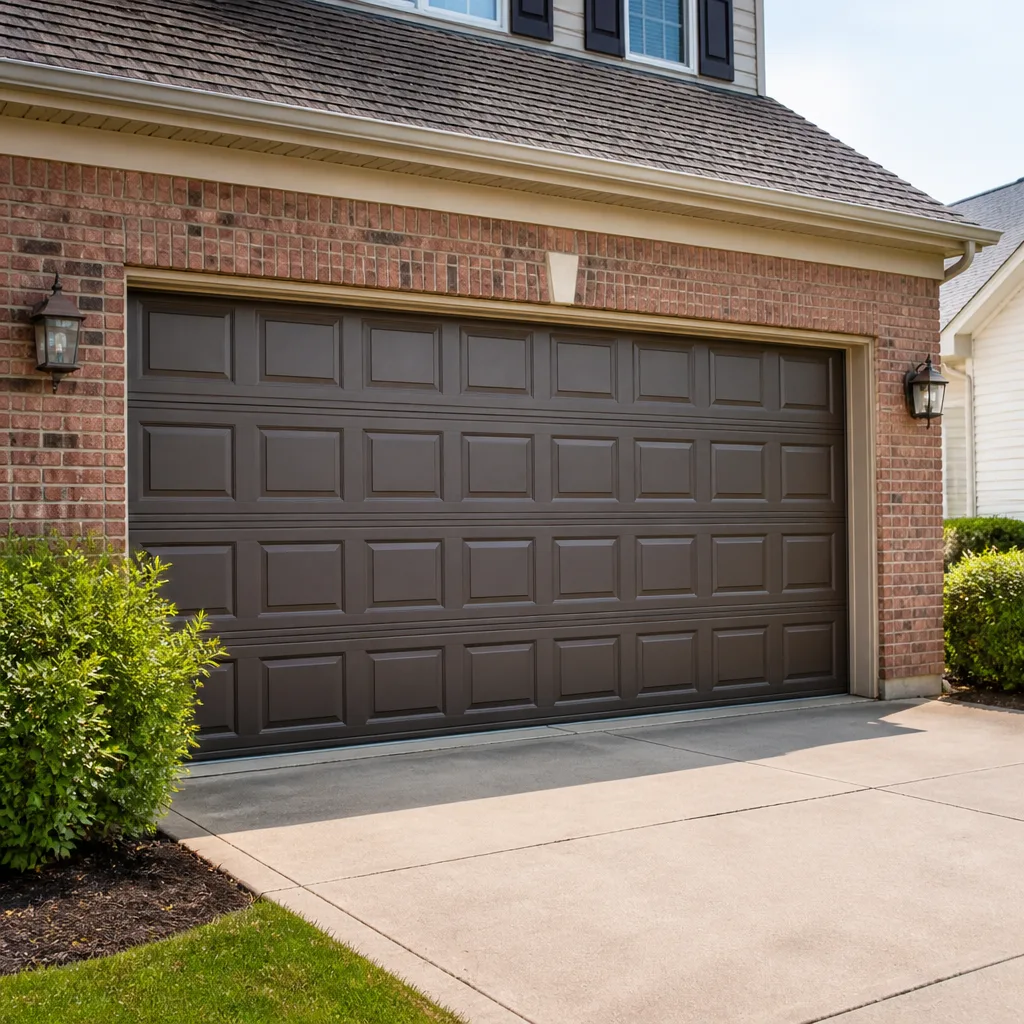 Raised-panel steel
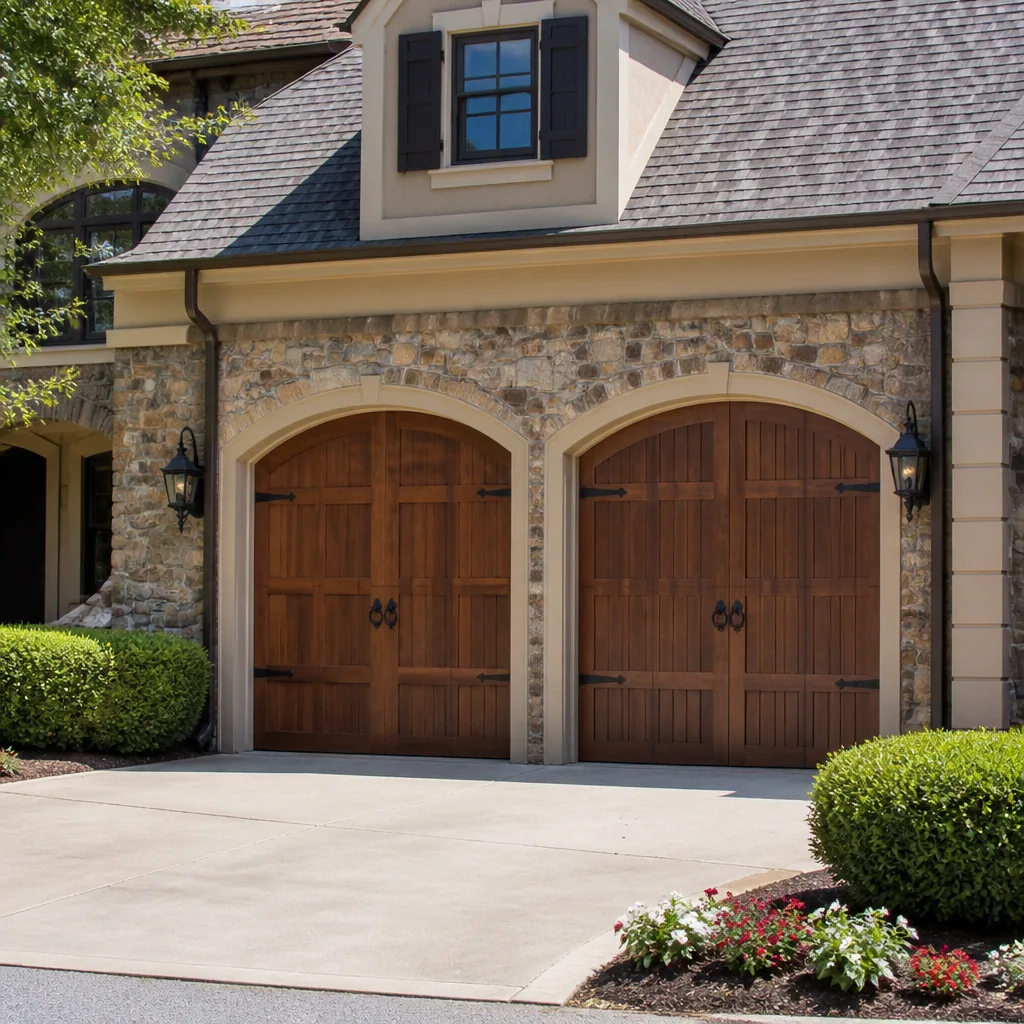 Carriage house
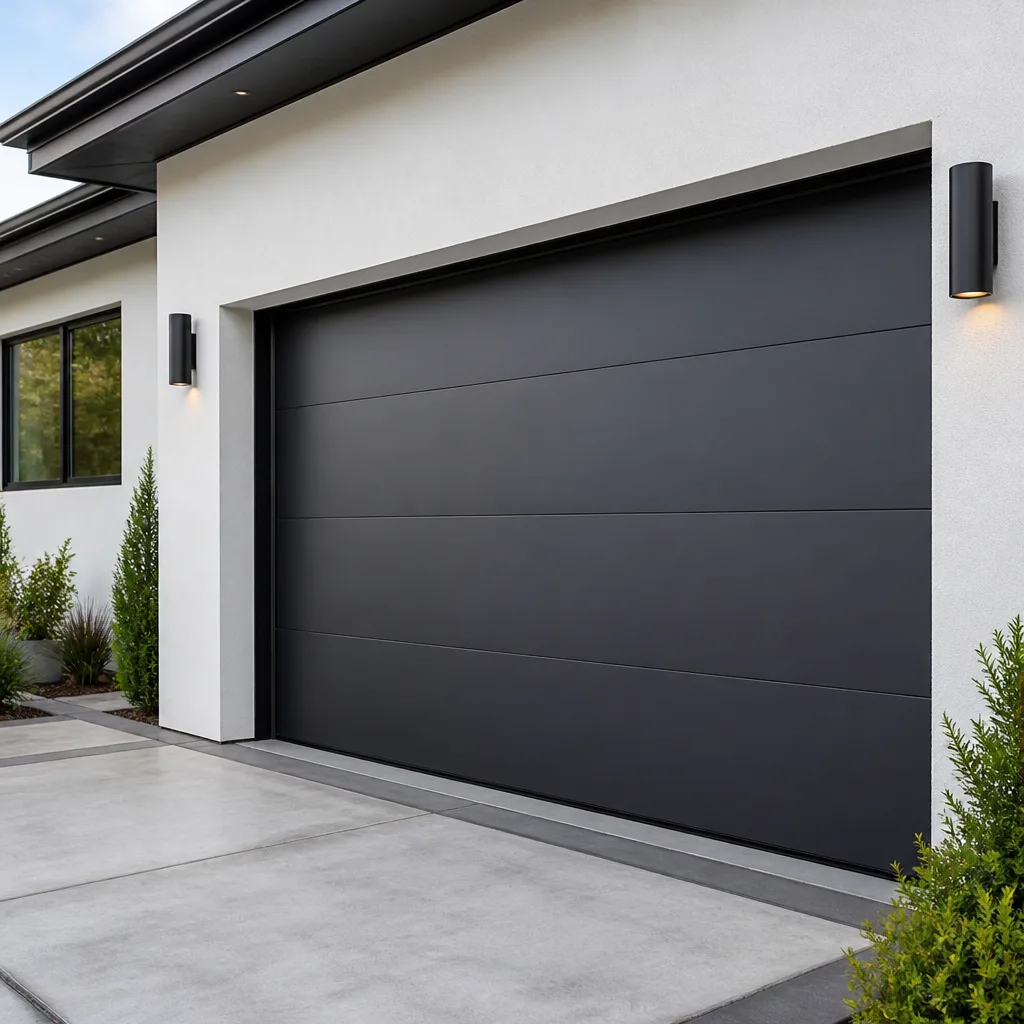 Modern flush
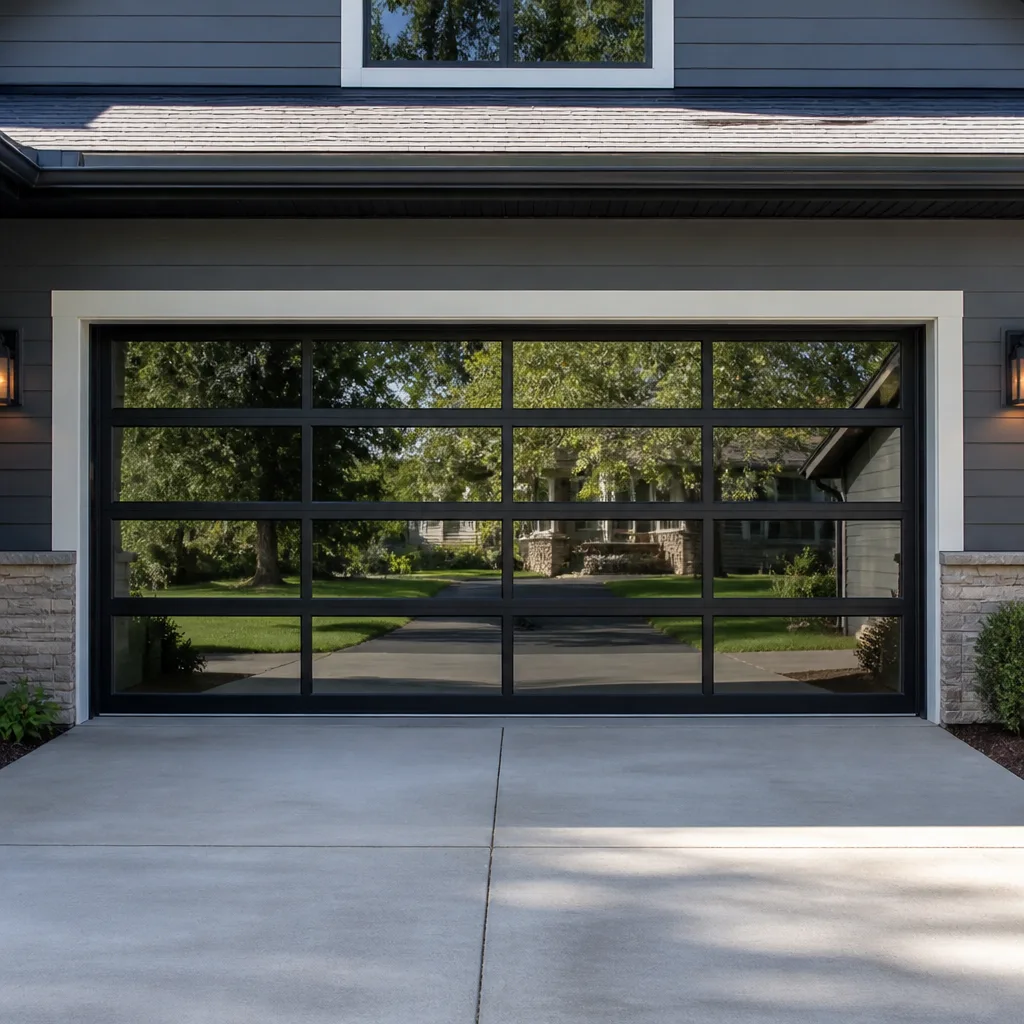 Full-view glass
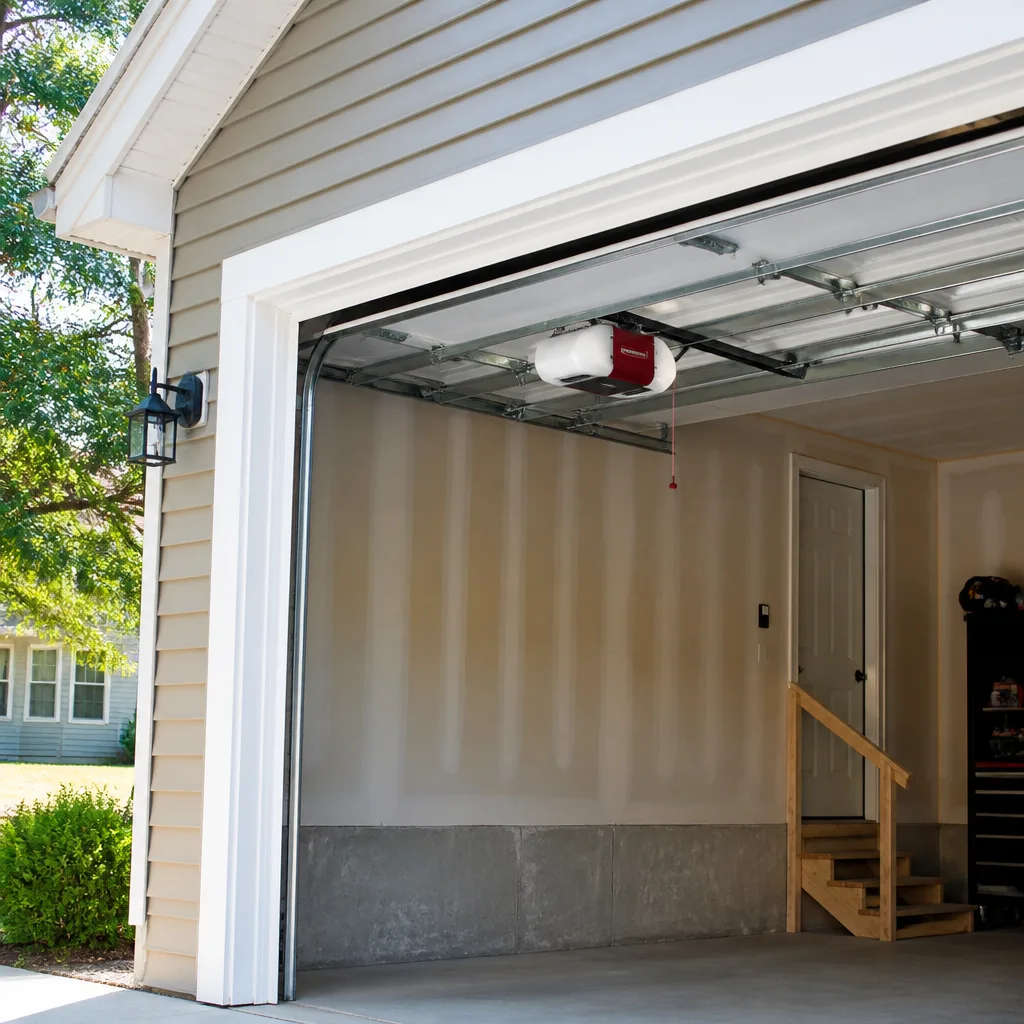 LiftMaster openers
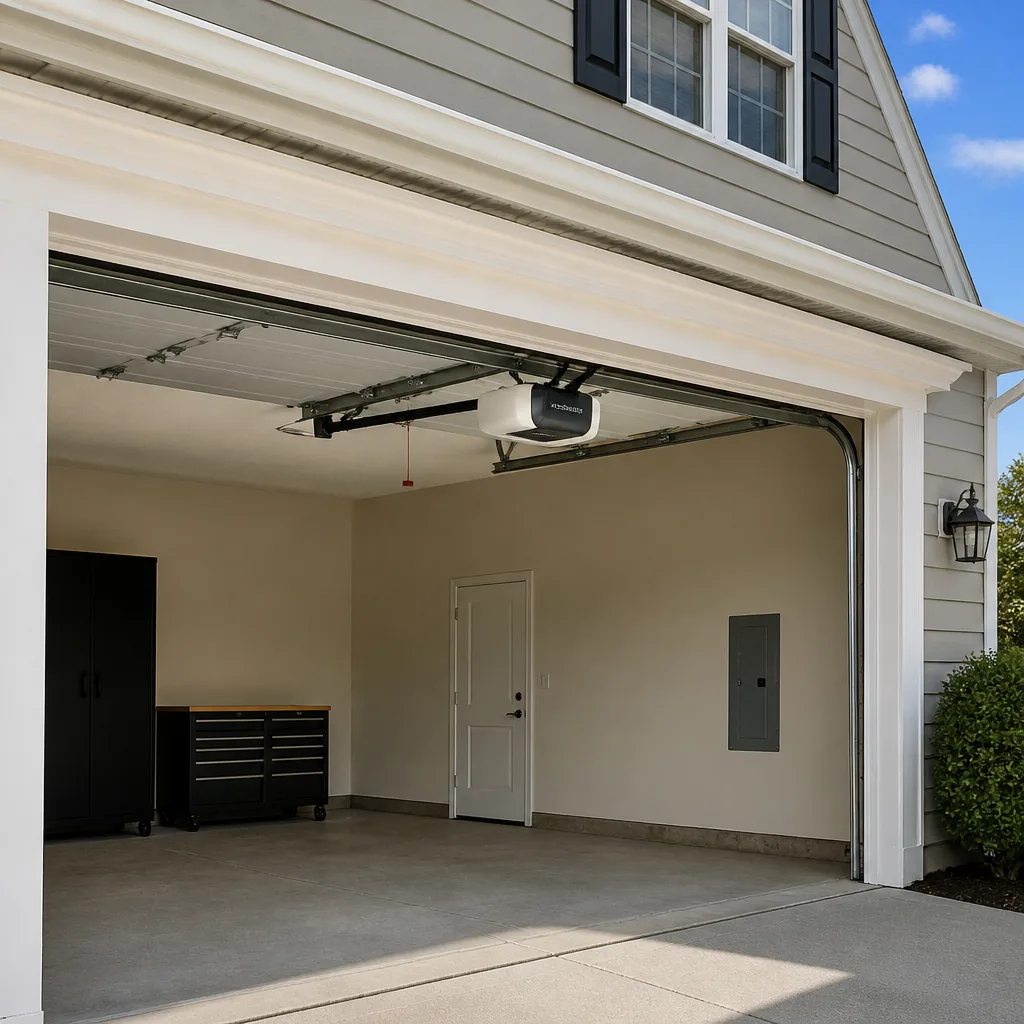 Chamberlain openers
Full 25-point door and opener safety check with every visit - springs, cables, rollers, tracks, and your LiftMaster or Chamberlain opener included
You get a price before we start. It does not change when the pro arrives.
Get your free estimateGarage Door Permits, Codes & Inspections in Plainfield, NJ: What You Need to Know
Here’s the part most homeowners miss: in New Jersey, the paperwork on your garage door can matter as much as the door itself. If you sold your Plainfield home tomorrow and your buyer’s attorney found an unpermitted garage door replacement on record, you could be looking at a delayed closing, a mandatory inspection, or a price renegotiation. All of it avoidable with one phone call to the city. This guide walks through when the Uniform Construction Code actually requires a permit for garage door work in Plainfield, how the local Construction Office handles a residential door permit, what wind load ratings mean for the product on your house, and how HOAs layer their own rules on top. We’ll also cover the documentation worth keeping afterward.
Quick Answer
In Plainfield, NJ, a brand-new garage door installation requires a permit, and a replacement usually does too when the structural header, framing, or wall opening is modified, or when a new opener is hardwired into the electrical system. A like-for-like door swap with no structural or electrical changes often does not. Wind load paperwork depends on the door you buy: many products are pre-certified for New Jersey’s code requirements, while others need an engineer’s stamp. The safe move is to ask Plainfield’s Construction Office directly before ordering, and to have your installer’s written scope in hand when you do.
Styles & brands we work with
- Raised-panel steel
- Carriage house
- Modern flush
- Full-view glass
- LiftMaster openers
- Chamberlain openers
Table of Contents
- When does New Jersey’s UCC require a permit for garage door work?
- How does Plainfield’s Construction Office process a residential garage door permit?
- How long does it take from application to inspection sign-off?
- What wind load ratings does New Jersey require, and which doors are pre-certified?
- What as-built documentation should you keep after a permitted job?
- How do Plainfield HOA design standards interact with the building code?
- What happens at resale if the work was never permitted?
- Common mistakes to avoid
When does New Jersey’s UCC require a permit for garage door work?
The Uniform Construction Code, or UCC, is the set of rules New Jersey applies to construction work across the state, and it covers more garage door scenarios than most homeowners expect. The rule of thumb we use: if the job changes the structure, changes the electrical system, or changes the size of what fills the opening, the answer is usually yes. If it’s a straight swap of the same door into the same opening with no framing or wiring touched, the answer is often no. “Often” is doing some work in that sentence, which is why the call to the city matters.
Here’s how the three common situations break down:
- New installation (a new opening or a new door where none existed before): A permit is always required. This includes converting a carport-style opening into a closed garage, enlarging an existing opening, or installing a door where there was previously only an open bay.
- Replacement, like-for-like: Typically permit-exempt when the header, framing, and opening size stay exactly as they are and no new electrical work is involved. The door goes into the existing track and the existing opening dimensions.
- Replacement with structural changes: If the job touches the header or framing, or changes the rough opening dimensions, expect a permit. Structural work on the wall of a house is the trigger. It doesn’t matter that the door itself is a “replacement.”
- Opener wiring (hardwired): A new hardwired opener with fresh runs to the panel requires an electrical permit. A plug-in opener using an existing outlet usually doesn’t. Battery backup openers like the ones from Chamberlain or LiftMaster that plug into a wall receptacle fall into a different category than a hardwired circuit.
Plainfield homeowners sometimes assume the door manufacturer handles the permit paperwork. It doesn’t. The permit is a building department transaction between the homeowner and the city, and the contractor listed on it. That’s a distinct step from garage door repair, which almost never needs a permit no matter how much work is involved. Repairs fix what’s there. Permits follow installations and structural changes. If you’re ever unsure, ask before the order goes in. The call to Plainfield’s building department costs nothing, and it saves the awkward conversation with a buyer’s attorney later.
How does Plainfield’s Construction Office process a residential garage door permit?
Plainfield’s Construction Office handles residential permits through the state’s standard UCC application process, with the technical review handled by the town’s building, electrical, and fire subcode officials as needed. Here’s the sequence a garage door permit generally goes through, in the order it happens:
- File the application. The permit application lists the property, the scope of work, the contractor, and the door product being installed. The signed contract and door specification sheets go with it.
- Submit product documentation. The subcode official needs to see the door’s wind load rating and the manufacturer’s installation instructions. Pre-certified products come with clear paperwork. Non-certified products need an engineer’s evaluation.
- Technical review. The building subcode official checks the application for code compliance, sizing, attachment details, and certificate requirements. If anything is incomplete, the application comes back for revisions rather than sitting in limbo.
- Permit issuance. Once the review is complete and fees are paid, the permit is issued and work can begin.
- Inspection scheduling. After the door is installed, the inspection is requested through the Construction Office. A building inspection confirms the installation matches the approved scope.
- Approval and certificate of occupancy or approval. On successful inspection, the work is signed off and, where the UCC requires, a certificate of approval is issued.
We see two things go wrong here in Plainfield. First, the application gets submitted without the door’s wind load documentation, and the review comes back for revisions because the subcode official has nothing to evaluate. Second, the contractor shows up with a door type that wasn’t on the approved application because the product got swapped at the supply house. Both delays are small in themselves but can add real weeks to a job if the paperwork has to be revised. Sorting out the specification before the application goes in, and pinning the installer to that exact product, keeps the process moving.
How long does it take from application to inspection sign-off?
Realistically, a straightforward residential garage door permit in Plainfield moves through application, review, and issuance in a matter of weeks rather than days, then adds inspection scheduling on top. The total depends on whether the application is complete on first submission, whether the door product needs an engineer’s review, and how busy the Construction Office’s inspection calendar is at that moment. Nobody can promise you a firm number in advance because the answer isn’t up to the installer.
What you can control is which application goes in. A complete, well-documented application for a pre-certified door clears review in the fastest window. An application missing wind load documentation, or submitted for a product the subcode official hasn’t seen before, sits in revision limbo. The practical steps:
- Confirm the exact door model, size, and wind load rating before the application is filed. Don’t file for “a door in that opening.” File for the product on the spec sheet.
- Get the manufacturer’s installation instructions and the certificate of compliance in the same packet.
- Assemble the signed contract, property survey if the scope touches the property line, and any HOA approval letter in the same file.
- Schedule the inspection as soon as the door is installed. Don’t wait for a gap in the calendar to close on you.
The good news: an unpermitted garage door installation in Plainfield isn’t a permanent problem. The Construction Office can usually still permit work that’s been done, subject to inspection and any corrective work needed. That’s more expensive and slower than starting with the permit, which is exactly why we recommend not skipping it. If you’re working out whether your situation needs a permit or whether you’ve been left with an unpermitted job by a previous installer, a call settles it.
What wind load ratings does New Jersey require, and which doors are pre-certified?
New Jersey’s building code includes wind load requirements for exterior components, and a garage door is the largest moving exterior component on most homes. Wind load ratings describe how much pressure a door can withstand without deflecting beyond safe limits. The rating is delivered by the door manufacturer, validated against engineering standards, and checked by the building subcode official during permit review. If the door you buy doesn’t carry the right rating, no permit will issue.
Doors fall into two camps:
- Pre-certified products: The manufacturer has already evaluated the door against New Jersey’s wind load requirements and ships a certificate of compliance with the product. These are the fast-track doors. Raynor, Clopay, and Amarr all publish wind load documentation for their product lines, and a competent installer selects from that catalog specifically.
- Non-certified or custom products: Custom sizes, unusual configurations, and doors being installed at an opening that doesn’t match the standard spec will typically require an engineer’s stamp. That stamp is a separate fee and a separate review, and it moves the timeline out.
One more point we see missed: wind load requirements for garage doors are not uniform across the state. Plainfield’s requirements follow the state code, but the actual rating needed depends on the specific door size and exposure of your home, which is a calculation for the building department and the engineer. Don’t guess at it. Get the door spec in front of the subcode official and let them confirm what applies. We work on the brand already in your garage, whether that’s Raynor, LiftMaster, Chamberlain, Genie, Clopay, Amarr, Wayne Dalton, Craftsman, or Raynor, and we’ve become familiar with the wind load documentation that comes with each of those product lines. That familiarity is what avoids the revision cycle.
What as-built documentation should you keep after a permitted job?
As-built documentation is the paper trail proving what was installed, how it was installed, and that the city inspected and approved it. It’s the difference between a permitted job that closes clean at resale and an unpermitted job that triggers a mess. Good contractors hand this file over at completion. If yours doesn’t, ask for it before the final payment goes out. Here’s what belongs in it:
- The approved permit application, with the scope of work exactly as filed.
- The certificate of approval or final inspection sign-off from Plainfield’s Construction Office. This is the single most important document in the file.
- The door’s certificate of compliance, showing the wind load rating and the manufacturer’s spec.
- The door model, serial number, and installation date, either in the manufacturer’s literature or on the invoice.
- The opener documentation, if an opener was installed or replaced, including any electrical permit and inspection record.
- Any engineer’s stamp or technical evaluation, if the door required one.
- HOA approval letter, if applicable.
File it with the deed paperwork or the home improvement file, not in the garage where it gets wet or lost. When a buyer’s attorney asks for the permit record on a garage door replacement during closing, this is the file that answers the question in one email. No file, no clean answer. We’ve watched too many Plainfield closings get held up over unpermitted work on a component the homeowner barely thought about. Document it and you never have to think about it again.
How do Plainfield HOA design standards interact with the building code?
Plainfield has active HOAs in several of its residential neighborhoods, and a garage door replacement can trigger two separate approval processes at the same time: the town’s UCC permit and the association’s design review. They’re parallel tracks, not sequential, and they don’t talk to each other. The town cares about structure and wind load. The HOA cares about appearance, materials, and consistency with the neighborhood’s design standards. Both need to be satisfied.
The reason this matters is timing. Design review through an HOA can be just as slow as permit review, and often slower because it runs on the association’s meeting schedule. The mistake homeowners make is sequencing them one after the other. Do them in parallel:
- Get the HOA’s design standards document before shopping for the door. The color, panel style, window configuration, and material of the door may be prescribed.
- Submit the HOA design review application and the UCC permit application at roughly the same time.
- Keep both approval letters in the same file. If there’s a conflict between what the HOA wants and what the door catalog offers, the HOA’s written approval with the door specification attached is what resolves it.
For neighborhoods with HOA restrictions, the safe rule is: read the standards, pick a door the manufacturer already pre-certifies for New Jersey, and submit both applications together. That double-track approach is what makes a garage door repair or replacement project run smoothly instead of stalling for a month over an approval nobody scheduled. If you’re not sure whether your Plainfield block is inside an association’s boundary, the closing paperwork from your home purchase will tell you. That document names the association and gives you a point of contact.
What happens at resale if the work was never permitted?
An unpermitted garage door installation doesn’t automatically kill a Plainfield home sale, but it does hand the buyer’s attorney a piece of leverage. What that leverage becomes depends on the buyer, the market, and the strength of the rest of the file. The worst outcome isn’t a fine; it’s a delayed closing, a mandatory inspection that delays or kills the deal, and a price renegotiation on the strength of the discovered defect. None of that is worth the small hassle of having asked the city before the door went in.
Here’s the practical way to evaluate your own situation:
- Confirm first whether a permit was required. A like-for-like replacement with no structural or electrical work often didn’t need one, in which case there’s nothing to disclose and nothing to fix.
- If one was required and skipped, the Construction Office can usually still permit the work as an after-the-fact filing, subject to inspection and any corrective work the inspector identifies.
- Disclose it. A seller’s disclosure that names the garage door replacement and its permit status is exponentially cleaner than a buyer discovering the gap in title search.
- Get the letter into the file before the listing goes live, not during attorney review.
We don’t present this as a scare tactic because the numbers and outcomes depend entirely on the sale. The point is simpler: the permit, when required, is a small transaction when it’s handled at the time of the install, and an expensive negotiation when it surfaces at the wrong moment. And when it isn’t required, knowing that is what lets you answer the buyer’s attorney with a clean, easy email. Either way, the Plainfield Garage Door Repair Pros can help you read the scope of a job and understand what the paperwork requires before a door goes in.
Common Mistakes to Avoid
- Assuming “replacement” means “no permit.” A replacement with structural header work or new hardwired opener circuits typically needs one. The word “replacement” doesn’t matter to the subcode official; the scope of work does.
- Filing the permit application without the door’s wind load documentation. The application comes back for revision, and the whole timeline restarts. Submit the spec sheet with the application the first time.
- Letting the installer substitute a door model after approval. The permit is tied to the product on the approved application. A different door means a different review, and that’s a hidden delay nobody planned for.
- Sequencing HOA and city approvals instead of running them in parallel. For Plainfield neighborhoods with HOAs, both tracks are slow. Run them at the same time and don’t let one wait for the other.
- Forgetting the hardwired opener permit. A door install with a new hardwired opener is two permits, not one. Missing the electrical side leaves a gap in the file that shows up at inspection.
- Not asking for as-built documentation when the job wraps. Contractors who don’t file the paperwork on the homeowner’s behalf are common. If you don’t collect the file at the time, you won’t have it at resale.
- Assuming the door manufacturer handles the permit. The permit is a transaction between you and Plainfield’s Construction Office. The manufacturer supplies documentation. The city issues the permit. The installer does the work. Three different responsibilities.
See the difference
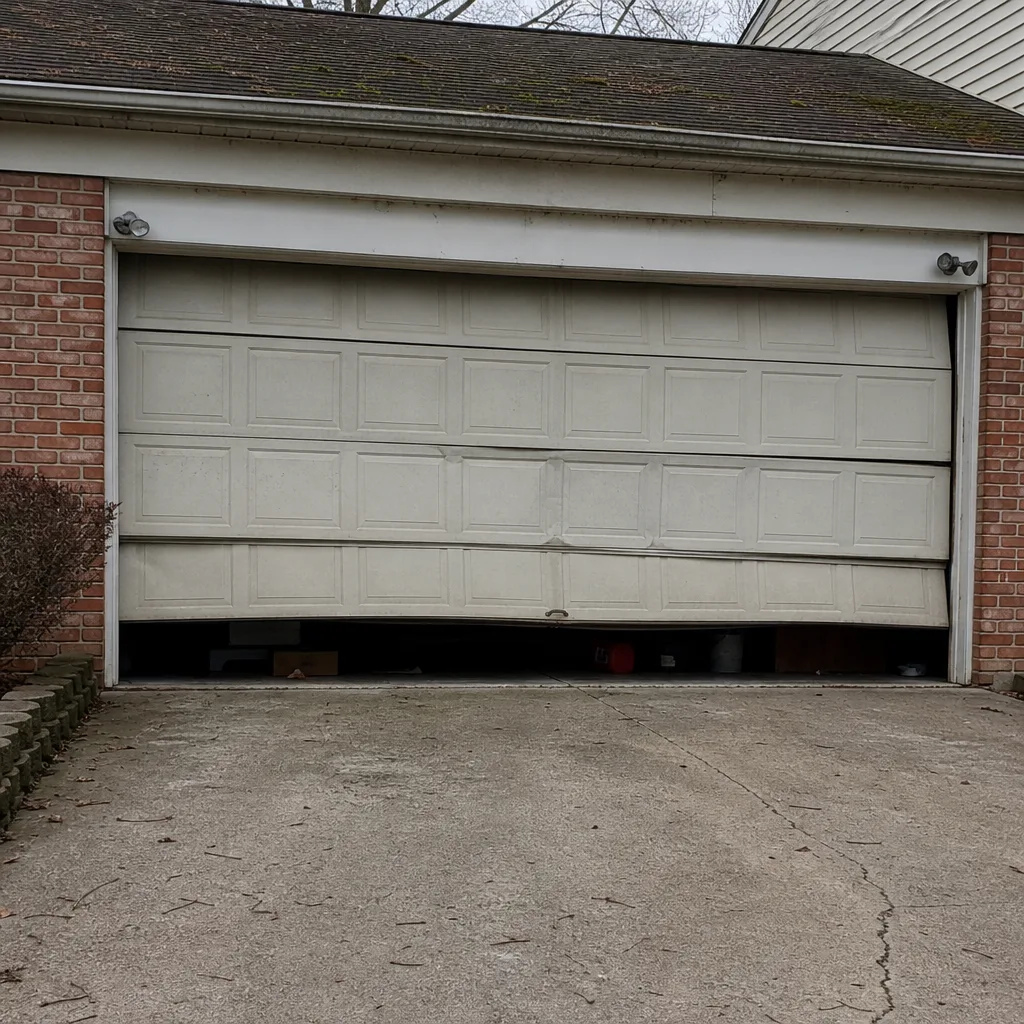 Before
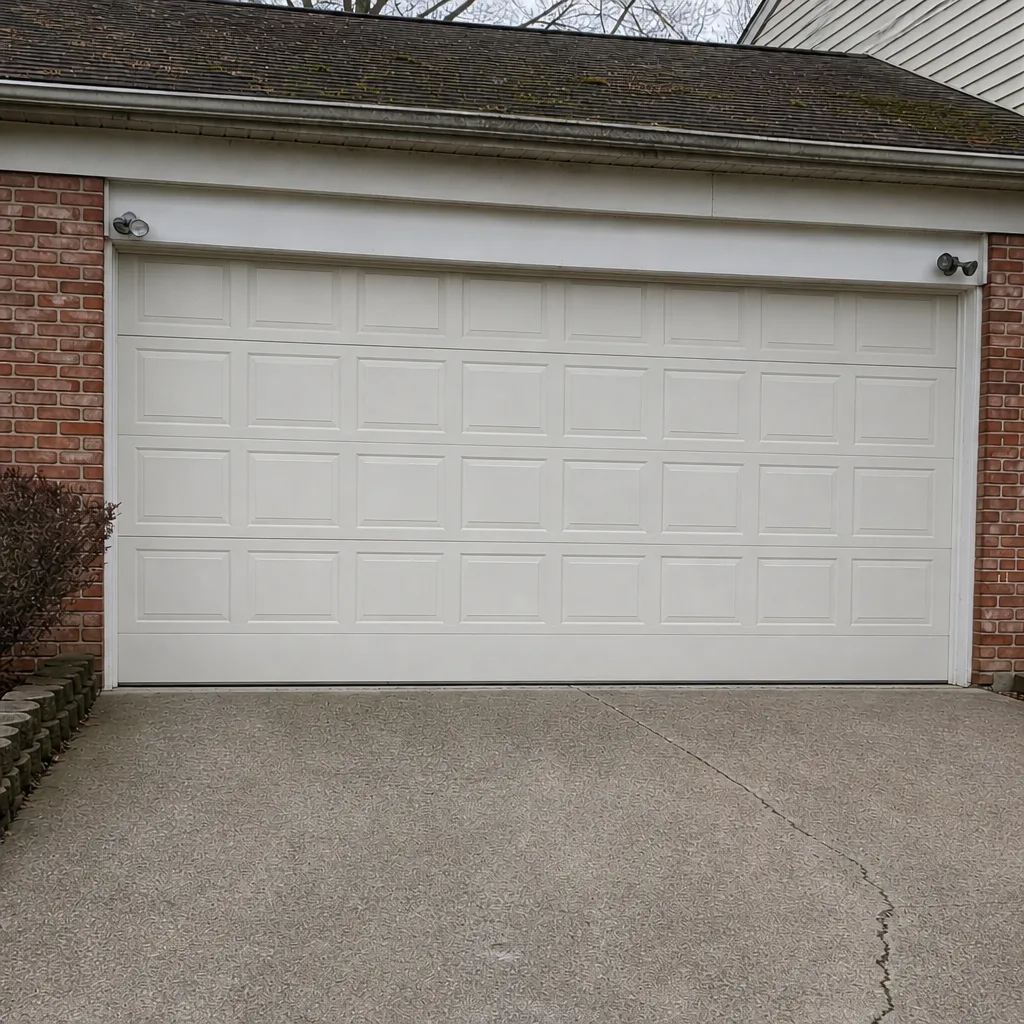 After
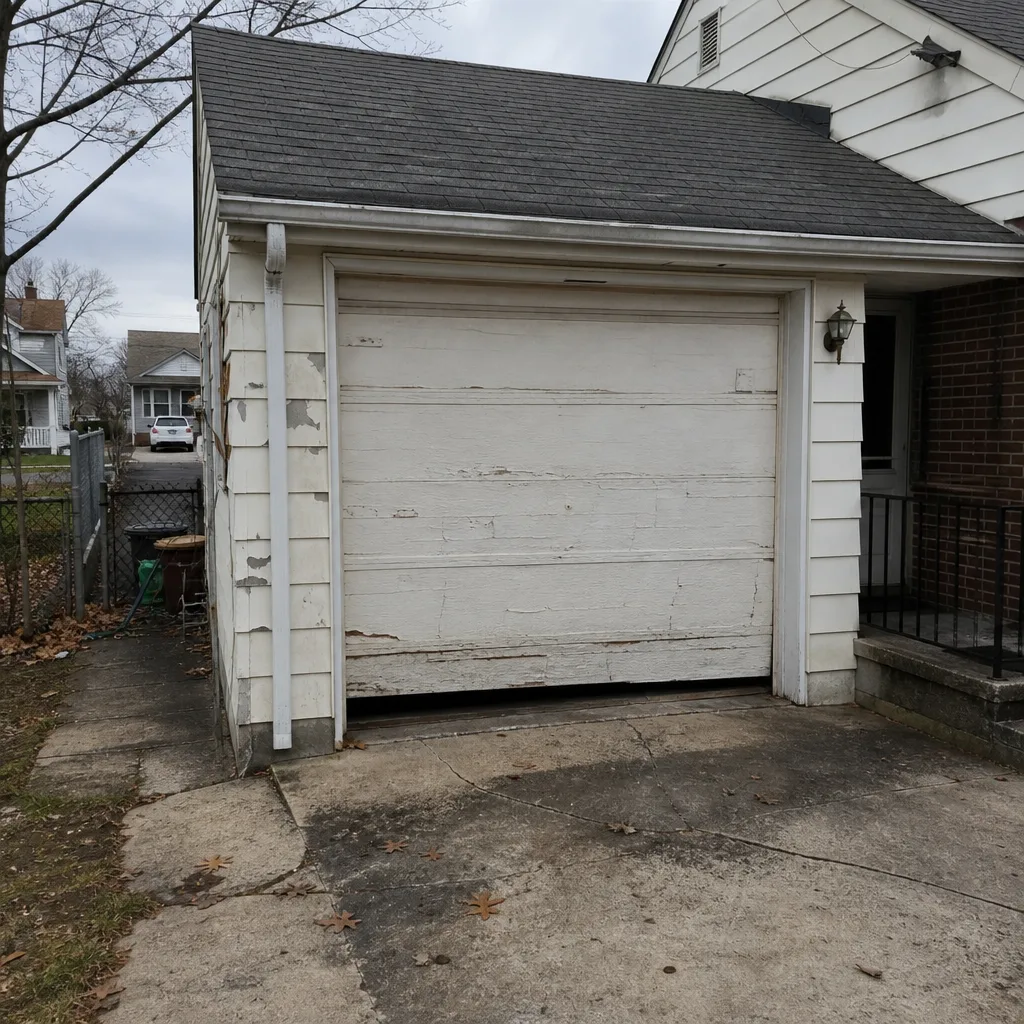 Before
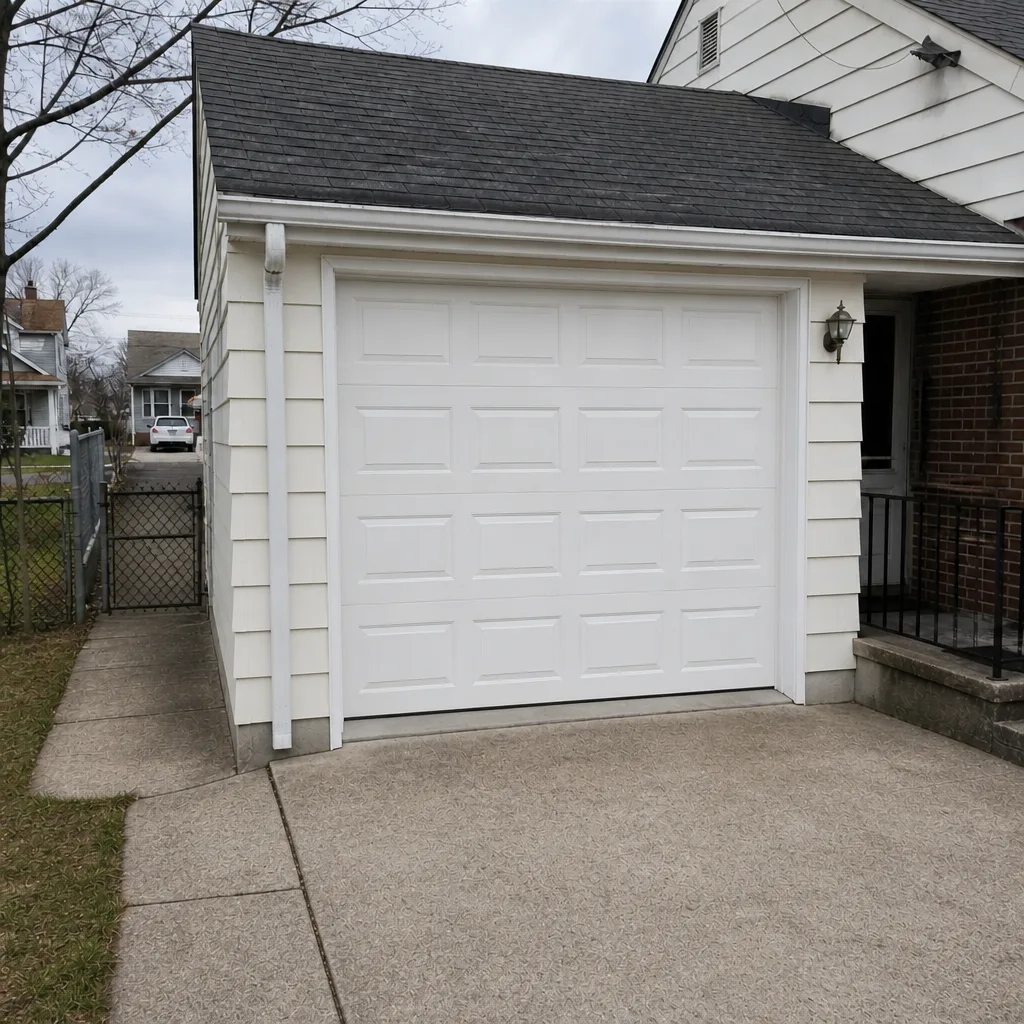 After
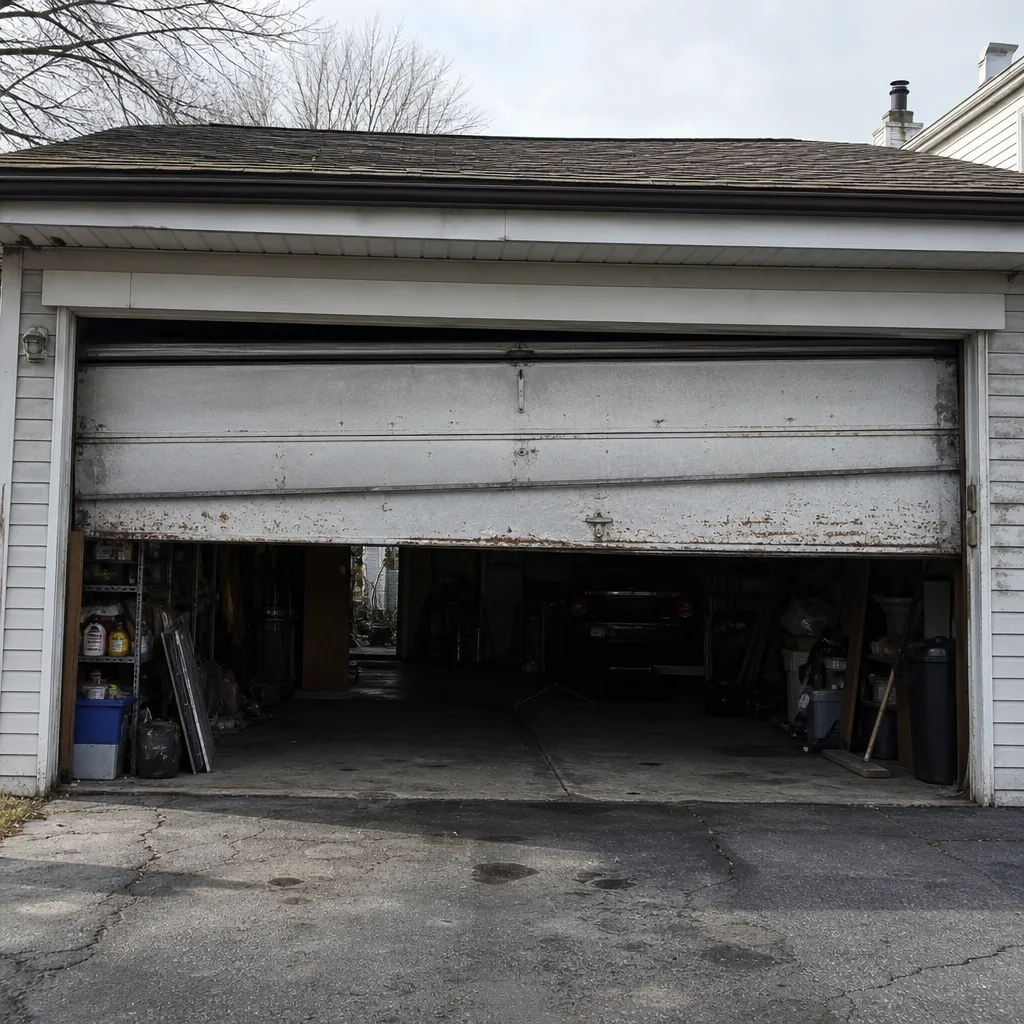 Before
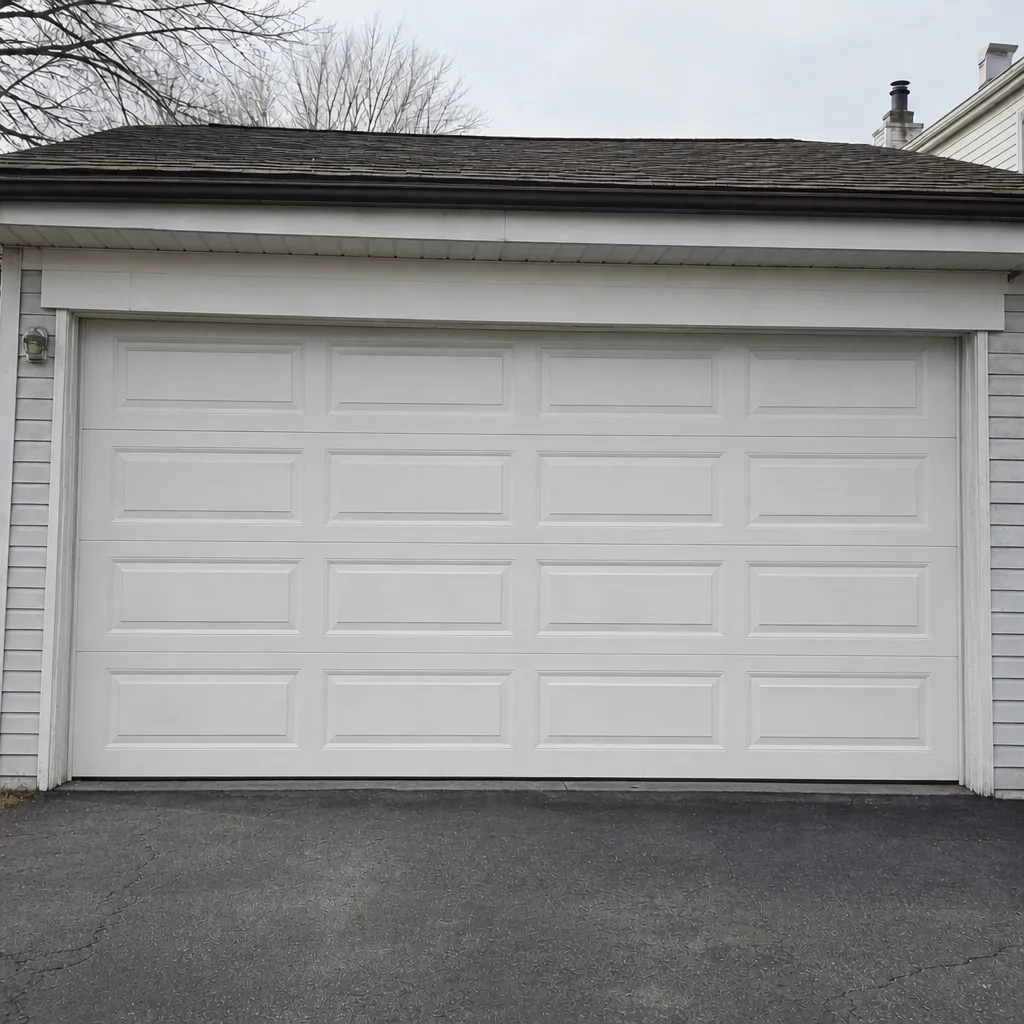 After
When to Call a Professional
Some garage door work is genuinely DIY territory. A visual check of the track, a rebalance adjustment, cleaning the photo-eye lens, replacing the remote battery with a genuine LiftMaster or Chamberlain unit; none of that needs a truck roll. But the moment a job involves the springs, the cables, the panel weight, or the electrical circuit feeding the opener, hands off. High-tension torsion springs on a garage door are one of the most dangerous components in a residential home. A spring or cable failure under tension can cause serious injury, and no guide is a substitute for a trained technician with the right tools and the right spring winding bars.
Beyond safety, a professional call is the answer in these scenarios: the header or framing around the door needs modification (which triggers permit territory); a new door needs to be specified against wind load requirements; the opener needs fresh hardwired electrical work; or the door won’t close and you’re looking at a stuck component. That’s when you need someone who can read the scope of the job, tell you what the permit paperwork requires, and hand you the as-built documentation at the end. For garage door spring repair or an opener that’s misbehaving, we can get a technician out, quote the job in writing, and put a price in front of you before anything starts. Plainfield Garage Door Repair Pros offers free estimates in Plainfield. Call (877) 492-3251. We answer 24/7. Fast dispatch from 7am to 7pm, Sunday through Friday.
Frequently Asked Questions
Usually not for a like-for-like swap with no structural or electrical changes, and yes for a new installation, a replacement touching the header or framing, or a job adding a hardwired opener circuit. The deciding factor is the scope of work, not the word “replacement.” Confirm with Plainfield’s Construction Office before ordering the door. Call (877) 492-3251 for a free estimate and we’ll walk you through what the paperwork likely requires.
Permit fees are set by Plainfield’s Construction Office and calculated on a state fee schedule tied to the scope and value of the work. Garage door permit fees are not published by the city as a flat number and we don’t quote them; the Construction Office tells you the exact figure when the application is filed. The door itself is a separate line item. Call (877) 492-3251 for an exact quote on the door work. Estimates are free.
A wind load rating describes how much pressure a door can withstand without deflecting beyond safe limits, and New Jersey’s code requires garage doors to meet wind load requirements. Pre-certified doors ship with a certificate of compliance; non-certified or custom doors typically need an engineer’s stamp. Which applies to your door depends on the product and the opening, and the subcode official makes the final call. Call (877) 492-3251 and we’ll help you sort out which door product fits before you order.
No. The price is quoted and agreed before any work starts, and the written estimate sets the final price. What can change the number is a scope change you request, like adding a new opener to a door install or deciding to replace the tracks along with the door, and that gets priced in writing before the work continues. Call (877) 492-3251 for a free estimate. We answer 24/7. Fast dispatch from 7am to 7pm, Sunday through Friday.
The local professionals we connect you with are licensed and insured as New Jersey requires, and they carry the qualifications that a garage door install or repair job demands. Our technicians have up to 15 years of experience, and every job stays inside the garage door trade. Call (877) 492-3251 for a free estimate.
We can identify what your installation likely requires, help you prepare the product documentation the city needs, and complete the installation to the approved scope. The permit application itself is filed by the homeowner or the contractor of record with Plainfield’s Construction Office, and we make sure you know exactly what’s being filed. Call (877) 492-3251 and we’ll walk through the process for your specific door.
The Bottom Line
Most Plainfield homeowners who get into trouble over garage door permits aren’t trying to avoid the rules. They just didn’t know a door replacement could trigger one. The short version: a new installation always needs a permit; a replacement needs one when the header, framing, or opening size changes; a new hardwired opener circuit needs one too. Plainfield’s Construction Office processes these through the standard UCC route, and the fastest path is a complete application with the door’s wind load documentation attached. Run HOA design review at the same time as the permit, don’t sequence them. Collect the as-built file when the job wraps. And when the door, the springs, or the opener need work that raises safety or permit questions, that’s the moment to call a specialist, not the moment to keep reading guides. The small cost of getting the process right the first time is nothing compared to the closing delay it prevents.
Ready to move forward on a repair, a spring replacement, an opener fix, or a new door in Plainfield? Call (877) 492-3251 for a free estimate. We answer 24/7. Fast dispatch from 7am to 7pm, Sunday through Friday. Garage doors are all we do, and our technicians have up to 15 years of experience working on the brands already in your garage – LiftMaster, Chamberlain, Genie, Raynor, Clopay, Amarr, Wayne Dalton, and Craftsman. When you call, the price is quoted and agreed before any work starts.
Written by the team at Plainfield Garage Door Repair Pros.