
Last updated November 23, 2026
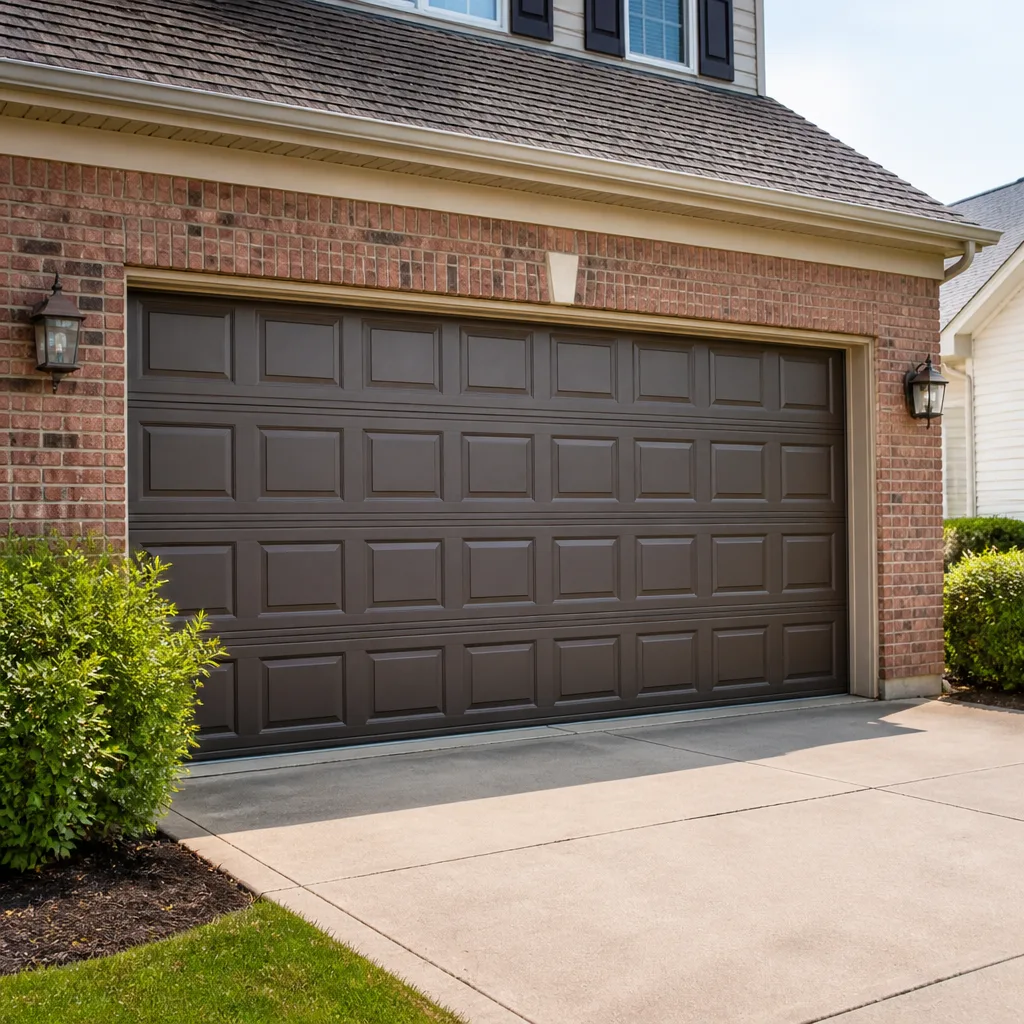 Raised-panel steel
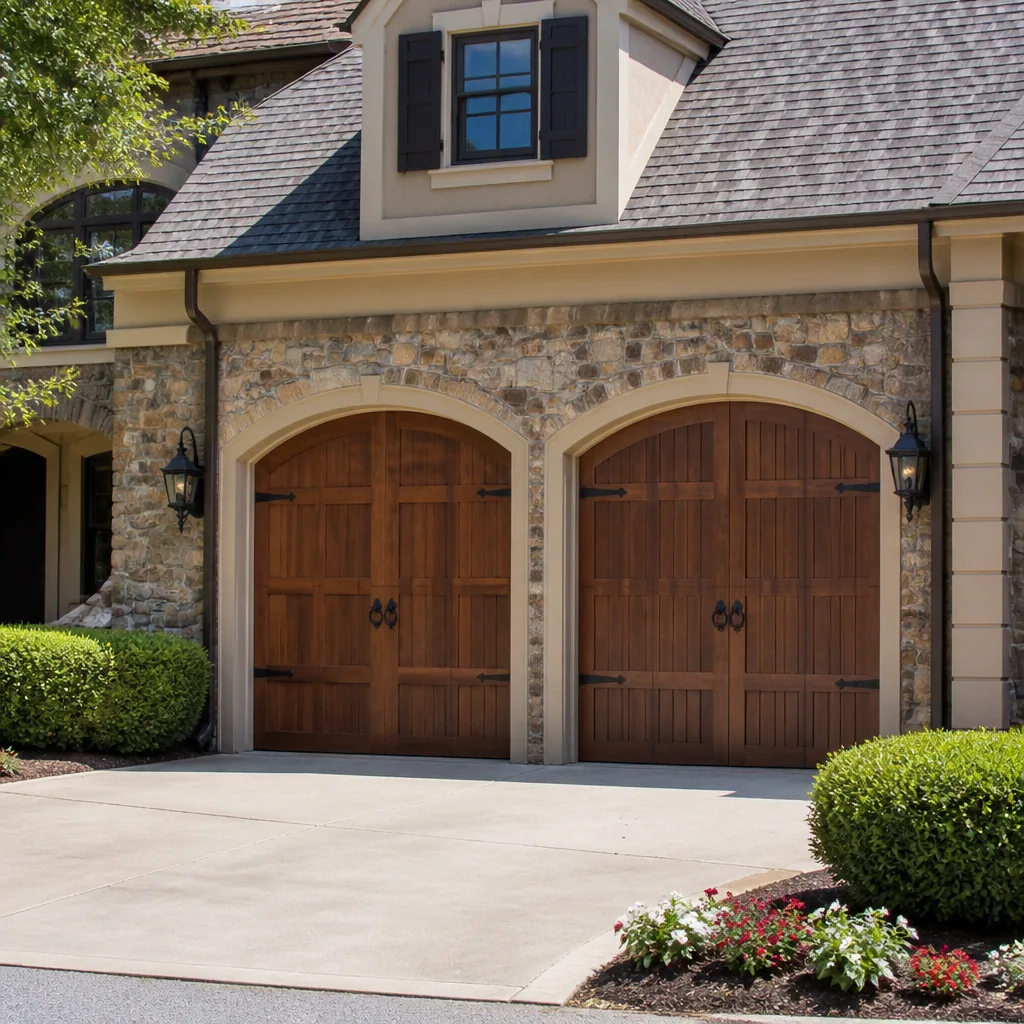 Carriage house
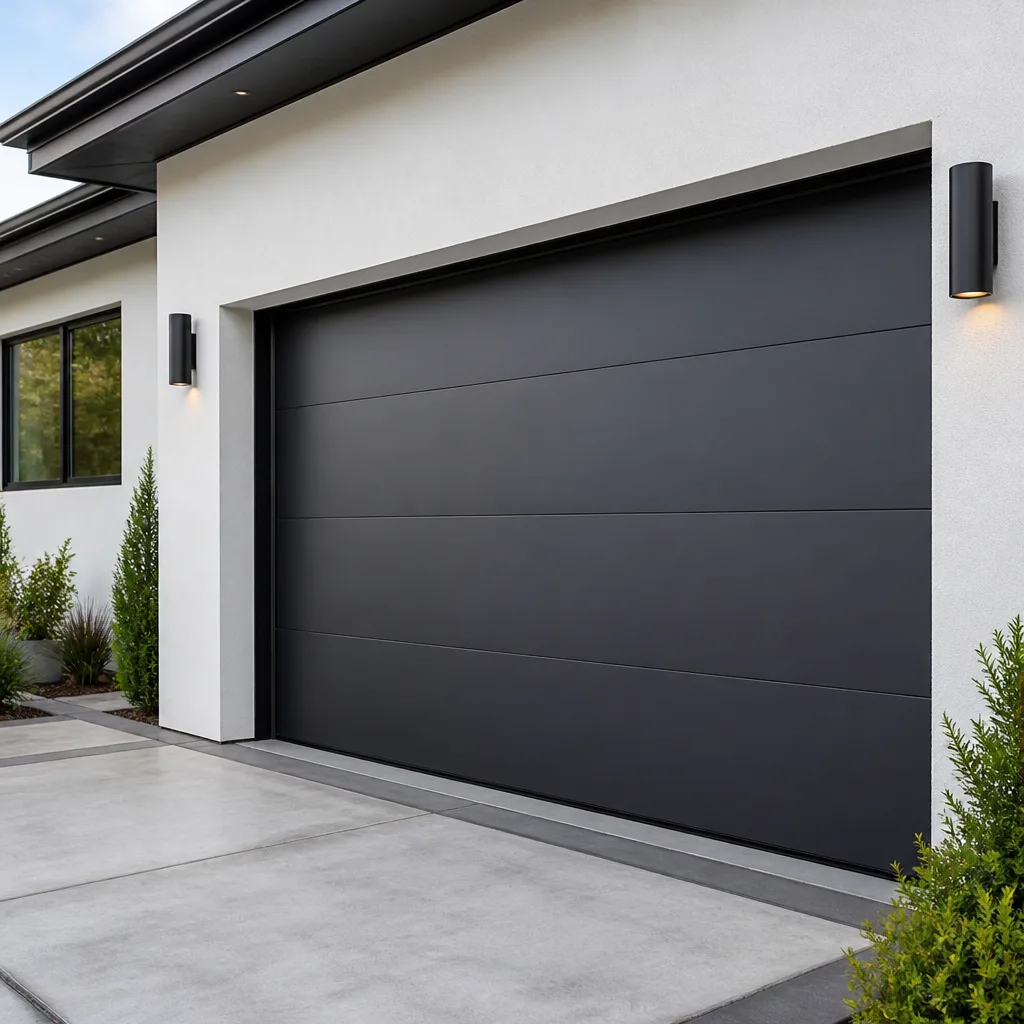 Modern flush
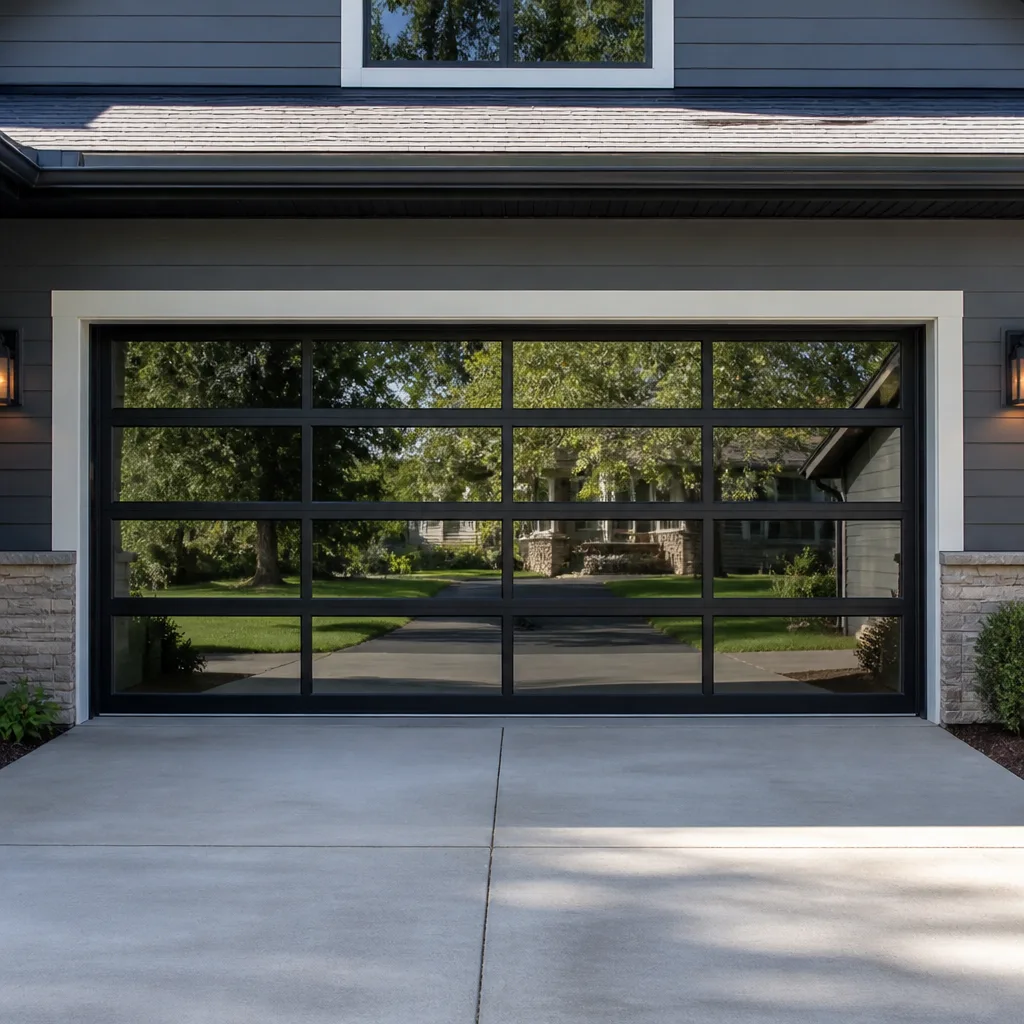 Full-view glass
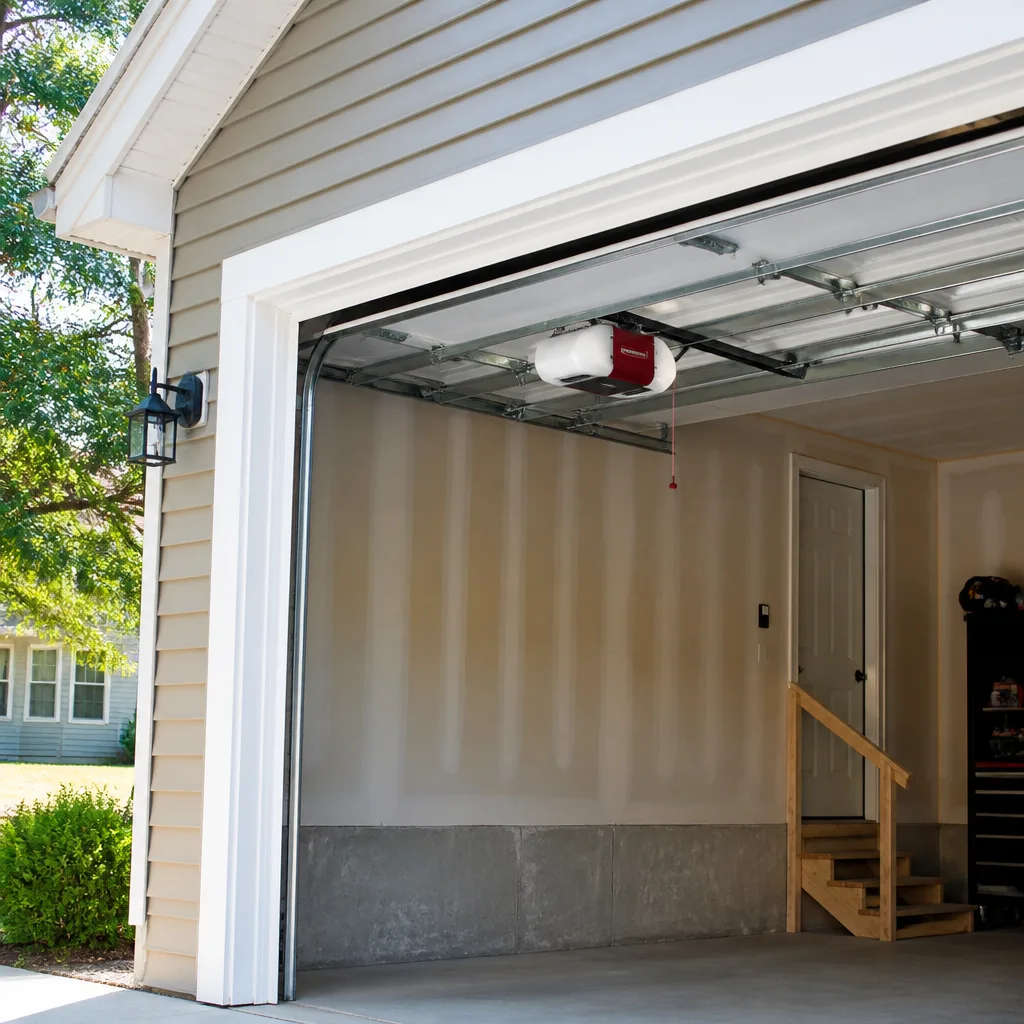 LiftMaster openers
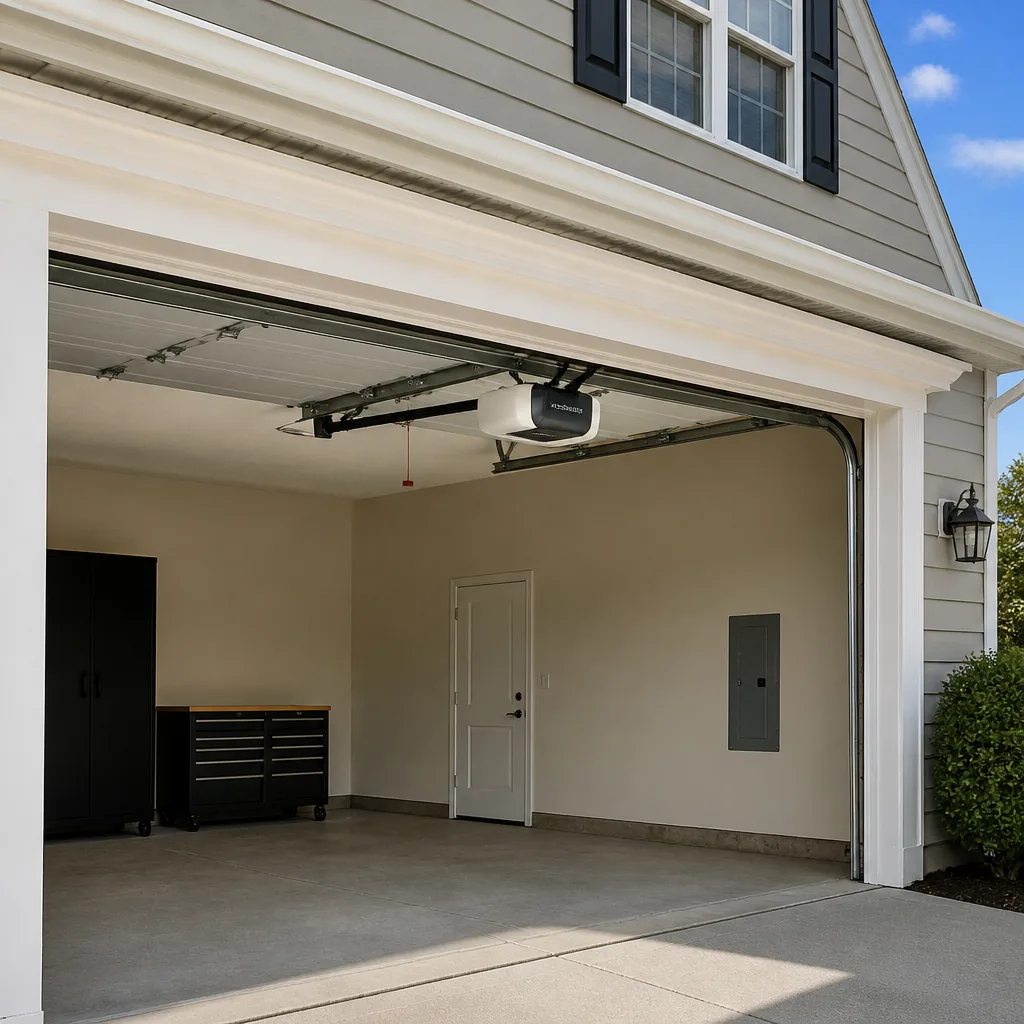 Chamberlain openers
Full 25-point door and opener safety check with every visit - springs, cables, rollers, tracks, and your LiftMaster or Chamberlain opener included
You get a price before we start. It does not change when the pro arrives.
Get your free estimateGarage Door Warning Signs: A Plainfield Homeowner’s Reference Guide
Garage doors rarely fail without warning. What they do is warn you slowly, then fail suddenly, and the gap between those two moments is where most Plainfield homeowners get caught. The noise you’ve been meaning to look at, the slightly crooked close you’ve stopped noticing, the vibration that wasn’t there last year: these aren’t the background hum of an aging door. They’re a countdown. In this guide we’ll teach you to sort every warning sign into one of three severity tiers, name the three sounds that point to three different repairs, walk you through a balance test that exposes spring wear in about half a minute, and show you which panel cracks are cosmetic and which are structural. Plainfield sits in a stretch of New Jersey where summer humidity and hard winter cold push a steel door through wide temperature swings all year, and that matters for exactly one part of this list: the panels.
Quick Answer
Garage door warning signs that need immediate attention are a snapped spring (a loud bang followed by a door that won’t lift), a visibly broken or frayed cable, a door that comes down unevenly or slams, and any grinding that stops the door mid-travel. Signs you can monitor include a slightly louder hum, one loose hinge, or a door that sits a little unevenly but still closes fully. Anything that puts the door in motion under load is in the red tier, and that’s when you stop using it and call a professional at (877) 492-3251.
Styles & brands we work with
- Raised-panel steel
- Carriage house
- Modern flush
- Full-view glass
- LiftMaster openers
- Chamberlain openers
Table of Contents
- The Three-Tier Severity System: Yellow, Orange, Red
- The 30-Second Door Balance Test
- Reading the Three Garage Door Sounds
- Spring Warning Signs: The Loudest Warning in Your Garage
- Cable Fraying: The Sign You Have to Look For
- Panel Cracks: Cosmetic or Structural?
- Opener Strain: When the Motor Is Doing Too Much
- What Plainfield’s Weather Does to a Garage Door
The Three-Tier Severity System: Yellow, Orange, Red
Every warning sign in this guide gets sorted into one of three tiers. The tiers exist because homeowners have two failure modes: they ignore a small sign until it becomes an emergency, or they panic over something that isn’t urgent. Both waste money and both are avoidable once you know where a sign sits on the scale.
Yellow: Monitor It
A yellow sign means something is drifting out of spec but the door still operates the way it should. You note it, watch it, and check again in a few weeks. A slightly louder hum, one hinge that’s a touch loose, a remote that occasionally needs a second press, a door that sits a hair unevenly but still closes flush to the floor. None of these require a repair visit today, but all of them should be on a list you glance at. Yellow signs that stick around for a season usually turn orange.
Orange: Schedule Repair Within 30 Days
An orange sign means the door is still working but a component is wearing out in a way that will get worse and cost more if you wait. A door that closes unevenly, a motor that strains harder on the way up than it used to, a wheel that scrapes on one side of the track, a remote or keypad that only works at close range. Orange is where we see the most plain money wasted: a worn roller replaced in the orange tier costs a small amount on an estimate, while the same door run for another year can bend the track and turn a roller job into a track and panel conversation.
Red: Stop Using the Door
Red means stop. Don’t open it, don’t close it, don’t stand under it, don’t yank the manual release and try to muscle it up. A snapped spring, a broken or visibly frayed cable, a door that drops or slams, a door off its track, a panel separated from the stile, or anything the door does under load that didn’t happen before. This is when you call and get a trained technician out.
The 30-Second Door Balance Test
The balance test tells you in about half a minute whether your springs are carrying the door’s weight the way they’re supposed to. Springs are what balance a garage door: they hold roughly the full weight of the door so your opener only has to push a balanced load, not lift dead weight. When springs wear, the door gets heavier to move, and the test catches that before the springs snap. It has one hard rule: do the test with the door already open and the opener disconnected by its manual release cord, and do not stand under the door or put your body in its path.
- Fully open the door, then pull the manual release cord so the door is on springs only and disconnected from the opener.
- Lift the door by hand about halfway down, then let go and step back. A door in balance holds roughly where you left it.
- A door that drops on its own means the springs are losing tension. A door that wants to rise on its own means they’re worn unevenly.
- Try the same thing about a foot above the floor. If the door crashes down or springs shut from that height, the springs aren’t doing their job and the balance is failing.
- Pull the door back to fully open by hand and reconnect the release. If moving the door by hand took real effort in either direction, springs are the reason.
The measurement that matters: on a properly balanced door you should be able to move it by hand with light, steady pressure in both directions. If the door drops or flies up faster than you can keep up with it, or if you have to lean your body weight into it to move it, the balance is failing and the springs are worn. That’s an orange sign on its own, and it goes red the moment a spring snaps. Our spring repair specialists treat a door that fails this test as due for service, because a spring under full tension holds enough stored energy to cause serious injury when it lets go, and we don’t recommend running a door through that failure.
Reading the Three Garage Door Sounds
Garage doors make three distinct sounds when something is wrong, and each sound points at a different repair. Homeowners tend to lump all of them into “the door is loud,” which is how a roller problem ends up mismatched with a motor repair. The trick is to listen with the door running on the opener and note whether the sound comes from the motor housing, the sides of the door, or the track itself.
The Grinding Motor
If the sound is a low grind or groan coming from the opener itself, that’s an opener issue. The motor is straining against a load it shouldn’t have to carry, which is usually either a door whose springs are no longer balancing it, or an opener that’s been pushed past its duty cycle. Grinding from the motor on a door that also fails the balance test points to the springs first. Grinding from the motor on a door that balances fine points at the opener itself, and that’s a job for our garage door opener repair service rather than a spring call. Either way, grinding that stops the door mid-travel is red tier.
The Whistling Cable
A high, thin whistle or a sharp ping as the door moves is usually cable noise. Cables don’t whistle for fun: the whistle is the sound of a cable rubbing where it shouldn’t, either because it’s fraying, because a drum has a burr, or because the cable is no longer sitting in its groove the way it should. Cable noise is always worth stopping for. Cables hold the low end of the door’s tension from the bottom corner up to the drum, and a fraying cable is one broken strand away from a door that drops.
The Scraping Roller
A scraping or grinding along the sides of the door as it moves is roller noise. Rollers ride in the track and when they seize or wear flat, the track gets scraped instead of the roller rolling. This is rarely dangerous on its own, but it’s the most common way a track gets bent, and a bent track is a bigger repair than a set of rollers. Scraping is orange tier: schedule it, don’t ignore it.
Spring Warning Signs: The Loudest Warning in Your Garage
Torsion springs sit on the bar above the door and extension springs run alongside the tracks; both do the same job of carrying the door’s weight. Springs are under full tension every hour of the day, whether the door is moving or not, and a winding bar under a wound spring stores a serious amount of energy. That’s why every spring warning sign goes past orange into red if the spring is showing it: the failure mode is a loud snap and a door that comes down hard, and the cause of injury in a spring failure is usually a homeowner trying to handle the door after the snap. We handle spring work as its own named service because it’s the most safety-critical repair in the trade.
Spring warning signs to watch for:
- A visible gap in a torsion spring. A clean split through the coil means the spring has snapped. Red tier, stop using the door.
- A stretched, sagging extension spring. Extension springs lose tension and stretch before they let go. Orange if it’s still running, red if the door is banging.
- A loud snap or bang from the garage with no obvious cause, followed by a door that won’t open by opener. That’s a snapped spring. Red tier.
- A door that gets heavier to lift by hand every few weeks. Orange, but the balance test tells you how close you are.
- A gap of daylight under one side of a closed door. One spring has failed or stretched and the other is carrying the load. Red tier if the door also drops.
Springs are not a DIY job. A torsion spring under tension can release enough stored energy to break a wrist or worse, and no homeowner should be winding a spring bar without the tools and the training. The right move on any of these signs is to leave the door in place and call.
Cable Fraying: The Sign You Have to Look For
Cables are the one major warning sign most homeowners never see, because they don’t show it on the side you look at. A lifting cable runs from the bottom corner bracket of the door up to a drum above the track. The outside face of the cable faces you when you look at the door. The strands fray on the inside face, the side that rubs against the drum and the bracket, so the visual damage is hidden from the angle you see every day. To check, look along the cable with your eye level with it, not above or below it, and look for the tell-tale curl of a broken strand.
What cable fraying looks like when you catch it:
- One or two broken strands poking out of an otherwise smooth cable, usually near the bottom bracket or the drum. This is the earliest visible sign and it’s already orange tier.
- A cable that’s started to birdcage, meaning the strands separate and the cable looks like a small spring wound around a core. Orange tier, sometimes red.
- A cable that has jumped its drum groove. Red tier, stop using the door.
- A cable that’s gone slack on one side of a door. That side is no longer carrying load, and the door is one movement away from going crooked. Red tier.
If you find any of these, don’t test the door to see if it holds. A fraying cable has already lost strength, and the door’s full weight is riding on what’s left. Stop using it and call (877) 492-3251. We answer 24/7, and fast dispatch from 7am to 7pm, Sunday through Friday, means a technician can be on the way to look at it.
Panel Cracks: Cosmetic or Structural?
Panel cracks are where Plainfield’s climate does the most work. Steel panels expand and contract with temperature, and this part of New Jersey swings hard between humid summer heat and hard winter cold. That daily and seasonal movement puts stress on every seam, hinge point, and panel edge on the door, and over years it shows up as cracks. The question is whether a given crack is cosmetic or whether it’s telling you the panel is losing structural integrity. A cosmetic crack leaves the door straight, seals, and closes flush. A structural crack means the panel has started to separate from the door and the door is no longer one rigid piece.
Here’s the pattern we look for: a crack that runs through the stile, the vertical frame of the panel, and continues into the panel face. Cracks near the hinges where the panel meets the next panel. Any crack that opens a gap you can see daylight or feel air through when the door is closed. And any crack that’s grown longer since you first noticed it. Those are structural signs, and a panel that’s separated at the stile is a door waiting to buckle the next time it operates under load. Cracks in the middle of a panel face that don’t reach the stile, don’t grow, and close with the door are cosmetic and can be watched.
The reason this matters in Plainfield specifically: the stress pattern from temperature movement shows up at the edges, at the stiles and hinges, not usually in the middle of a panel. A crack that sits at a stress point is telling you the door is flexing where it shouldn’t. If a panel crack is opening or the door is crooked, stop using it and call. If it’s a hairline in a panel face and the door is straight, put it on the yellow list and check it seasonally. We work on Clopay and Wayne Dalton panels regularly, and matching a new panel to an existing door means knowing how that brand’s panel profiles and tolerances fit.
Opener Strain: When the Motor Is Doing Too Much
An opener’s job is to move a balanced door, not to lift the door itself. When the springs carry the weight, the motor only has to push a balanced load up and guide it down. When a spring is worn or a cable is binding, the opener picks up the slack, and that’s where most opener strain shows up: the motor struggles, the door moves unevenly under it, and eventually the opener gives up mid-travel. Homeowners see the opener as the problem and call for a new one, when the real issue is a door that’s suddenly three times heavier than the motor was sized for.
The signs of opener strain that point back at the door:
- The door reverses before it reaches the top. The opener’s travel limits or force setting is being tripped by a load it can’t carry.
- The opener motor runs but the door barely moves. That’s force, not speed. Springs or cables first.
- The remote stops working from close range. Sometimes it’s a battery or a remote issue, sometimes the motor’s overloaded and the logic is struggling. Kick it to a technician to sort out.
- The door opens fine but closes hard or slams. That’s a balance and spring issue, not an opener age issue.
If the door passes the balance test and the opener is still straining, you’re looking at a genuine opener repair. We work the brand already in your garage: LiftMaster and Chamberlain are the two we see most in Plainfield, and Amarr and Craftsman doors are common too. Knowing the tolerances of a specific brand’s travel limits and force settings means we can tell the difference between a worn component and a setting that drifted.
What Plainfield’s Weather Does to a Garage Door
Plainfield’s location gives a garage door a fairly wide set of seasonal conditions to survive. Hot, humid summers, cold winters with real freezes, and wide swings between the two. A garage door on a carport-style opening or a fully detached garage feels those swings the most, because there’s less thermal mass grading out the temperature. The visible sign is on the metal: steel panels stress-cycling at the seams, paint at the hinge points, and cracks showing up at the edges. The hidden sign is in the hardware: springs, cables, and the balance of the door change with temperature, and a door that runs fine in July can feel stiff in January because the springs and rollers are working in cold conditions.
We see this as a rhythm, not a surprise. Springtime is when doors do their first big move after winter and signs surface. Late fall is when heating comes back on and the door’s been through a summer of temperature cycling. The practical takeaway for a Plainfield homeowner: check the balance test and walk the door edges twice a year, in spring and fall, and note anything that changed from the last check. Neighborhoods like Cedarbrook and the older homes along Park Avenue tend to have doors that lived through a lot of temperature cycling, and that’s where panel-edge cracks and worn springs show up first. The town also has plenty of newer construction where the door is on its first set of springs, and the balance test still catches a worn set before it fails.
We are a garage door specialist, not a generalist, so a lot of what we see at a Plainfield door is a note we’ve noted at other door systems that have run through the same climate. Every job we do, from opener repair to a full replacement, is covered by free estimates, upfront pricing, and a written price agreed before any work starts.
Common Mistakes to Avoid
- Treating a snap or bang as “just a door noise.” A single loud bang followed by a door that won’t open is a snapped spring. Stop using the door and don’t try to open it by hand or with the opener.
- Running the door after a cable breaks. A broken cable means one side of the door has lost its lift. Running the opener drags the door crooked and can bend a track or crack a panel, so the repair gets bigger every second it runs.
- Calling for a new opener when the door’s balance failed. A door that’s been opened and closed with worn springs will exhaust an opener. If the door fails the balance test, fix the springs first. A new motor on a badly balanced door is money thrown at the wrong part.
- Assuming every panel crack is the same. A crack through the stile or at a hinge point is structural and needs a panel replacement. A hairline in the face that doesn’t grow is cosmetic. Treating both as “just a crack” or treating both as a new door is a mistake either way.
- Skipping the inside face of the cable. Most cable checks are done with a quick glance from the front. The fraying shows on the face you can’t see unless you get eye level with the cable along its run.
- Thinking the door can be “worked around” until spring. The balance test changes season to season, and a door that failed in October can snap a spring by December. Orange-tier signs don’t age into yellow ones.
- Trying spring work yourself. A torsion spring under tension is one of the most dangerous things in your house. Spring repair needs a trained technician, proper bars, and the right tension. This isn’t a homeowner job.
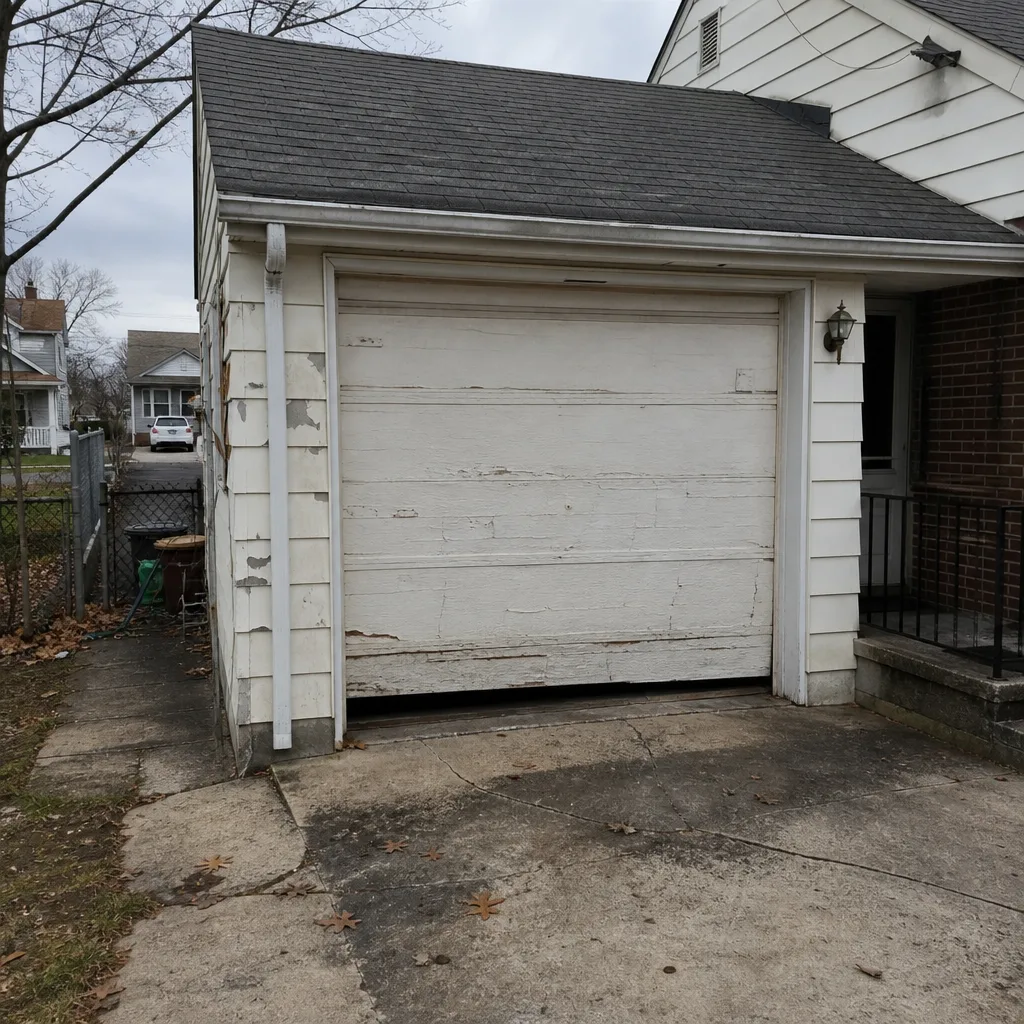
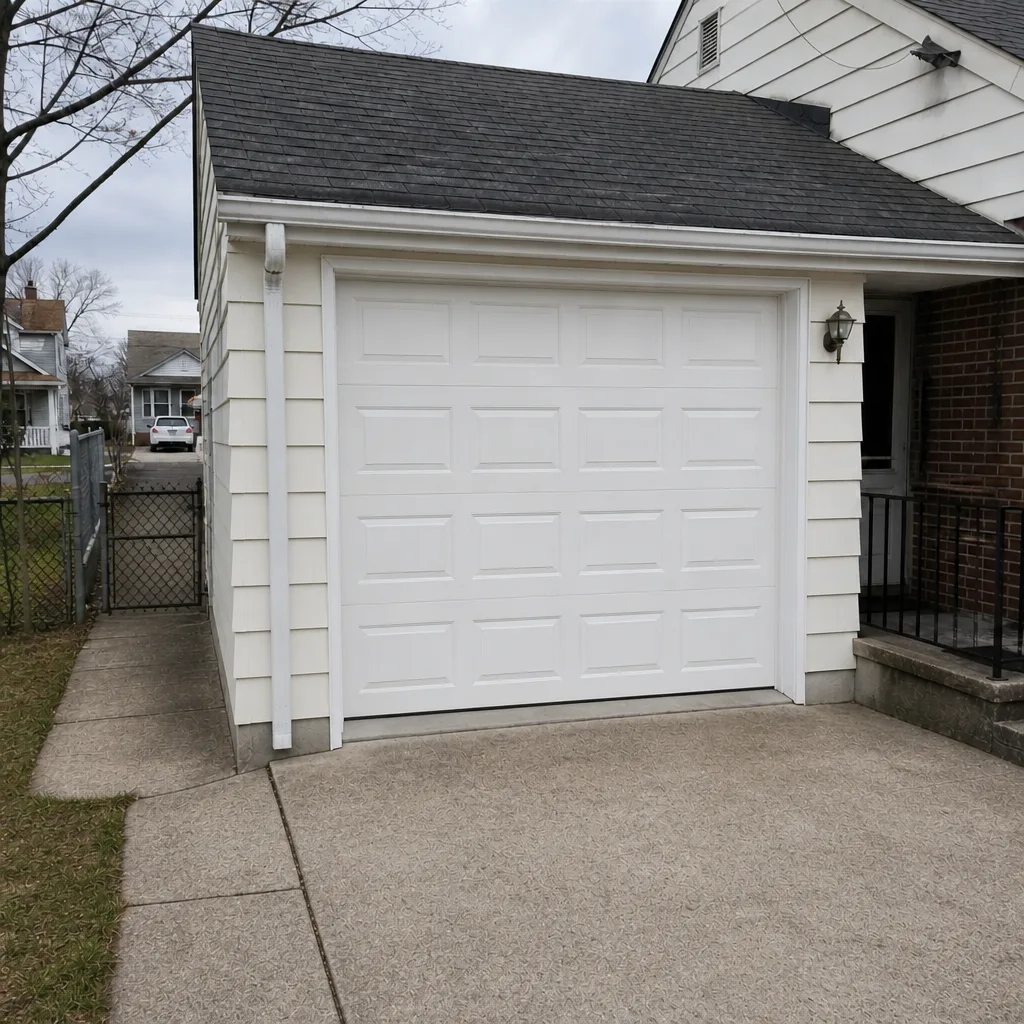
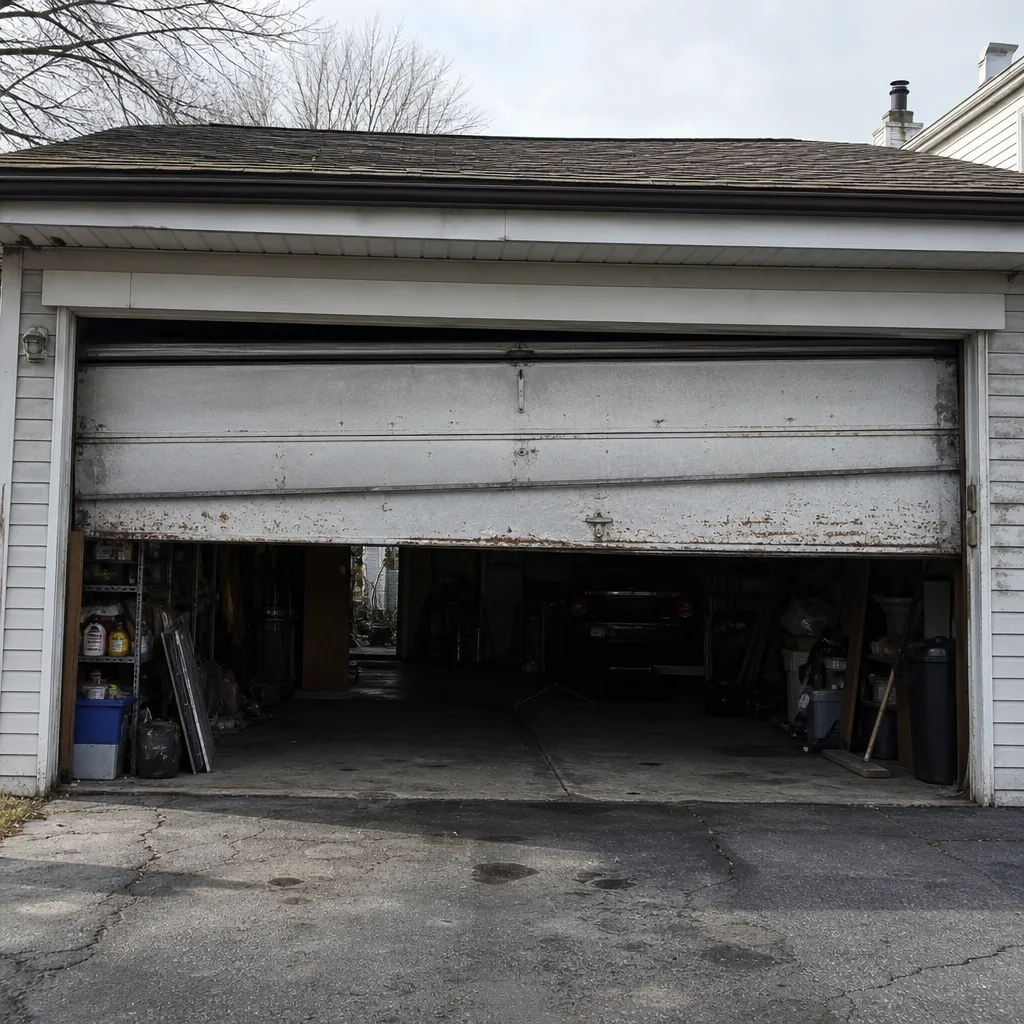
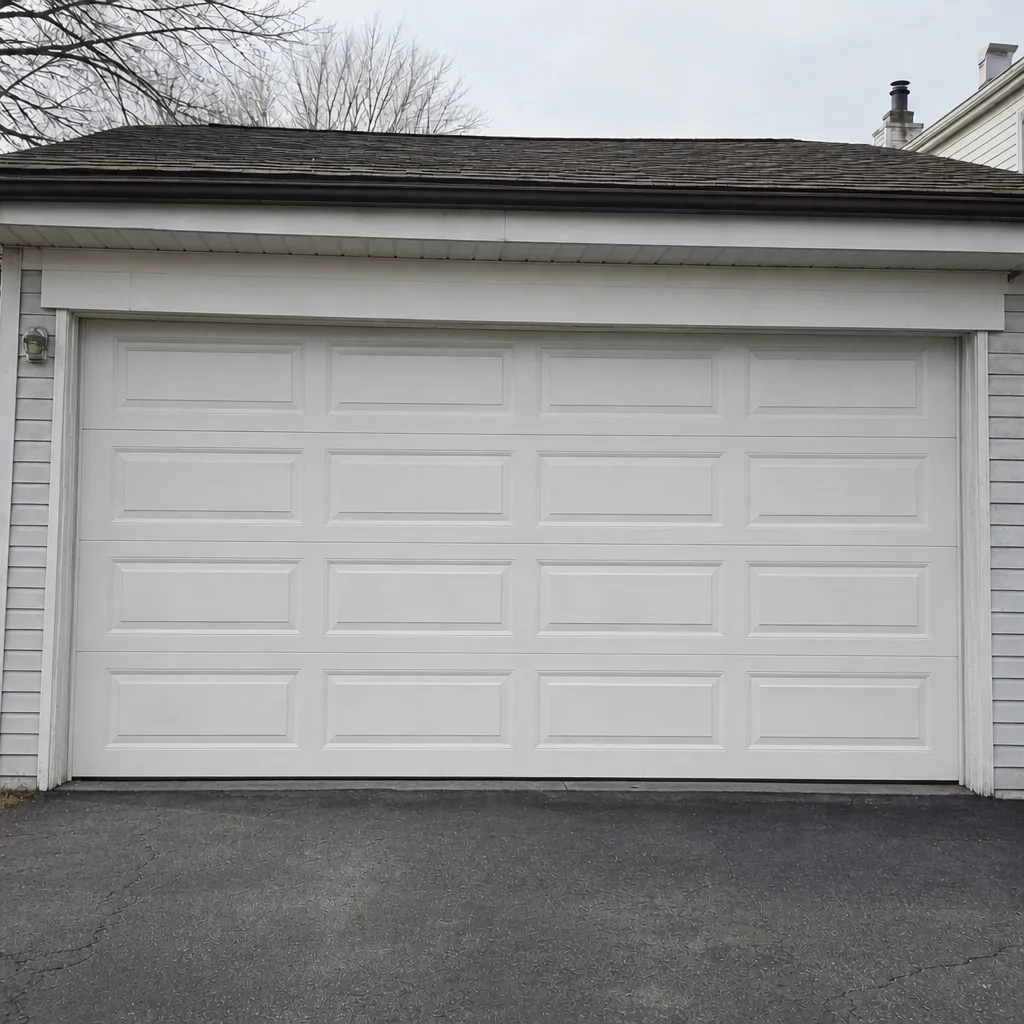
See the difference
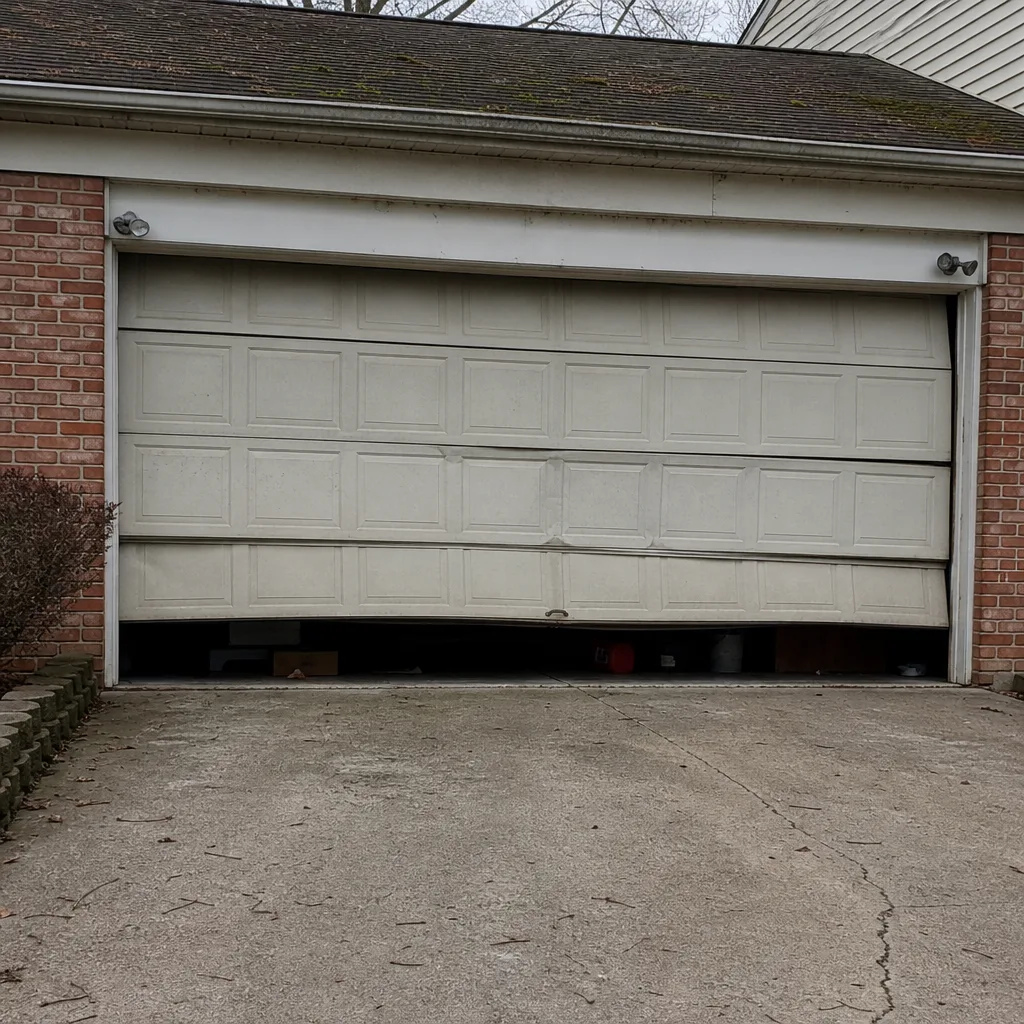 Before
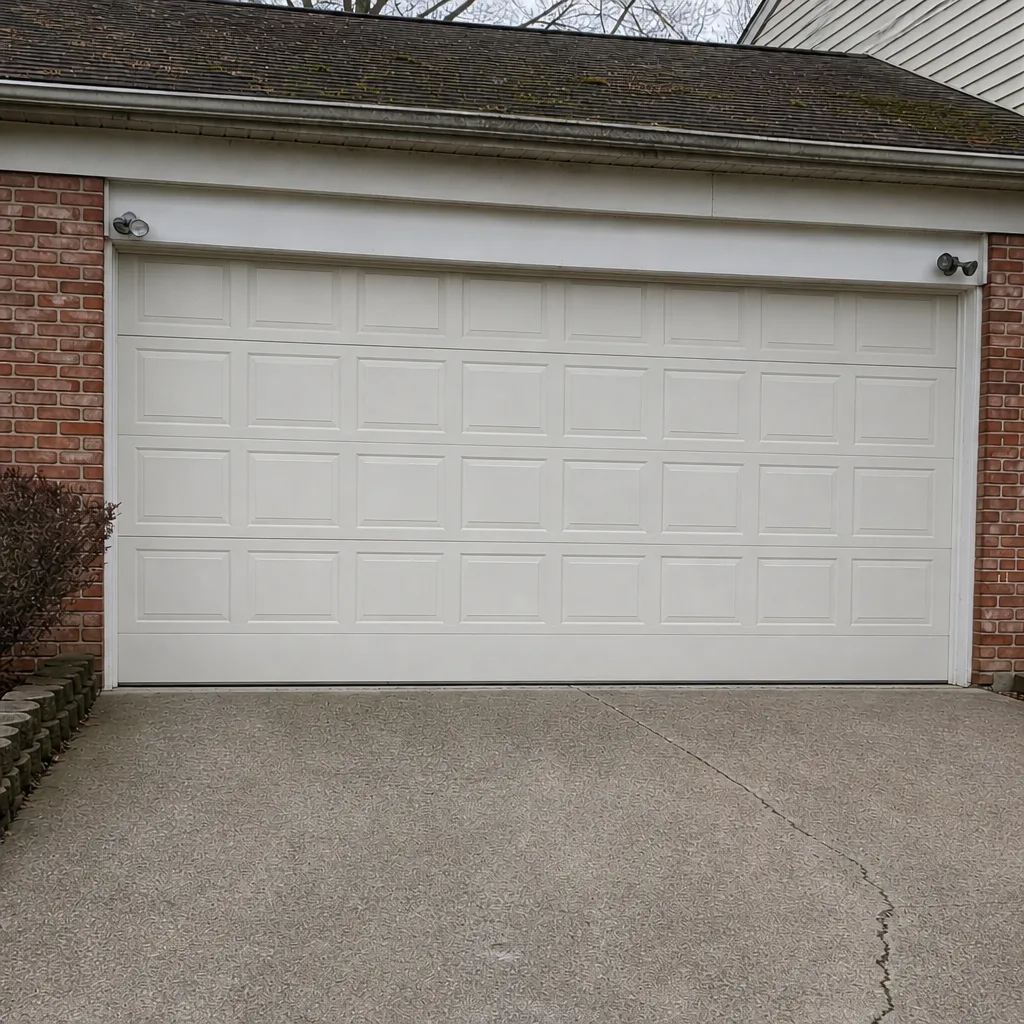 After
 Before
 After
 Before
 After
When to Call a Professional
Call a professional the moment a warning sign goes red: a snapped spring, a broken or frayed cable, a door that slams or drops, a door off its track, a panel separated at the stile, or any grinding that stops the door mid-travel. These aren’t signs to sleep on. Our technicians have up to 15 years of experience, and we handle spring repair as a core service because it’s the most safety-critical job on the door. We work the brand already in your garage, from LiftMaster and Chamberlain openers to Clopay, Amarr, Wayne Dalton, and Raynor doors, so you’re not paying a generalist to learn your system. Call (877) 492-3251. We answer 24/7, and with fast dispatch from 7am to 7pm, Sunday through Friday, we can get a technician out. Plainfield Garage Door Repair Pros offers free estimates in Plainfield, and a call is the fastest way to sort a yellow sign from a red one.
Frequently Asked Questions
The first sign is usually that the door gets noticeably heavier to lift by hand and fails the balance test before you ever hear a snap. A door that won’t hold halfway up, drops from a foot off the floor, or needs real effort to move is a door whose springs are failing. Call (877) 492-3251 for an exact look; estimates are free.
Grinding from the opener housing is an opener issue, while a high whistle or ping along the sides is a cable, and scraping is a roller. The balance test sorts the springs from everything else: if the door fails it, the springs are the cause. Call (877) 492-3251 and we’ll tell you which repair you’re looking at; estimates are free.
No, a frayed or visibly birdcaged cable means the door is no longer fully supported and you should stop using it. A cable that has lost strands can fail under the weight of the door at any moment. Call (877) 492-3251. We answer 24/7, with fast dispatch from 7am to 7pm, Sunday through Friday.
It depends on where the crack is. A crack through the stile or at a hinge point means the panel is separating and the door is losing structural strength, which is a stop-using-it situation. A hairline in the panel face that doesn’t grow is cosmetic and can be monitored seasonally. Call (877) 492-3251 for a free estimate and we’ll tell you which one you have.
Repair pricing in Plainfield depends on the part, so we set the price per job by a written estimate rather than quoting a number before we see the door. The estimate is free, and the written price is agreed before any work starts. Call (877) 492-3251 for an exact quote; estimates are free.
No. We quote from what the door needs and put the price in writing before work starts, and the written estimate sets the final price. If we find something different during the job, you’ll hear about it before any extra work begins. Call (877) 492-3251 to get your estimate; estimates are free.
We take same-day spring calls whenever dispatch capacity allows, and fast dispatch from 7am to 7pm, Sunday through Friday, gets a technician out on the same day in many cases. Call (877) 492-3251 and we’ll book the next opening; estimates are free.
The Bottom Line
Every warning sign on your garage door falls into one of three tiers: yellow to monitor, orange to schedule within 30 days, and red to stop using the door immediately. The balance test sorts the springs in half a minute, and the sound tells you which part is in trouble. Check the inside face of the cable because that’s where it frays first, watch panel cracks at the stiles and hinges, and remember that Plainfield’s temperature swings drive most of the stress a steel door sees. If a sign is red, don’t run the door. Call (877) 492-3251. We answer 24/7, and we work the brand already in your garage.
Written by the team at Plainfield Garage Door Repair Pros.