
Last updated November 23, 2026
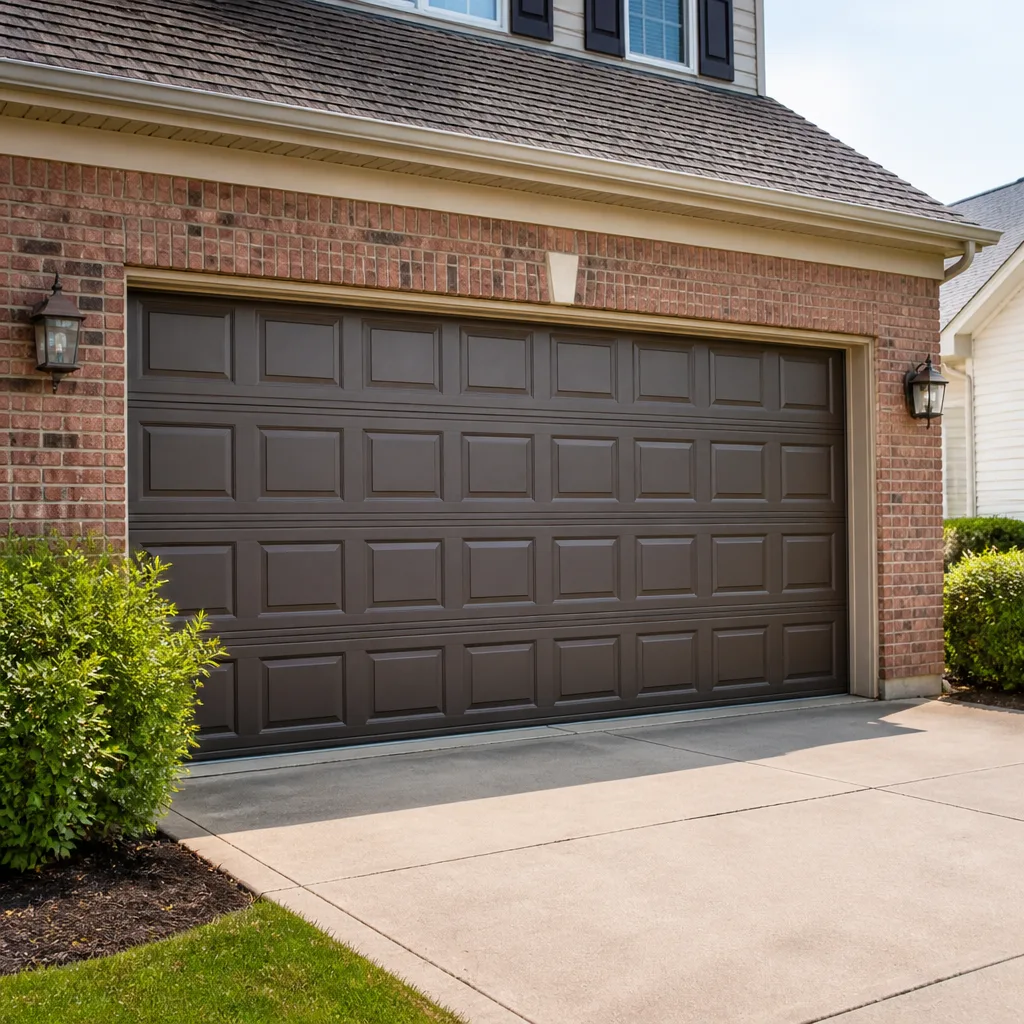 Raised-panel steel
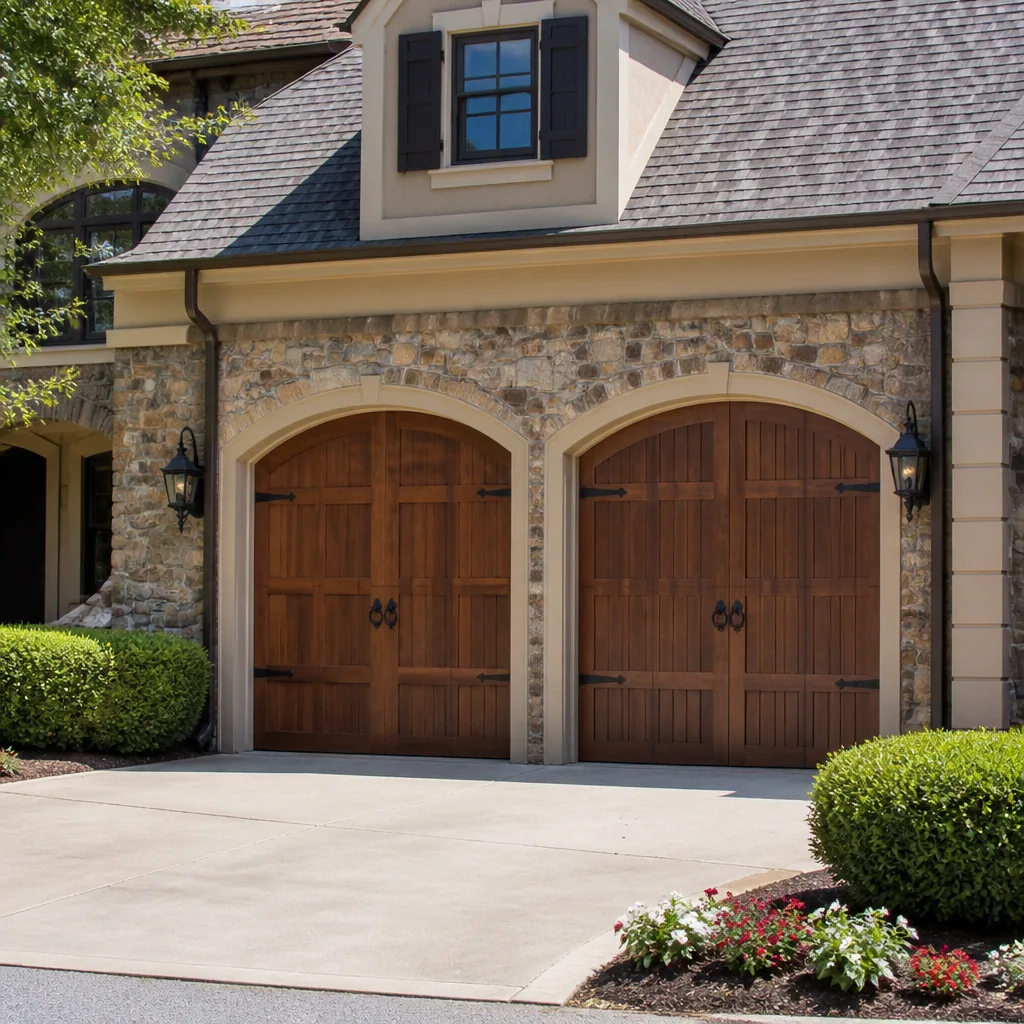 Carriage house
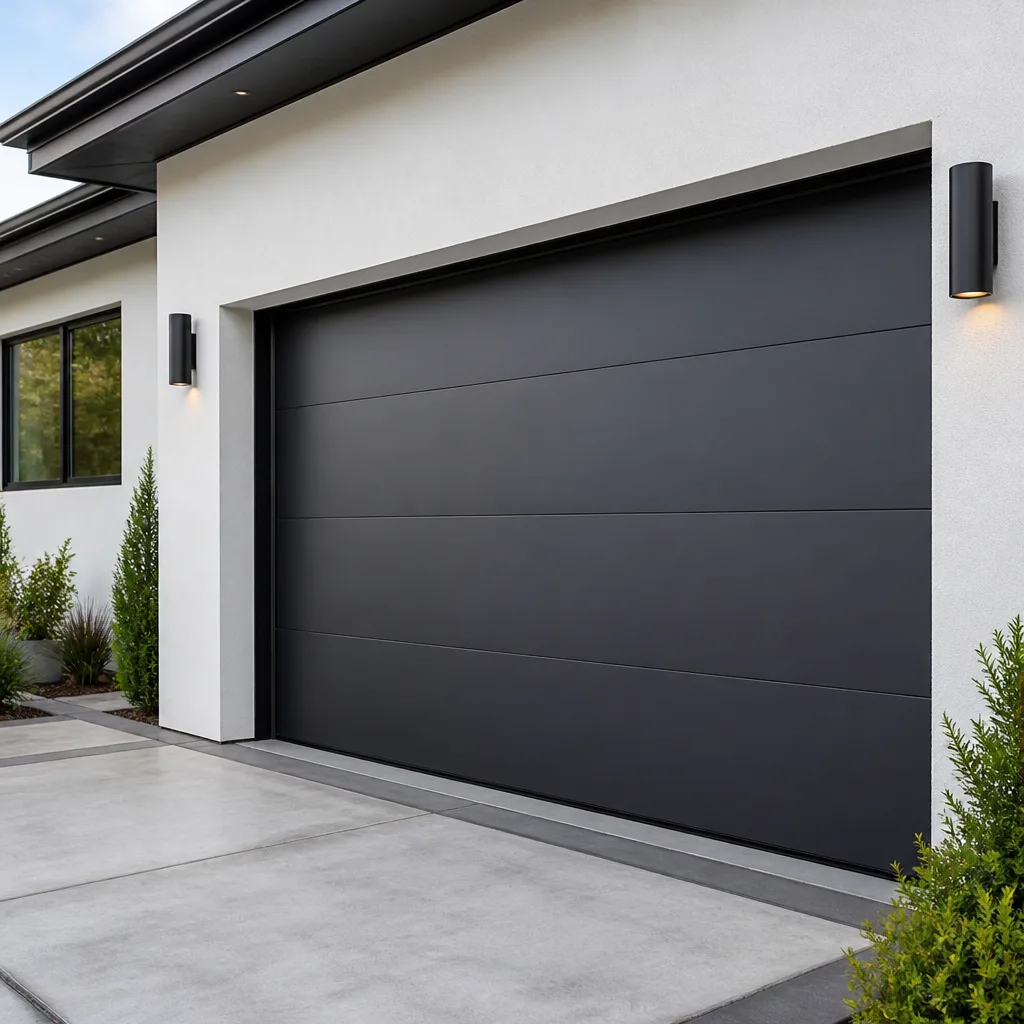 Modern flush
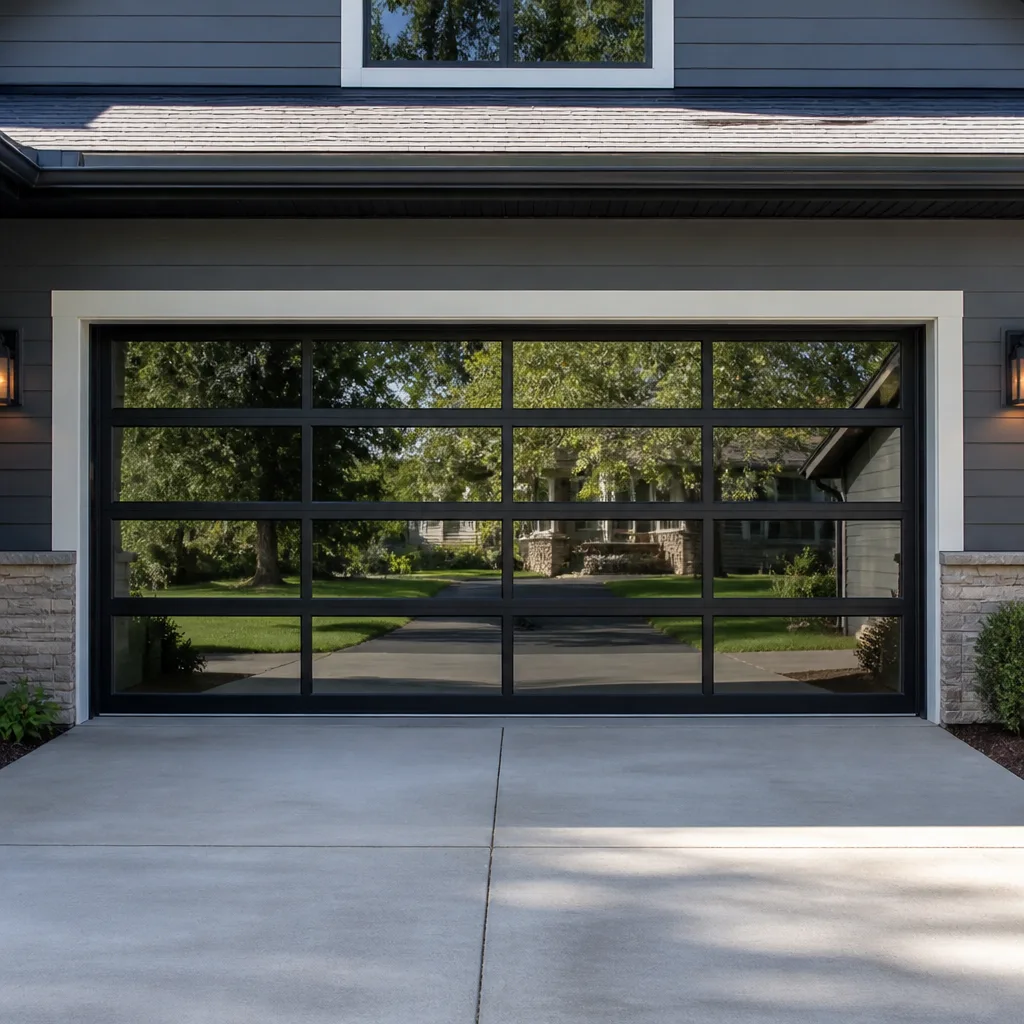 Full-view glass
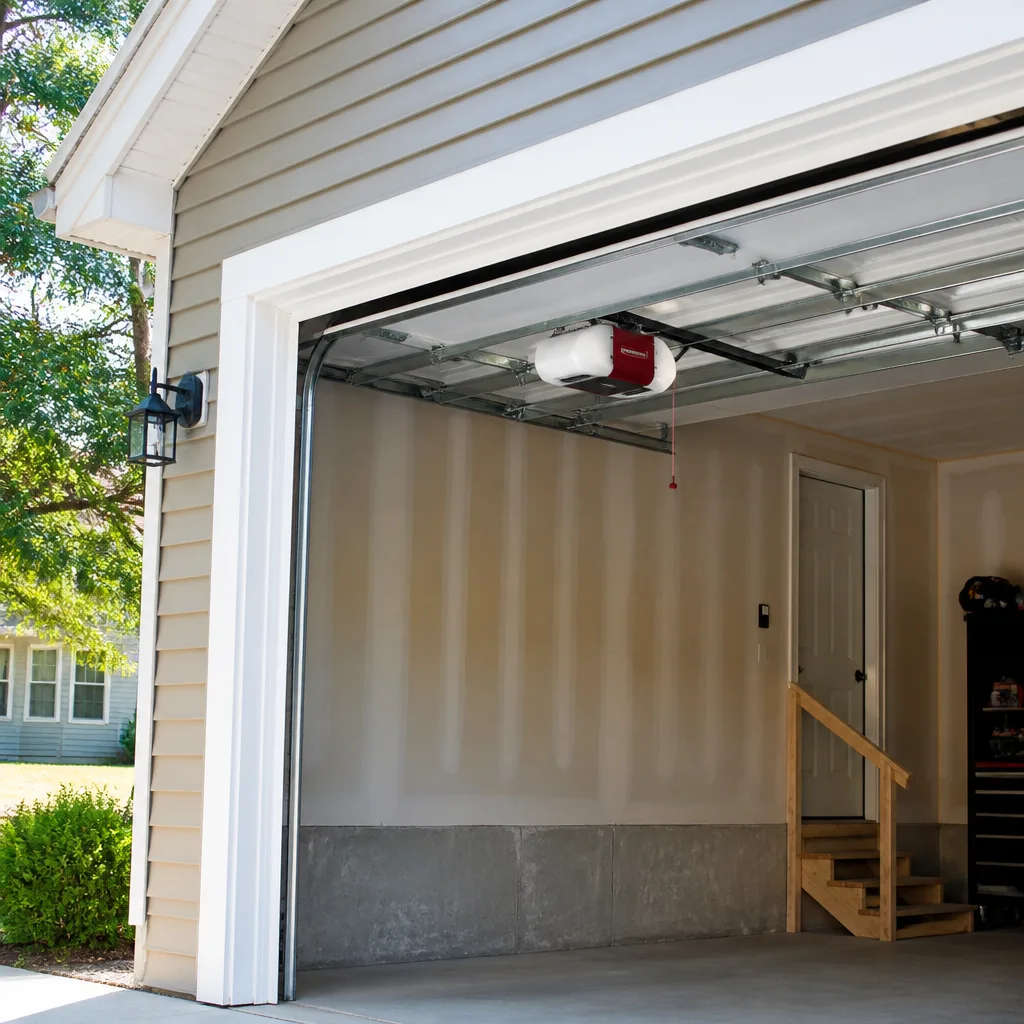 LiftMaster openers
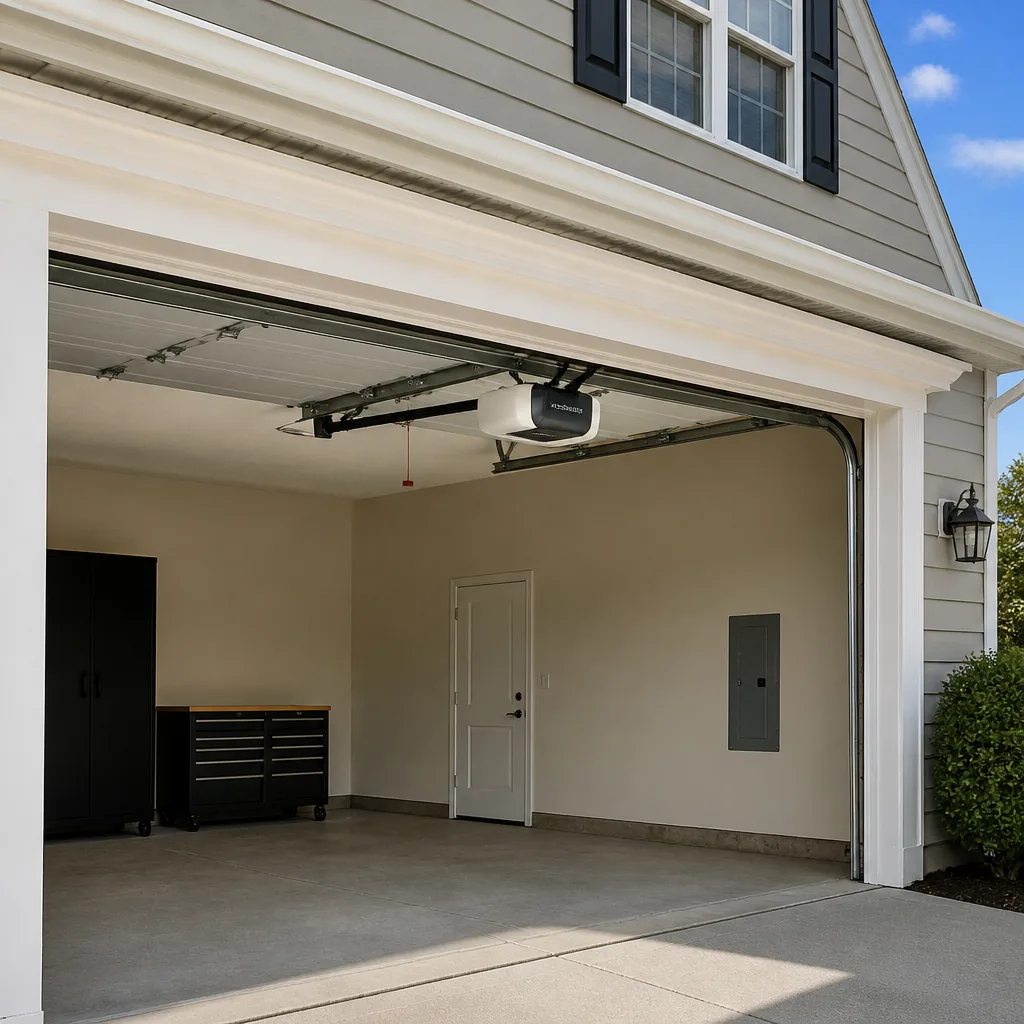 Chamberlain openers
Full 25-point door and opener safety check with every visit - springs, cables, rollers, tracks, and your LiftMaster or Chamberlain opener included
You get a price before we start. It does not change when the pro arrives.
Get your free estimateGarage Door Emergency Preparedness Guide for Plainfield Homes
Torsion springs rarely snap at a convenient hour. They let go on a cold morning when the car is inside and the school run is in twenty minutes. Here’s the part most homeowners get wrong: the failure isn’t the problem. The reaction is. A plan built in fifteen minutes, before anything breaks, keeps you from forcing a door that shouldn’t be forced or leaving your home open to the street while you wait for help. That’s what this guide is for. By the end you’ll know how to disconnect your door safely, when not to touch it, how to secure it if it’s stuck open, what to have ready before you call, and how to post a one-page reference card inside your garage. Written for Plainfield homes, from a garage door specialist that works here.
Quick Answer
Garage door emergency preparedness for a Plainfield home means four things: knowing where your opener’s emergency release cord is and how to use it safely, knowing when a broken spring makes that release dangerous, knowing how to secure a door stuck open, and having your door’s model and serial number written down before you need them. None of that costs money. All of it saves you from the two worst outcomes: a door dropped on a person, and a home left open while you figure out what to do.
Styles & brands we work with
- Raised-panel steel
- Carriage house
- Modern flush
- Full-view glass
- LiftMaster openers
- Chamberlain openers
Table of Contents
- 1. Know Your Door Before You Need To
- 2. The Emergency Release Cord: How To Use It For Your Opener Type
- 3. The Spring Failure Rule: When Not To Disconnect
- 4. Securing a Door That’s Stuck Open
- 5. What To Have Ready Before You Call
- 6. Building Your One-Page Emergency Reference Card
- 7. Plainfield Weather, Older Homes and Why Doors Fail When They Do
- 8. The Five-Minute Preventive Walk-Around
1. Know Your Door Before You Need To
The single most useful preparedness step costs nothing: walk into your garage with a flashlight and actually look at your door. Most Plainfield homeowners have lived with the same door for years and have never read a label on it. In an emergency that label is the fastest way to get the right part on the first visit.
You’re looking for four pieces of information. Write them down once and keep them somewhere findable.
- Door brand and model. Clopay and Amarr are common on newer construction and replacement doors in this area. The label is usually inside the panel or on the bottom section edge. On a two-car door, note the width.
- Opener brand and model. Chamberlain and Genie are the two most frequent on residential installs locally. The model plate is on the back or underside of the motor head.
- Spring type and count. Stand inside the garage and look up over the door. A torsion spring is a wound coil on a shaft above the door. Extension springs sit alongside the horizontal tracks at each side. Count them. Note roughly how long they are.
- Door position when it fails. In an emergency, whether the door is fully up or fully down changes what you do next. Note it before you call.
Why this matters: when you call for garage door repair, the difference between “my door won’t open” and “1949 single torsion, Chamberlain opener, door is down” is the difference between a diagnostic visit and a repair visit. The second one usually costs less and takes less time. Our technicians have up to 15 years of experience, and we work on the brand already in your garage, including Chamberlain, Genie, Clopay and Amarr systems, so we can talk through your specific setup when you call.
2. The Emergency Release Cord: How To Use It For Your Opener Type
The emergency release cord is the red or black rope hanging from the opener trolley. Pulling it disconnects the door from the opener so you can lift it by hand. Sounds simple. In practice, whether it’s safe depends on the door’s balance, its spring condition, and the opener type. Get these wrong and a “won’t open” problem becomes a door-drop injury.
Here’s how each of the four common opener types in Plainfield homes behaves.
- Chain drive (Chamberlain, Genie). The trolley sits on a metal rail with a chain running the length of it. The release cord hangs from the trolley. Pulling it straight toward the door disconnects the door. To reconnect, run the opener until the trolley clicks back into the carriage. Standard disconnect.
- Belt drive. Same disconnect mechanism as chain drive, but the rail is smooth because the drive is a belt. The cord hangs in the same place. Nothing changes about the disconnect procedure, but belt drive openers are quieter and the trolley can feel loose when disconnected, which throws some homeowners. It’s normal.
- Screw drive. The trolley rides on a threaded steel rod rather than a chain or belt. Same release cord, same pull direction. Screw drive trolleys sometimes need a firmer pull because the carriage can bind slightly if the opener hasn’t run recently.
- Jackshaft (side-mount) openers. The motor sits on the side wall next to the torsion shaft, not overhead. The release mechanism is different: you’re disconnecting the opener from the torsion shaft, not from a trolley. If you’re not sure which you have, look at the ceiling. No overhead motor head means you have a jackshaft, and the disconnect procedure is one you should get walked through on the phone rather than guess at.
The rule that overrides everything: pull the release cord only if the door is fully closed and balanced. Before you pull, lift the door by hand about a foot. If it feels heavy, let it back down slowly and stop. A door that won’t stay in place when you lift it by hand has a spring problem, and the release cord is not the answer. Keep it connected and call. Plainfield Garage Door Repair Pros handles spring failures as a core service, and we can talk you through what to do while you wait. Call (877) 492-3251. We answer 24/7. Fast dispatch from 7am to 7pm, Sunday through Friday.
3. The Spring Failure Rule: When Not To Disconnect
This is the section that matters most. A garage door with a broken spring is a fundamentally different situation than a door with a dead opener or a power outage. Getting them confused is how people get hurt.
Garage door springs carry the weight of the door. On a standard single-car door the springs hold hundreds of pounds in tension or torsion. When one lets go, that stored energy is no longer doing its job, and the door becomes a heavy object resting on its track and its hinges. On a normal door, you can lift it by hand because the spring does most of the work. On a door with a broken spring, you cannot. It will feel like lifting a heavy bike with the chain cut. It will not stay in place when you let go. And it will come down.
Here’s the rule in plain language:
- Do not pull the emergency release cord on a door with a broken spring. The disconnect lets the door travel freely, and free travel on a door with no spring support means a drop.
- Do not try to lift the door to clear the car. It won’t stay up.
- Do not touch the spring, the shaft or the cables. Torsion springs and the cables that run alongside them are under extreme tension even when a door won’t open. Motion in the wrong direction can cause a serious injury. This is one of the most dangerous parts of a garage system to handle without training and proper tools.
- Do call for emergency service. A door with a broken spring is a call-a-professional situation, not a figure-it-out situation. Spring failures don’t wait. Neither do we.
If you’re not sure whether the spring is broken, look for the gap. A torsion spring is a single wound coil. When it breaks, you’ll usually see a visible separation somewhere along its length. Extension springs are similar. A break is a break. If you see one, leave the door alone and call. Our garage door spring repair service covers torsion and extension spring replacement, and we’ll tell you honestly on the phone whether what you’re describing sounds like a spring failure or something else.
4. Securing a Door That’s Stuck Open
A door that won’t close is its own emergency. Your home is open to the street, and if the weather is turning, everything in the garage is exposed. Most of the fix uses things you already own.
Work in this order:
- Don’t force the door down by hand. If the opener is running and stopping, or the door is binding on one side, pushing it down can bend a panel that was fine. That turns a small repair into a bigger one.
- Disconnect the opener if the door is balanced and fully up. Pull the release cord once, then lower the door by hand slowly. If it comes down smoothly, close it fully and lock it if you have a manual lock or a slide bolt.
- If the door has a broken spring or is unbalanced, don’t lower it. Instead, secure the opening. A C-clamp or locking pliers clamped onto the horizontal track just above the bottom roller holds the door in place so it can’t drop. This is the same principle technicians use as a temporary stop, and it works with hardware most garages already have.
- Use a ladder for the tracks, not for the door. Clamp the track above the door’s current position so the door can’t travel further down, not so it can be forced up.
- If the door will not close at all and the garage is exposed to the street, that’s a security and weather situation, not just a repair. Call for emergency service for the repair and use a temporary barrier if you can. Get the door fixed first, then think about the contents.
In Plainfield, a door stuck open during a storm season run of heavy rain and wind is the scenario most likely to cause damage to what’s inside. A door that’s stuck open also doesn’t hold the home’s security line. This is the exact situation our emergency service exists for. If the door is up and won’t come down and you’re not sure why, call. We answer 24/7. Fast dispatch from 7am to 7pm, Sunday through Friday.
5. What To Have Ready Before You Call
The faster you can give a technician the basics, the faster the right part gets on the first visit. In our experience the calls that go fastest are the ones where the homeowner already has four facts written down.
Have these ready before you dial:
- Door dimensions. Measure the width and height of the door opening, not the door itself. Most single-car doors are 8 to 9 feet wide; most double-car doors are 16 feet wide. Measure once with a tape and note it.
- Spring type. Torsion (wound coil on a shaft above the door) or extension (springs alongside the tracks). Count the springs.
- Opener model. Brand name from the motor head (Chamberlain, Genie, LiftMaster, Craftsman, Raynor) plus the model number on the plate.
- Door position and symptom. Door up, down, or halfway. Opener runs but door doesn’t move, or door moves unevenly, or nothing happens at all when you press the button.
With those four facts, a specialist can usually tell you over the phone what’s likely wrong and what the repair will involve. That’s how the right fix happens the first time. When you call Plainfield Garage Door Repair Pros at (877) 492-3251, we’ll walk through what you’re seeing and set the visit. Estimates are free, and the price is quoted and agreed before any work starts.
6. Building Your One-Page Emergency Reference Card
This is the fifteen-minute step. It’s the single most useful thing you can do before a door fails. When it fails, the last thing you want to do is search your phone with a flashlight while your car sits trapped.
Take one piece of paper, note card or index card and post it on the inside garage wall next to the man door. Fill in these sections:
- Door facts. Brand, model number, serial number, width, spring type and count. This is the information from Section 1.
- Opener facts. Brand, model number, install date if you know it, and what type (chain, belt, screw, jackshaft).
- Service contact. Plainfield Garage Door Repair Pros, (877) 492-3251. Note beside it: We answer 24/7. Fast dispatch from 7am to 7pm, Sunday through Friday.
- Decision tree. A simple four-branch flow.
Write the decision tree out by hand so you remember it:
- Door won’t open, opener is running or dead, spring looks intact: Pull the release cord if the door is fully down and lifts by hand. Lift and drive out. Reconnect when you get back.
- Door won’t open, spring looks broken: Do not touch the release. Do not lift. Call.
- Door won’t close, spring intact, door balanced: Disconnect, lower by hand, lock or bolt.
- Door stuck open, spring broken or door won’t close at all: Clamp the track above the bottom roller, secure the opening, call.
Laminate it or slip it into a plastic sleeve. When you call, read from the card. This is the difference between a stressful search and a two-minute call.
7. Plainfield Weather, Older Homes and Why Doors Fail When They Do
Garage doors don’t fail at random. In Plainfield they tend to fail in patterns tied to the weather and to the housing stock.
Plainfield winters bring repeated freeze-thaw cycles. Metal contracts in the cold and expands in the warmer hours, and springs live under extreme tension through both. A spring that’s been on the door for years can let go on the first genuinely cold morning of the season, or on the first warm day after a hard freeze, because the metal is stressed in a direction it usually isn’t. Openers also work harder in cold weather because the door is heavier when the grease thickens and the rollers stiffen. If your door hesitates in January, it’s not a coincidence. It’s the door telling you what it needs.
Summer humidity matters too. Plainfield garages without climate control trap moisture, which rusts rollers, hinges and the bottom section of steel doors. A rusty roller doesn’t roll. It drags. A dragging roller loads the opener and the spring beyond their design, and something gives. On top of that, the Plainfield housing stock includes a lot of older homes with garages added after the fact or doors past their service life. A door that’s stayed in balance for a previous owner isn’t automatically in balance for you.
The pattern to watch: doors that need a second press of the button to close, doors that reverse on their own, doors that go up crooked, doors that get louder. Each of those is a warning. None of them is a reason to wait.
If your door is showing any of those signs, we’ll look at it during a routine visit instead of waiting for the failure. Call (877) 492-3251 to set a time.
8. The Five-Minute Preventive Walk-Around
Once a season, do this. It won’t prevent every failure, but it catches most of the ones that catch homeowners off guard.
- Look at the springs. Check for a visible gap in a torsion spring or a stretched or separated extension spring. Just look. Don’t touch.
- Listen as the door moves. Squeaks, grinding, or hesitation mean something is wearing. A door that used to be quiet and now isn’t has a problem.
- Test the balance. With the door disconnected, lift it halfway and let go. A balanced door stays where you leave it. A door that falls or rises on its own has a spring problem and shouldn’t be used until a technician looks at it.
- Test the safety reversal. Place a small object under the closing door. It should reverse when it touches the object. If it doesn’t, the down-force limit or the safety eye is misadjusted. Both are adjustable and both matter.
- Check the rollers and hinges. Look for rust, wobble or hairline cracks. Worn rollers are cheap to replace and expensive to ignore.
- Look at the opener. Confirm the release cord is intact and hangs freely. Confirm the light and the safety sensors are working.
If any of those checks turn up a problem, don’t ignore it because the door still technically opens. Half-failing doors fail all the way eventually, and the eventual failure is what this guide exists to prevent.
Common Mistakes to Avoid
- Pulling the release cord without checking spring condition. The single most dangerous mistake in this guide. If the spring is broken, pulling the cord lets the door free-fall. Check first.
- Assuming a dead opener means the door is dead too. A door with a dead opener is usually liftable by hand if the spring and door are intact. In a power outage, that’s the whole plan.
- Trying to close a door that’s stuck open by force. Pushing down on a binding door bends panels. That’s a repair multiplied by an order of magnitude, not a repair avoided.
- Leaving garage doors open “just for a minute” in Plainfield weather. A storm can roll in fast, and an open garage during heavy rain means water damage to whatever’s inside plus wet wood framing.
- Not knowing the door’s model or serial number before calling. It’s the difference between a fast repair and a diagnosis visit. Write it down before you need it.
- Letting a loud door keep going. Noise is the door telling you something. Ignoring it is how a spring replacement becomes a spring plus roller plus hinge replacement.
- Ignoring the safety reverse test. The reversal system is the safety mechanism that keeps a door from crushing a child or pet. If the door doesn’t reverse on an object, fix it before the door runs again.
See the difference
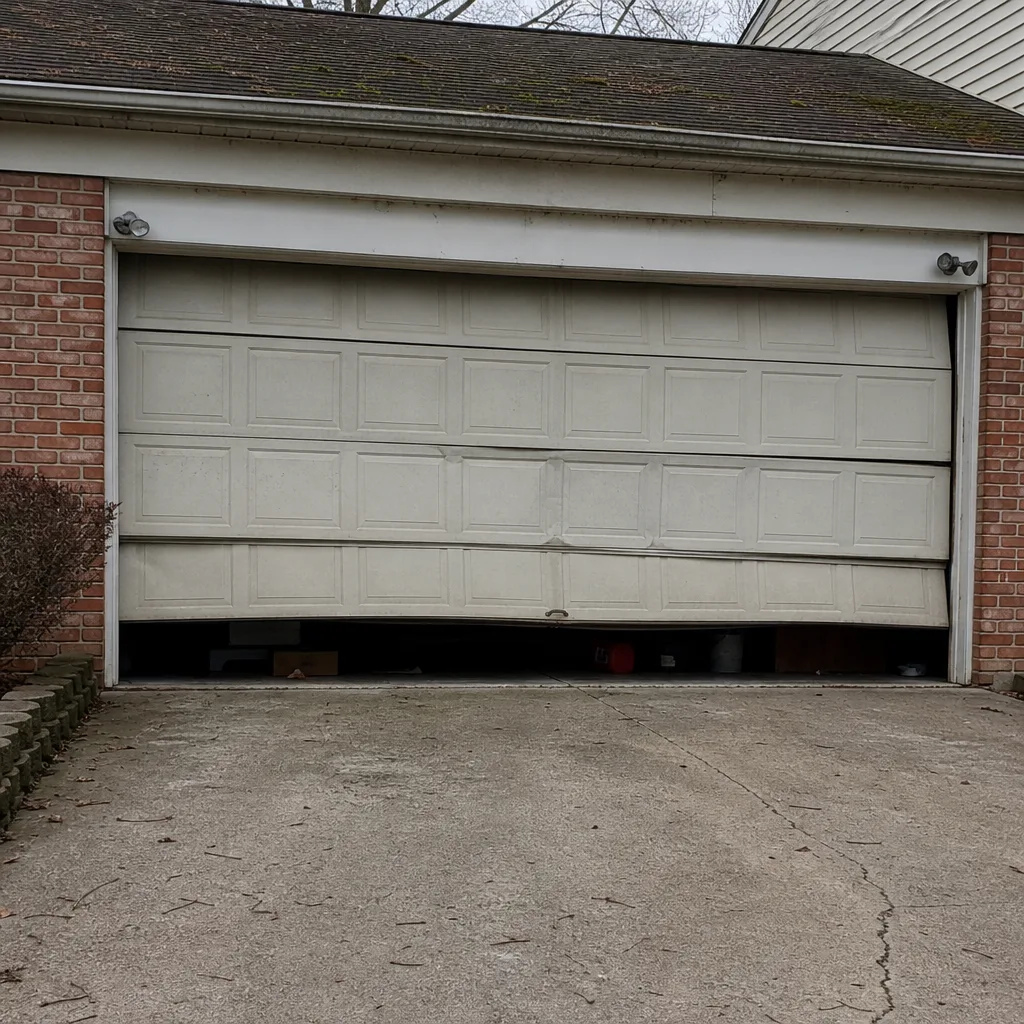 Before
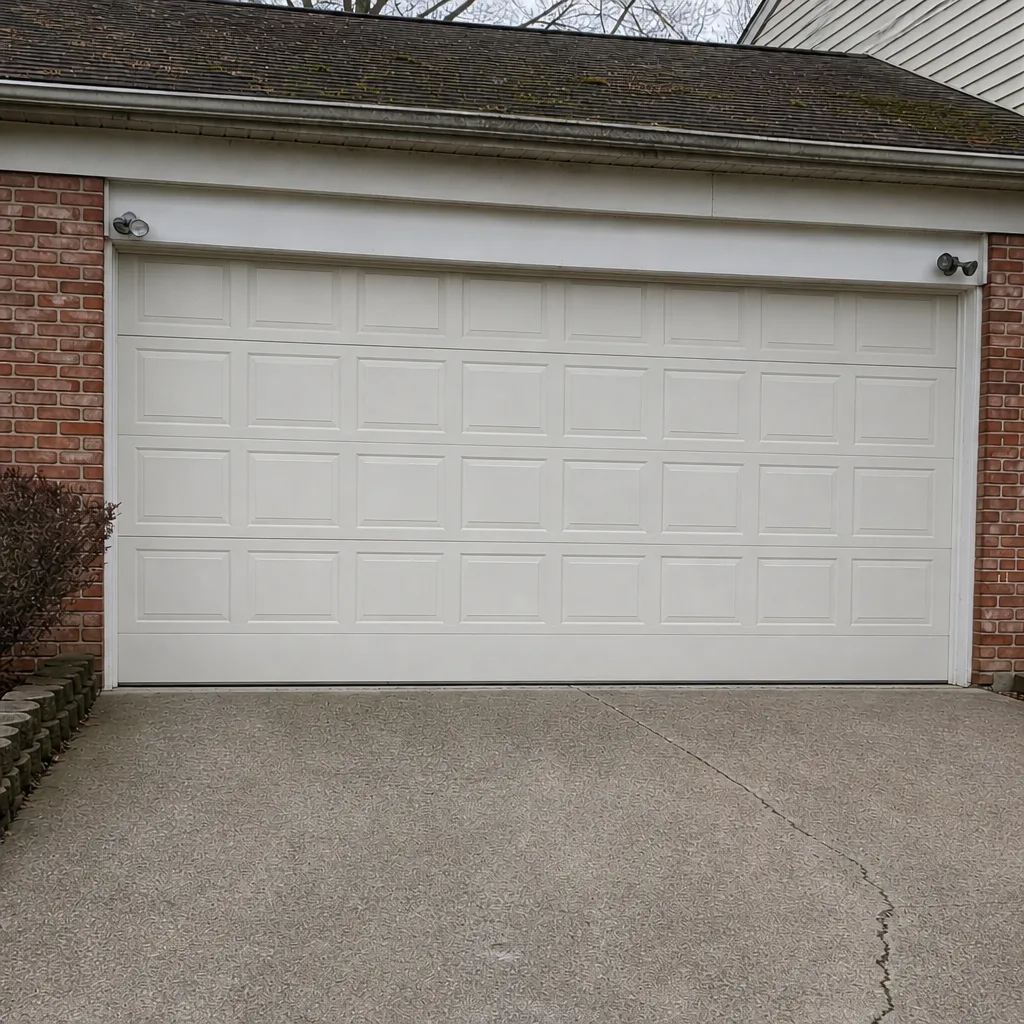 After
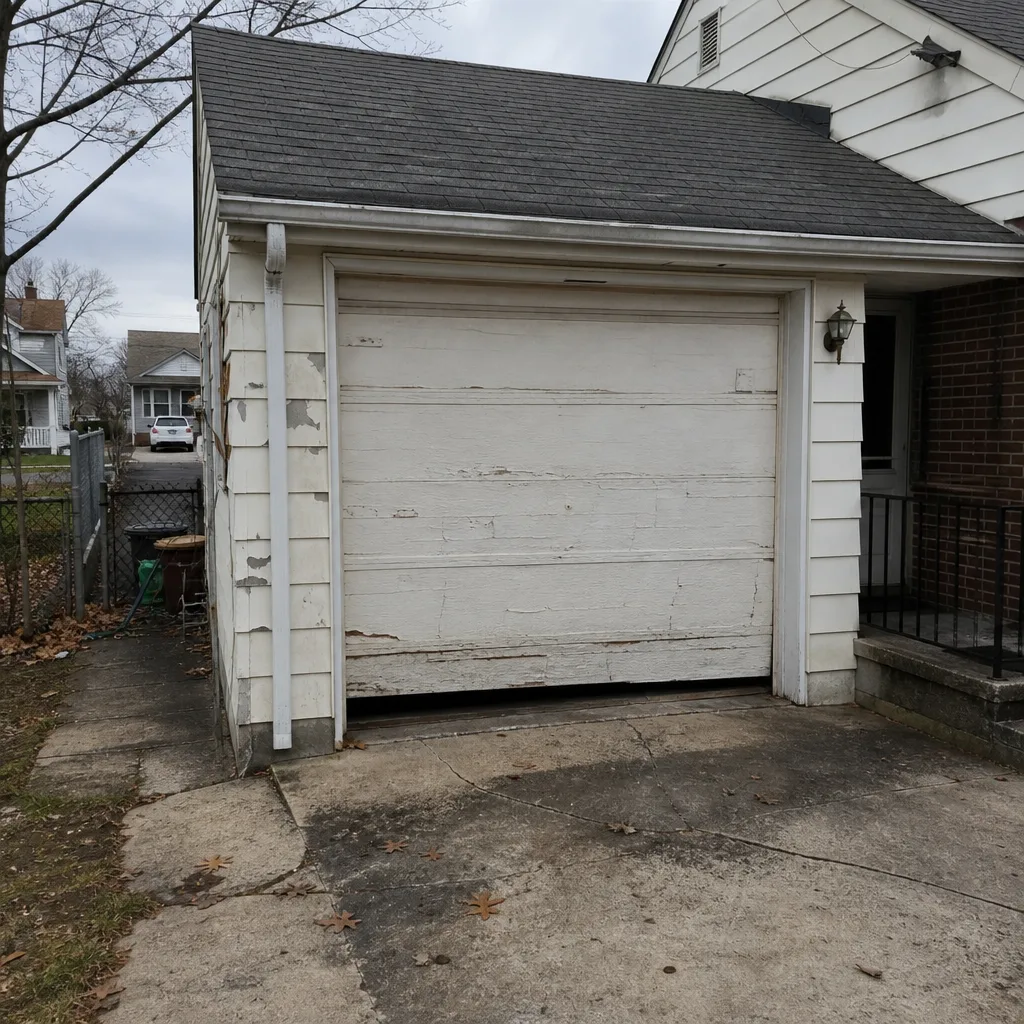 Before
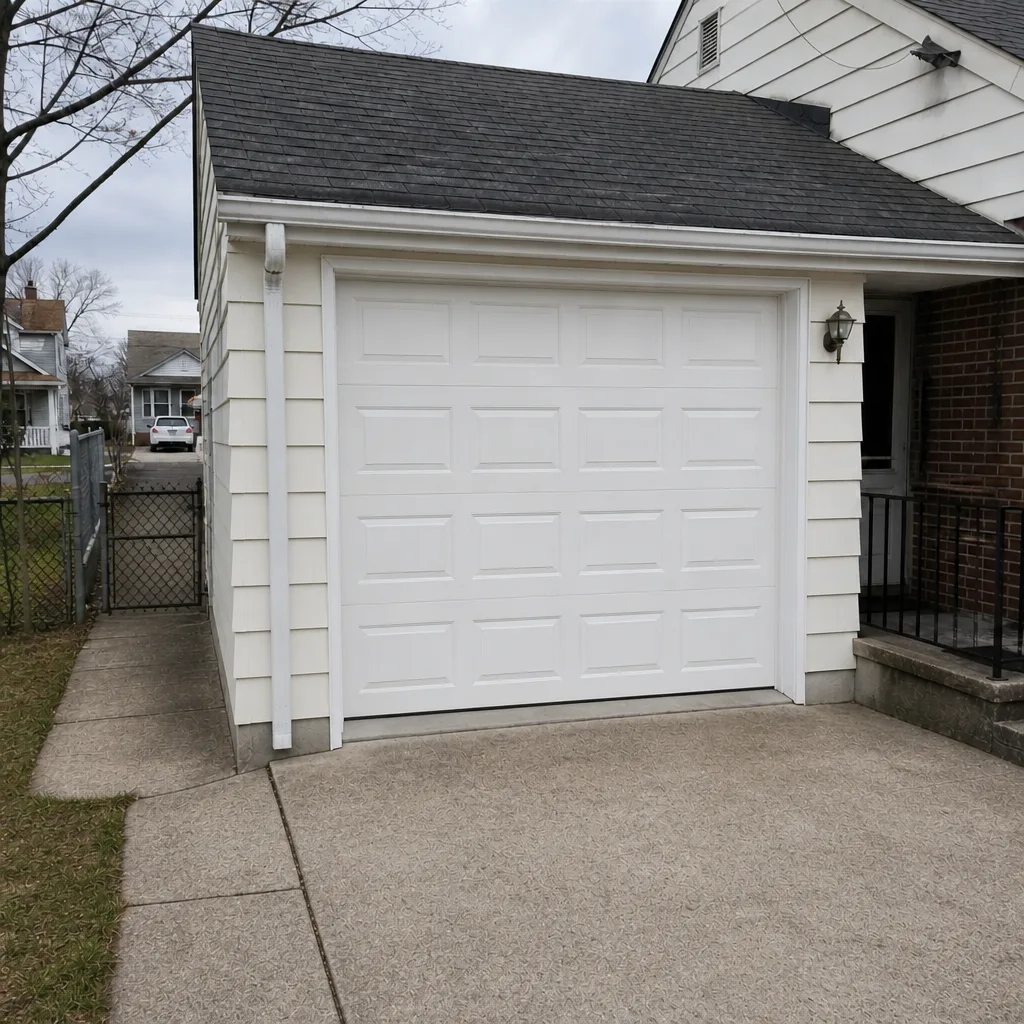 After
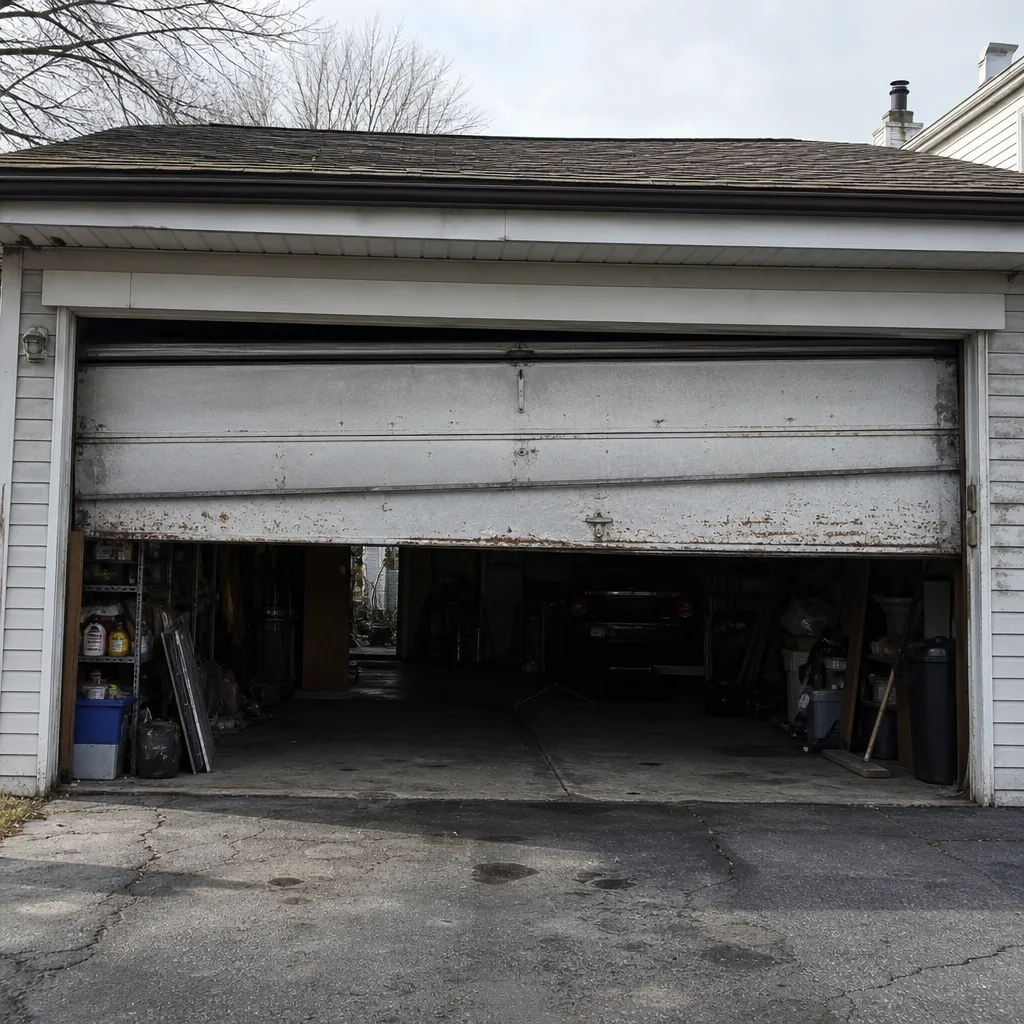 Before
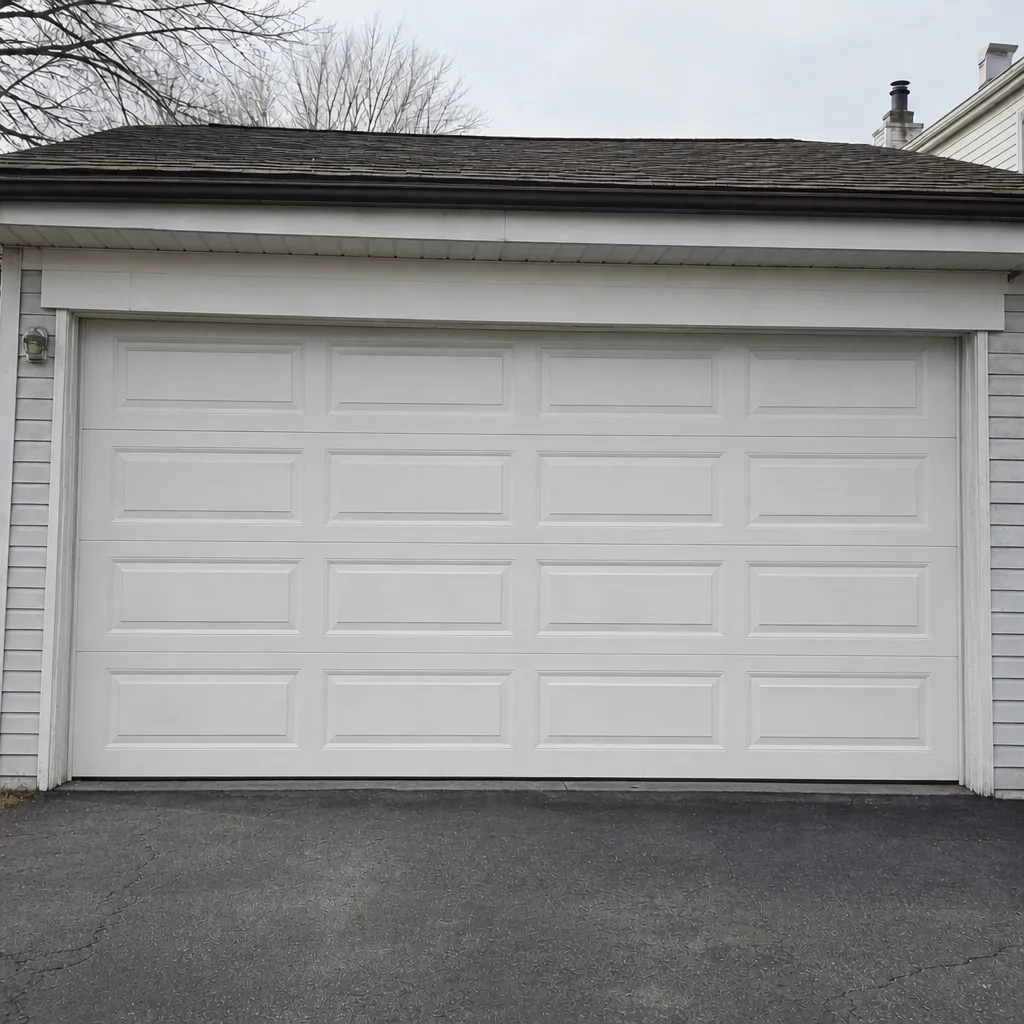 After
When to Call a Professional
Some garage door problems are DIY territory. Others are not. The dividing line in our experience is anything involving the spring, the cables, or a door that’s unbalanced. Those are the jobs where the equipment carries stored energy that a homeowner can’t safely manage, and where the injury risk is real. If you see a broken spring, if the cables are slack or frayed, if the door is crooked when it moves, or if a track is bent, call.
Also call if your door won’t close and you need it closed today, if your opener runs but the door doesn’t move, or if you’ve disconnected the door and can’t reconnect it. Any of those is a repair job rather than a learning opportunity. For opener-specific problems, our garage door opener repair service covers Chamberlain, Genie, LiftMaster, Craftsman, Raynor and other major brands, and for spring, track, roller or panel issues Plainfield Garage Door Repair Pros handles the full job from one specialist. Our technicians have up to 15 years of experience with garage door systems.
Plainfield Garage Door Repair Pros offers free estimates in Plainfield. Call (877) 492-3251. We answer 24/7. Fast dispatch from 7am to 7pm, Sunday through Friday. The price is quoted and agreed before any work starts, so you’ll know what the repair costs before it begins.
Frequently Asked Questions
Look at the spring first. Stand inside your garage and look for a visible break or gap in the torsion or extension spring. If the spring is intact, and the door is fully down and light enough to lift by hand, pull the emergency release cord and lift the door manually. If the spring is broken, do not pull the release, do not try to lift the door, and call for service. Call (877) 492-3251 for an exact quote – estimates are free.
No. The release cord lets a door travel freely, and a door with a broken spring has no counterbalance to keep it from dropping. The door is heavy, and the track won’t stop it. Leave the door connected, don’t touch the spring or cables, and call a specialist. Getting this one wrong is the most common way a repair becomes an injury.
Costs vary by job, but most repairs fall into a few common categories. Spring replacement, opener repair, and roller or hinge work each have different pricing depending on the parts involved. The written estimate sets the final price, and the price you agree to is the price you pay before any work starts. Call (877) 492-3251 for an exact quote – estimates are free.
In most cases yes. Emergency service is a core offering, not an afterthought, and we set same-day visits for doors that leave your home exposed. Call (877) 492-3251 and tell us whether the spring is intact and what the opener is doing. We answer 24/7. Fast dispatch from 7am to 7pm, Sunday through Friday. A call outside dispatch hours is booked into the next opening, Sunday through Friday, 7am to 7pm.
No. The estimate you receive is the price for the work described, and it’s quoted and agreed before any work starts. If a technician finds something beyond what you described on the phone, they’ll tell you first and quote the additional work separately. Nothing gets added to your bill without your approval. Call (877) 492-3251 for an exact quote – estimates are free.
The local professional we connect you with is licensed and insured as New Jersey requires, and our technicians have up to 15 years of experience with the major garage door brands. We work on the brand already in your garage, including LiftMaster, Chamberlain, Genie, Clopay, Amarr, Wayne Dalton, Craftsman and Raynor systems. Call (877) 492-3251 for an exact quote – estimates are free.
Only if you’ve secured the opening. A door left up is open to weather and to the street. Clamp a C-clamp or locking pliers onto the horizontal track just above the bottom roller so the door can’t drop, then close off the garage opening with whatever you have while you wait for service. If the door is safely balanced and can be lowered by hand, lower it and lock it, and don’t run the opener until a technician looks at it.
The Bottom Line
Garage door emergencies in Plainfield follow the same short list: broken spring, dead opener, door stuck open, door off its track. The failures are not the danger. The reaction is. Pull the release cord on a broken-spring door and you’ve turned a repair into an injury. Force a binding door down and you’ve turned a track fix into a panel replacement. The prepared homeowner knows the difference in advance, has the four door facts written on a card in the garage, and knows whether to pull the cord, lower the door, or call. Build the card. Do the seasonal walk-around. Learn the one rule that overrides everything: if the spring is broken, leave the door alone and call. If you’re not sure, call. We answer 24/7, we dispatch from 7am to 7pm Sunday through Friday, estimates are free, and the price you agree to is the price you pay.
Whether you’re rebuilding your preparedness plan from scratch or you’ve got a door that’s making a noise you don’t like, we’re the specialist to call. Plainfield Garage Door Repair Pros handles repair, opener repair, spring repair, installation and emergency service on the major brands in your home. Call (877) 492-3251 for a free estimate. We answer 24/7. Fast dispatch from 7am to 7pm, Sunday through Friday.
Written by the team at Plainfield Garage Door Repair Pros.