
Last updated November 23, 2026
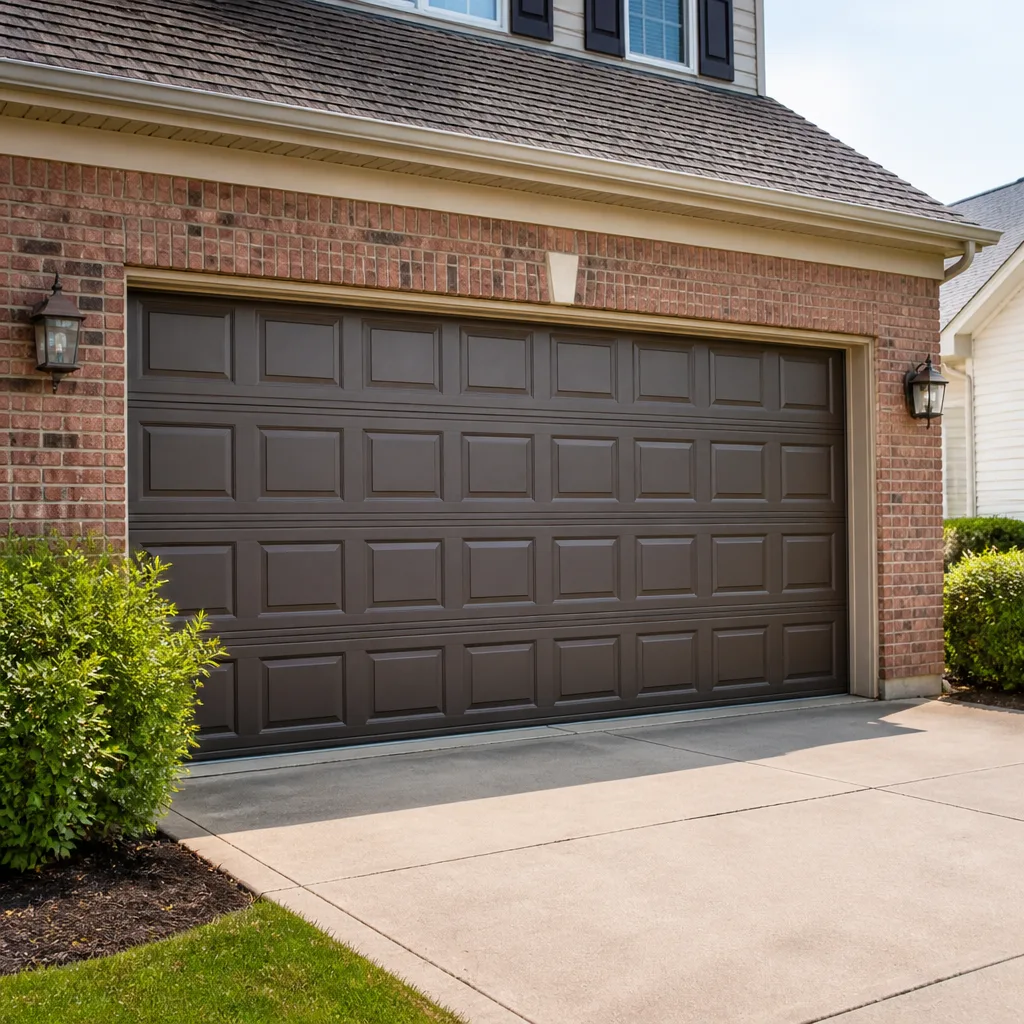 Raised-panel steel
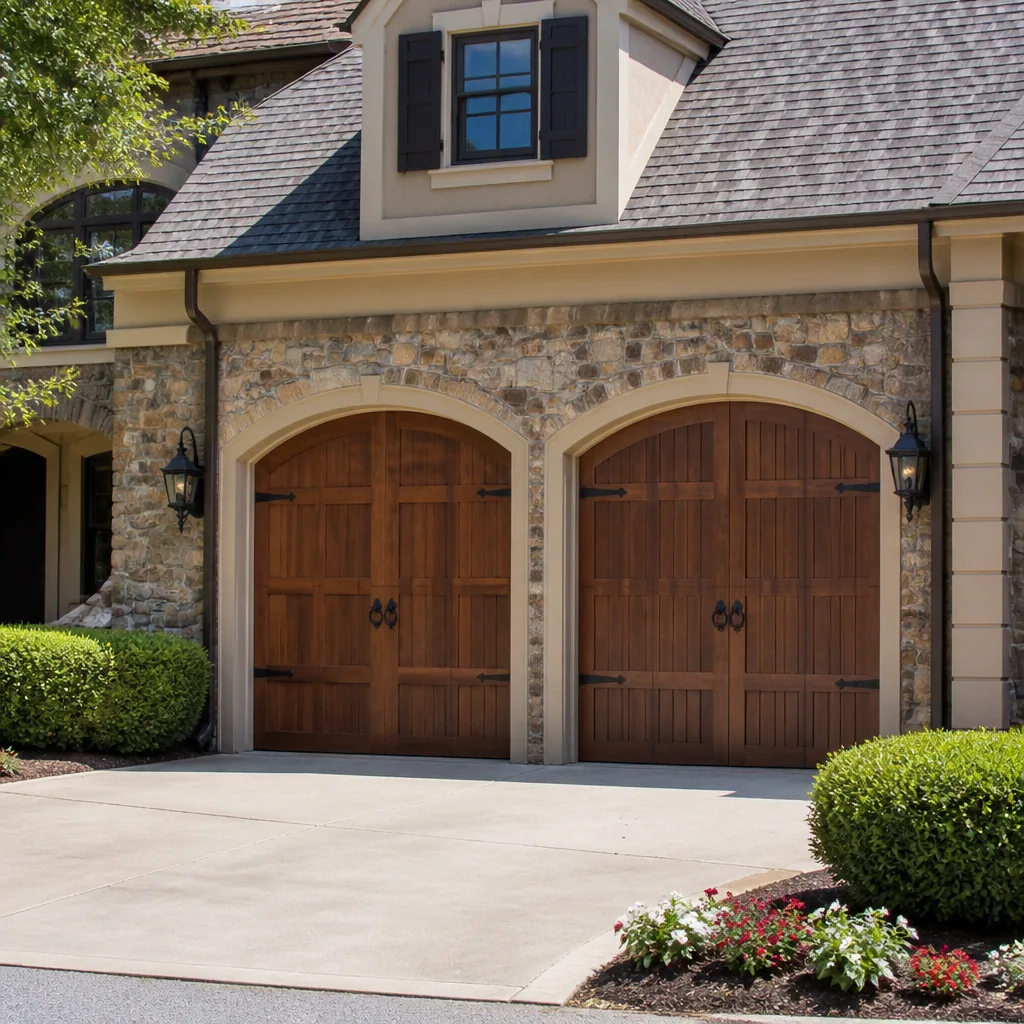 Carriage house
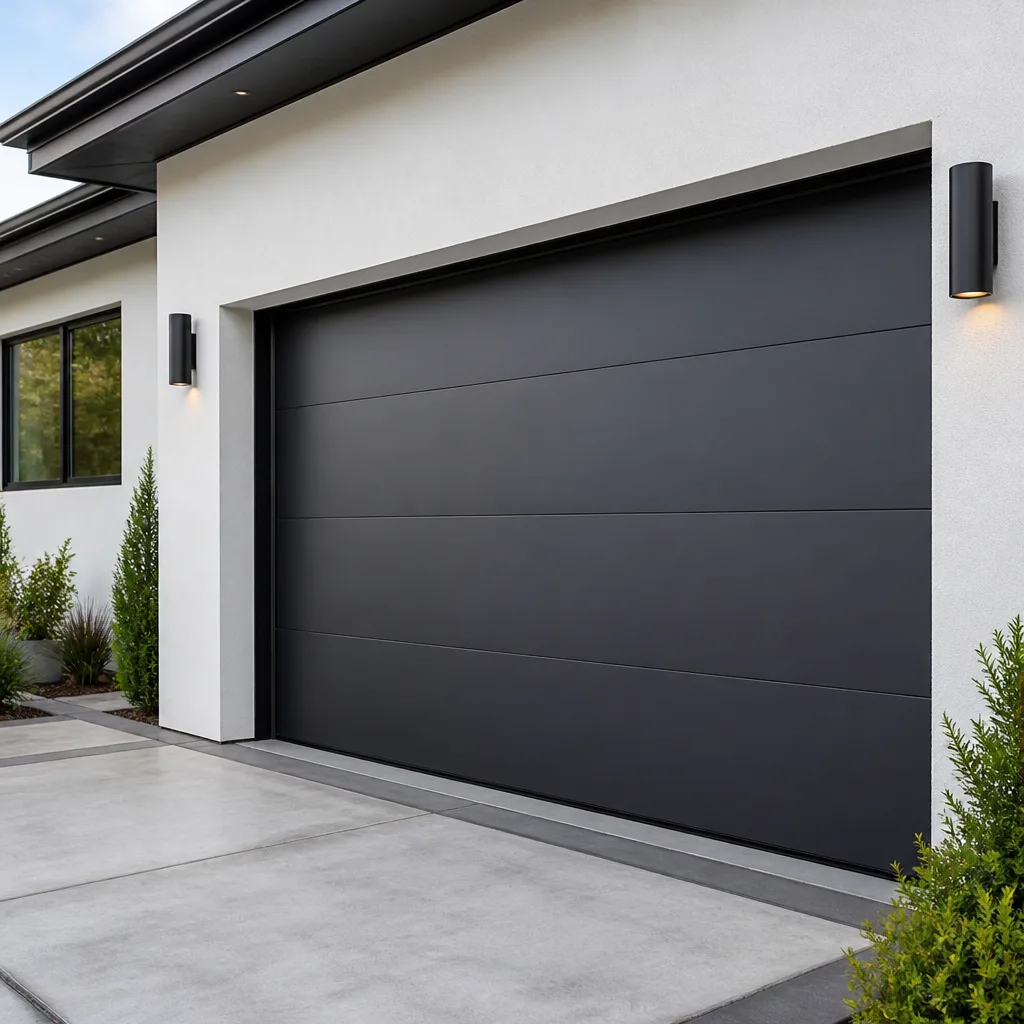 Modern flush
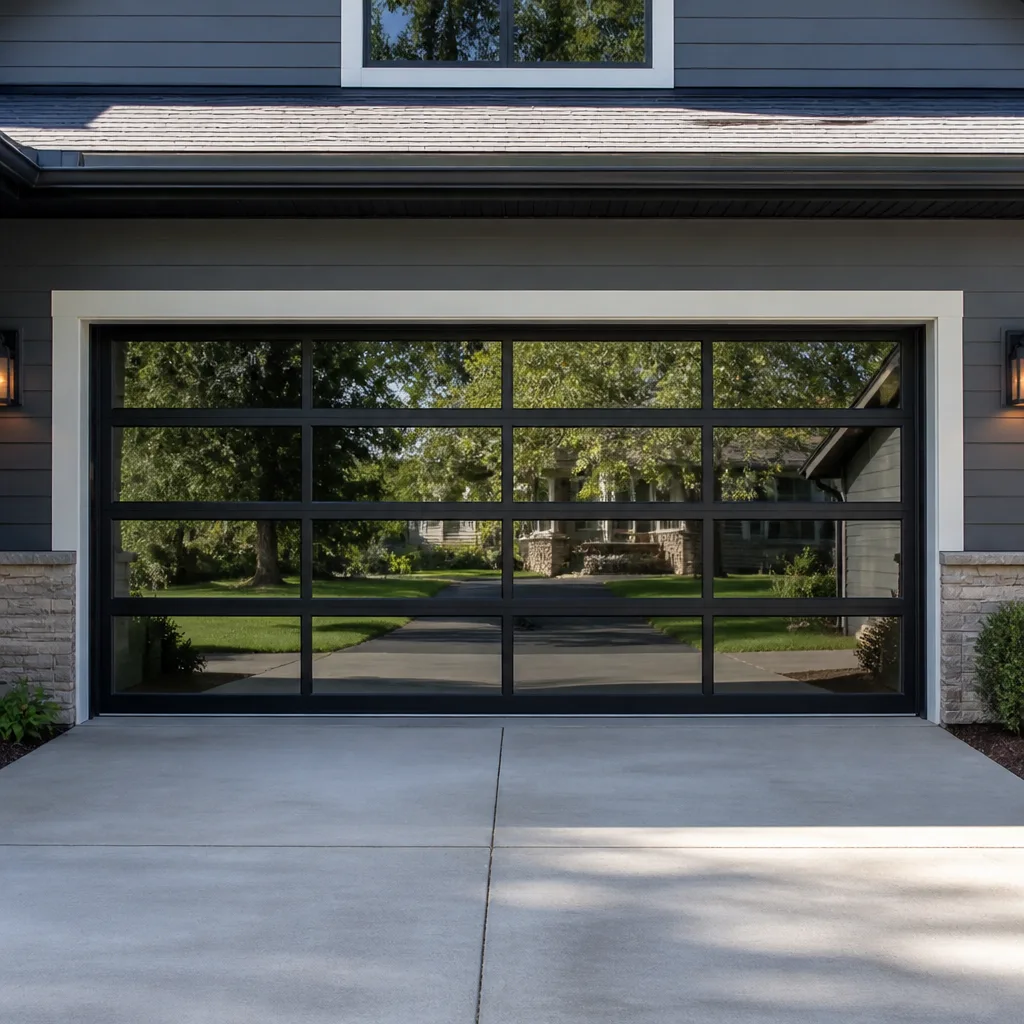 Full-view glass
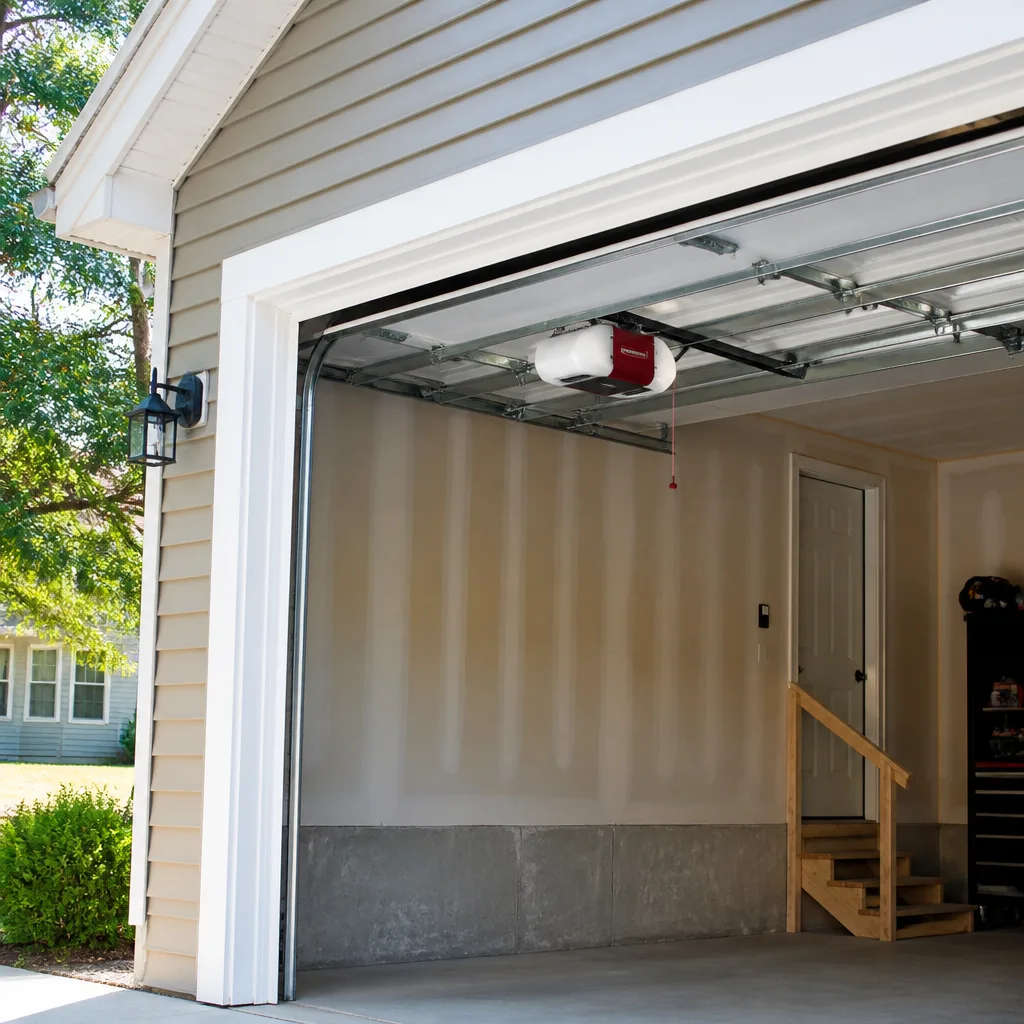 LiftMaster openers
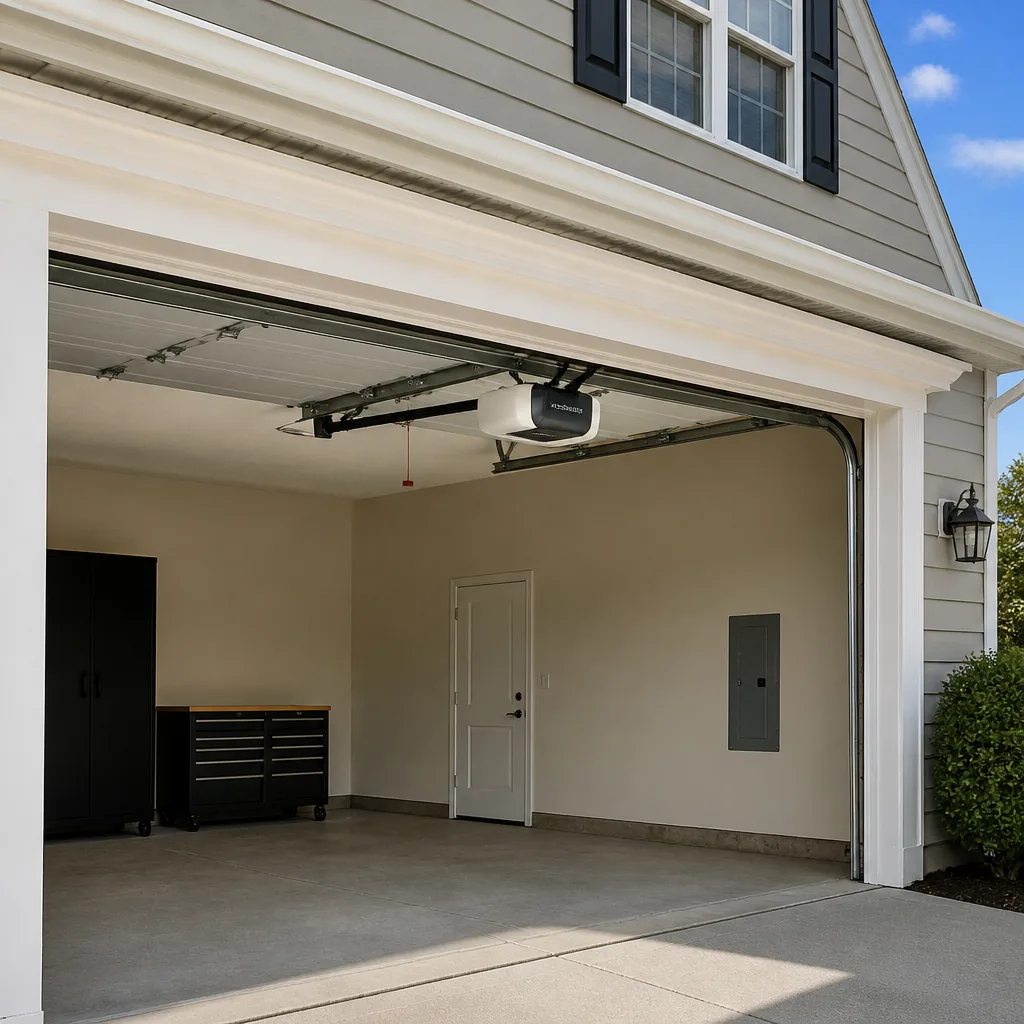 Chamberlain openers
Full 25-point door and opener safety check with every visit - springs, cables, rollers, tracks, and your LiftMaster or Chamberlain opener included
You get a price before we start. It does not change when the pro arrives.
Get your free estimateThe Complete Guide to Garage Doors in Plainfield
Most homeowners spend more time picking a kitchen faucet than choosing the largest moving part of their house. That’s backwards, and the cost of getting it wrong shows up years later as warped panels, chewed-up springs, and doors that never quite seal. Your garage door is also roughly a third of what people see when they pull up to your home, so the choice matters more than most of us give it credit for. This guide walks through what makes a garage door fit a Plainfield home specifically: how the climate here stresses materials, why the older houses in this part of Union County bring their own sizing quirks, and how to tell a repair from a replacement before you spend a dollar.
Quick Answer
Getting a garage door right in Plainfield comes down to three things: matching the material to freeze-thaw cycles and summer humidity, sizing the door and its springs to the actual opening rather than a catalog default, and using a specialist who works on garage doors every day. A door built for this climate and installed with correct spring tension will run reliably for years; one chosen on looks alone tends to start failing within a few seasons. In our experience, the homeowners who avoid trouble are the ones who ask about material, insulation, and spring sizing before they ask about color.
Styles & brands we work with
- Raised-panel steel
- Carriage house
- Modern flush
- Full-view glass
- LiftMaster openers
- Chamberlain openers
Table of Contents
- How Plainfield’s climate shapes the right door choice
- Steel, wood composite, or fiberglass: which holds up in New Jersey
- Why older Union County homes need special attention to sizing and framing
- Track systems: seven-foot versus nine-foot doors and the spring failures that follow
- Reading R-value for an attached garage in this climate zone
- Full-service repair versus section replacement: which is the right call
- Openers and the brands you’ll actually find in Plainfield garages
- How to choose a garage door company
How Plainfield’s climate shapes the right door choice
Plainfield sits in a part of New Jersey that swings hard between seasons. Cold winters, hot and humid summers, and dozens of freeze-thaw cycles each year act on a garage door every single day. Wood absorbs moisture in July and dries out in January. Steel expands in the heat and contracts in the cold. The door that looks best in a showroom isn’t always the one built for that kind of wear.
What matters most is how a door handles moisture and temperature change. A garage door is made of panels joined together, and every joint is a place where water can get in and where movement can stress the hardware. When a door isn’t built for this climate, we see the same problems repeatedly:
- Paint that blisters and peels on steel panels after a few humid summers
- Wood panels that swell at the bottom edge where snow piles against them
- Rust forming along the bottom section where salt from winter roads sits
- Springs that fatigue faster because the door is heavier when panels take on moisture
- Seals that harden and crack in the cold, letting in drafts and water
Plainfield homeowners also battle the humidity that comes with warm months, and an uninsulated or poorly sealed door lets that moist air right into the garage. If the garage is attached to the house, that moisture doesn’t stay in the garage. Choosing a door with a proper finish and tight seals is one of the simplest ways to protect the whole structure. It’s the kind of decision that’s easy to get right up front and expensive to fix later.
Steel, wood composite, or fiberglass: which holds up in New Jersey
There’s no single best material, but there is a best material for a New Jersey garage. Each type behaves differently through freeze-thaw cycles and summer humidity, and the tradeoffs are real. Here’s how they compare for a Plainfield installation:
Steel
Steel is the most common residential garage door material, and for good reason. It’s strong, it’s affordable, and it holds its shape through temperature swings. Modern steel doors come with a factory finish that resists moisture well. The weak point is the bottom edge and any spot where the paint gets scratched down to bare metal, because that’s where rust starts. A steel door with a good finish and a habit of touching up scratches lasts a long time in this climate.
Wood composite and wood-look
Real wood brings warmth and character that steel can’t match, and a wood composite gives you that look with less maintenance. Wood moves with humidity, though. It swells in wet months and shrinks in dry ones, which stresses the joints and finish over the years. If you love the look, composite is the more forgiving choice for a Plainfield home than solid wood, and it needs to be resealed periodically to stay protected.
Fiberglass
Fiberglass resists rust and moisture very well and won’t dent the way steel can. It’s lighter, too, which can be easier on springs over time. The tradeoff is that fiberglass doesn’t insulate as well unless it’s paired with an insulated core, and it can become brittle in extreme cold. For a detached garage or a milder application it’s a solid choice.
Whichever material you lean toward, the brand you buy from matters as much as the material itself. We work with doors from Clopay and other major manufacturers, and the build quality within each material category varies enough that it’s worth asking which brand and model you’re actually getting.
Why older Union County homes need special attention to sizing and framing
A lot of the housing stock in Plainfield went up before 1980, and that changes how a garage door job goes. Older homes weren’t built to today’s standard opening sizes, and the framing around a garage isn’t always square. A door that’s ordered to a catalog dimension and dropped into an opening that’s a half-inch off will bind, rub, and wear out its springs early. This is one of the things standard guides leave out, and it’s one of the things we check before we quote.
When we look at a pre-1980 garage in Plainfield, four things tend to come up:
- The opening isn’t a standard size. Older garages were built for the cars of their era, and the width and height can be anything. The door has to be measured to the actual opening, not assumed.
- The framing may be out of square. Age, settling, and past repairs all shift the frame. A door needs a level, plumb opening to travel correctly.
- The header may not carry the load. A new door, especially an insulated one, is heavier than an old hollow one. The framing above the opening has to handle that weight safely.
- The tracks may need realignment. Old track systems can be bent or out of level, and new tracks need to be set to suit the door.
None of this is a reason to avoid an older home. It’s a reason to have the opening measured properly by someone who does this every day. A specialist measures, checks the frame, and orders the door to fit. A generalist often doesn’t, and the door pays for it later.
Track systems: seven-foot versus nine-foot doors and the spring failures that follow
A seven-foot door and a nine-foot door don’t just differ in height. They need different tracks, different springs, and a different amount of counterbalance to work. When the track is sized for one door and installed with another, the door travels wrong, and the springs take the stress. That’s one of the most common causes of premature spring failure we come across, and it’s completely avoidable.
Here’s how the two sizes differ in practice:
- Seven-foot doors are the common residential height. The tracks are shorter and the springs are sized to lift a lighter door over a shorter distance.
- Nine-foot doors (and taller) need longer tracks and heavier springs because the door travels farther and weighs more. The hardware has to be matched.
When a nine-foot door lands on seven-foot tracks, the door can’t open fully, the cables carry uneven tension, and the springs wear out or snap well before they should. The fix is to match the track and spring to the door from the start. That’s part of why we always measure the door before quoting a spring replacement, and why garage door spring repair is never a one-size-fits-all job.
Springs are also genuinely dangerous. They’re under high tension, and the cables that hold them are too. Please don’t try to adjust or replace a spring or cable yourself. This is work for a trained technician, and it’s exactly the kind of job we specialize in. If a spring has broken, keep people and cars clear of the door and call a professional.
Reading R-value for an attached garage in this climate zone
R-value is a measure of how well a material resists heat flow, and for an attached garage in this climate, it’s the number that determines whether your garage stays comfortable and whether your home loses heat through the shared wall. A door with a higher R-value insulates better. For an attached garage in this part of New Jersey, a door with an insulated core is worth considering, and a higher R-value is a real advantage over an uninsulated single-layer panel.
What actually matters is not the single highest number on the label, but whether the door is insulated at all and whether it’s rated for the whole assembly. A door with an insulated core and good seals performs far better than a hollow one, and the shared wall between an attached garage and the house benefits most. Here’s how to think about it:
- Uninsulated single-layer steel offers minimal insulation. It’s fine for a detached or unheated garage.
- Insulated steel with a foam core is the common choice for an attached garage, because it keeps the garage warmer in winter and cooler in summer.
- Higher R-value measured across the whole door tells you more than a number measured at one spot, so ask how the rating is calculated.
For most Plainfield homes with an attached garage, a properly insulated door is the sensible middle ground. It won’t turn the garage into living space, but it keeps the cold where it belongs.
Full-service repair versus section replacement: which is the right call
When a door is damaged, the first question is whether to repair it or replace sections, and getting this wrong costs money either way. A section replacement (sometimes called a sectional repair) means swapping out the damaged panel or panels while keeping the rest of the door. Full-service repair means fixing the whole system: springs, cables, tracks, rollers, and the door’s alignment. Which one is right depends on what’s actually wrong.
When section replacement makes sense
If one panel is dented or damaged but the rest of the door is sound, replacing that section can be the sensible call. Section replacement keeps the cost down and preserves a door that still has plenty of life. Paint and finish matching matters here, because a new section can look different from a door that’s been in the sun for years.
When full-service repair is the better call
If the problem is mechanical, section replacement won’t fix it. A door that binds, runs crooked, or has a spring or cable problem needs the moving parts addressed, not a new panel. garage door repair covers the full system: springs, cables, tracks, rollers, hinges, and the way the door sits in the opening. In our experience, a mechanical issue that’s left alone will damage the door’s panels over time, so fixing it early protects the rest of the door.
Here’s the short version: a damaged panel on an otherwise healthy door leans toward section replacement. A door that’s mechanically sick leans toward full repair. Sometimes it’s both, and the estimate should explain which is which, in plain language, before any work starts.
Openers and the brands you’ll actually find in Plainfield garages
Most Plainfield garages run on an opener from one of a handful of brands, and knowing the brand and model tells a technician a lot about how the system is likely to behave. We service the openers made by LiftMaster, Chamberlain, Genie and the other major manufacturers, and that matters because each brand has its own tolerances, parts, and quirks. The opener in your garage wasn’t designed to be a mystery, and it shouldn’t be one to whoever arrives to fix it.
When an opener acts up, the problem is often the safety sensors, the travel limits, or the force setting rather than the motor itself. A proper diagnosis sorts out which. garage door opener repair covers the motor, the logic board, the sensors, the remote and keypad, and the way the opener works with the door’s weight and balance. A dead opener isn’t always a dead opener: sometimes the door itself is out of balance and the opener is just the thing that gives out first.
If you’re comparing brands, two things are worth knowing. Chamberlain and LiftMaster are related brands, so parts and remotes often share a family resemblance. Genie and Craftsman are common in older homes. Whichever you have, a specialist who works with the brand regularly knows the specific settings to check and the parts that tend to fail.
How to choose a garage door company
The company that shows up matters as much as the door. A garage door has heavy moving parts under tension, and the work isn’t something a general handyman should take on as a side job. Here’s what to look for when you’re choosing who to call in Plainfield:
- Ask if they specialize. A company that does nothing but garage doors knows the systems, the brands, and the local housing stock. A generalist may be learning on your door.
- Ask which brands they work on. If your door or opener is a LiftMaster, Chamberlain, Genie, Clopay, or another major brand, the company should recognize it and know its parts.
- Get a written estimate before work starts. The price should be quoted and agreed before anyone touches the door. A clear estimate names what’s being repaired and what it costs.
- Ask that the estimate be free. You shouldn’t pay to find out what’s wrong.
- Make sure the pro is licensed and insured as their state requires. That’s basic protection for your home and your wallet.
At Plainfield Garage Door Repair Pros, garage doors are all we do. We connect homeowners with local independent professionals who work on the major brands, we quote the price in writing before any work starts, and estimates are free. Our technicians have up to 15 years of experience, and they handle everything from a stuck opener to a full new door. If you’re not sure whether you need a repair or a replacement, that’s what the estimate is for.
Common Mistakes to Avoid
- Choosing a door by looks alone. The most attractive door on the showroom floor may not be built for New Jersey’s freeze-thaw swings. Ask how it handles moisture and temperature before you fall for the finish.
- Assuming a standard size will fit an older Plainfield garage. Pre-1980 homes often have openings that don’t match today’s catalog sizes. Measure the actual opening, don’t guess.
- Ignoring the track and spring size when changing a door. A taller door on the tracks built for a shorter one shortens spring life and makes the door unsafe. Match the hardware to the door.
- Skipping the R-value question on an attached garage. An uninsulated door on an attached garage lets heat and moisture into the house side. Ask for an insulated core.
- Going with the cheapest quote without asking what’s included. A low number that leaves out springs, cables, or haul-away isn’t a bargain. Compare what each estimate covers.
- Getting a generalist for a spring or cable job. Springs and cables are under high tension and can cause serious injury. This is a specialist’s work.
- Replacing a whole door when a section would do. If only one panel is damaged, a section replacement may be the right call and the lower cost. Ask whether the whole door has a problem or just one part.
See the difference
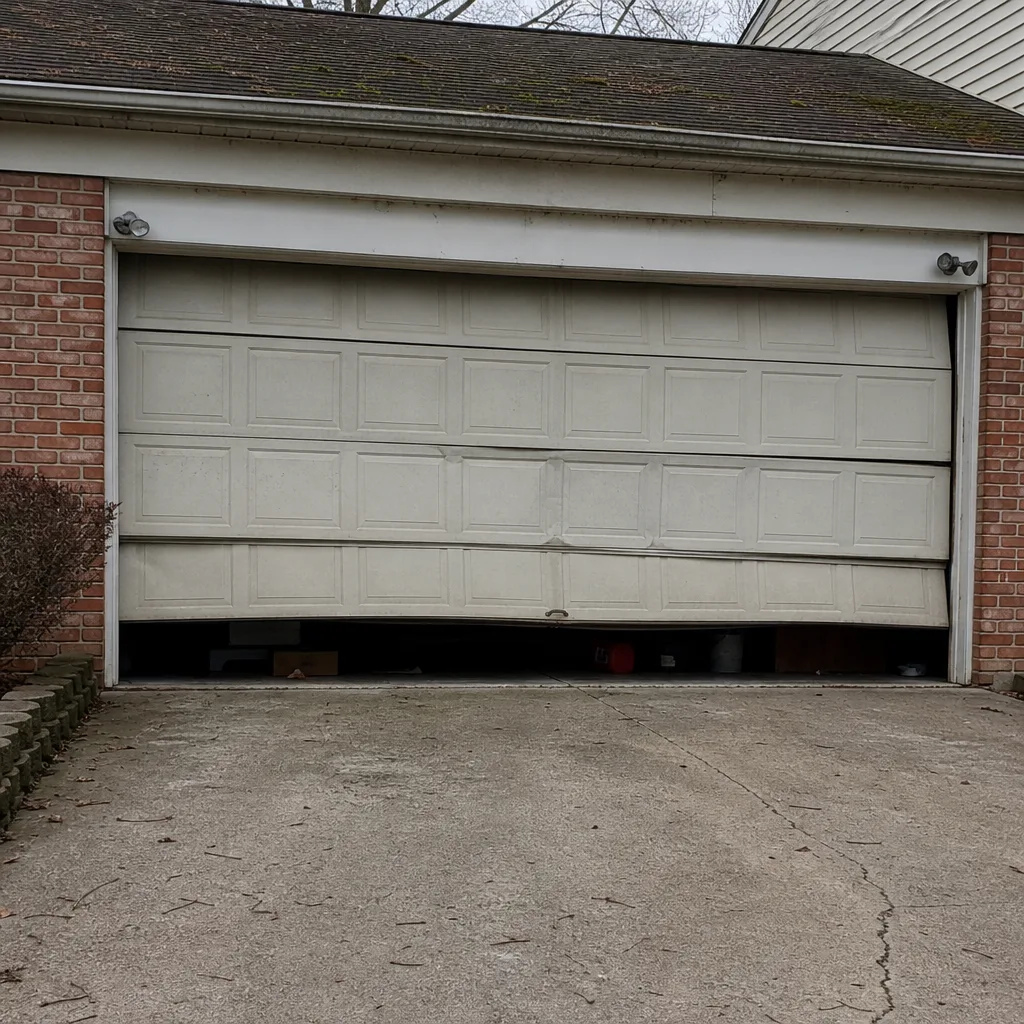 Before
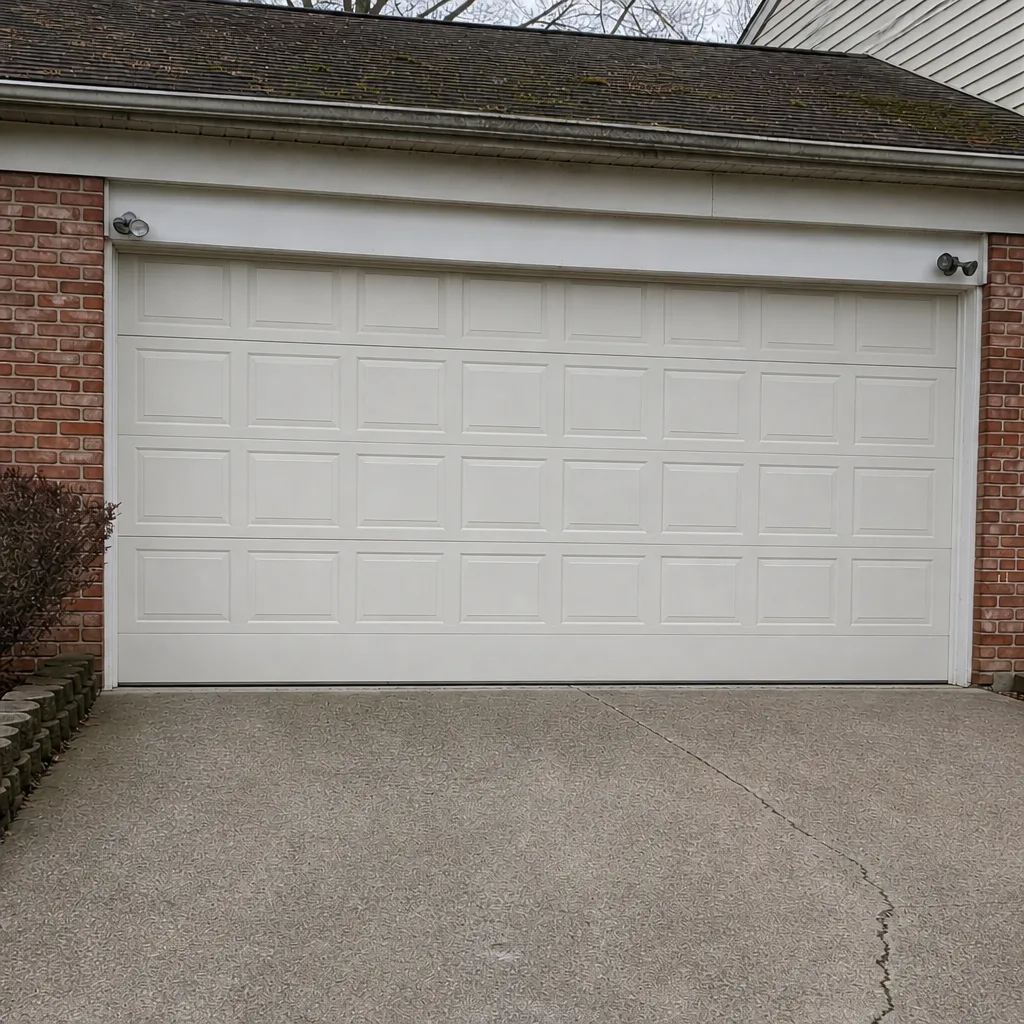 After
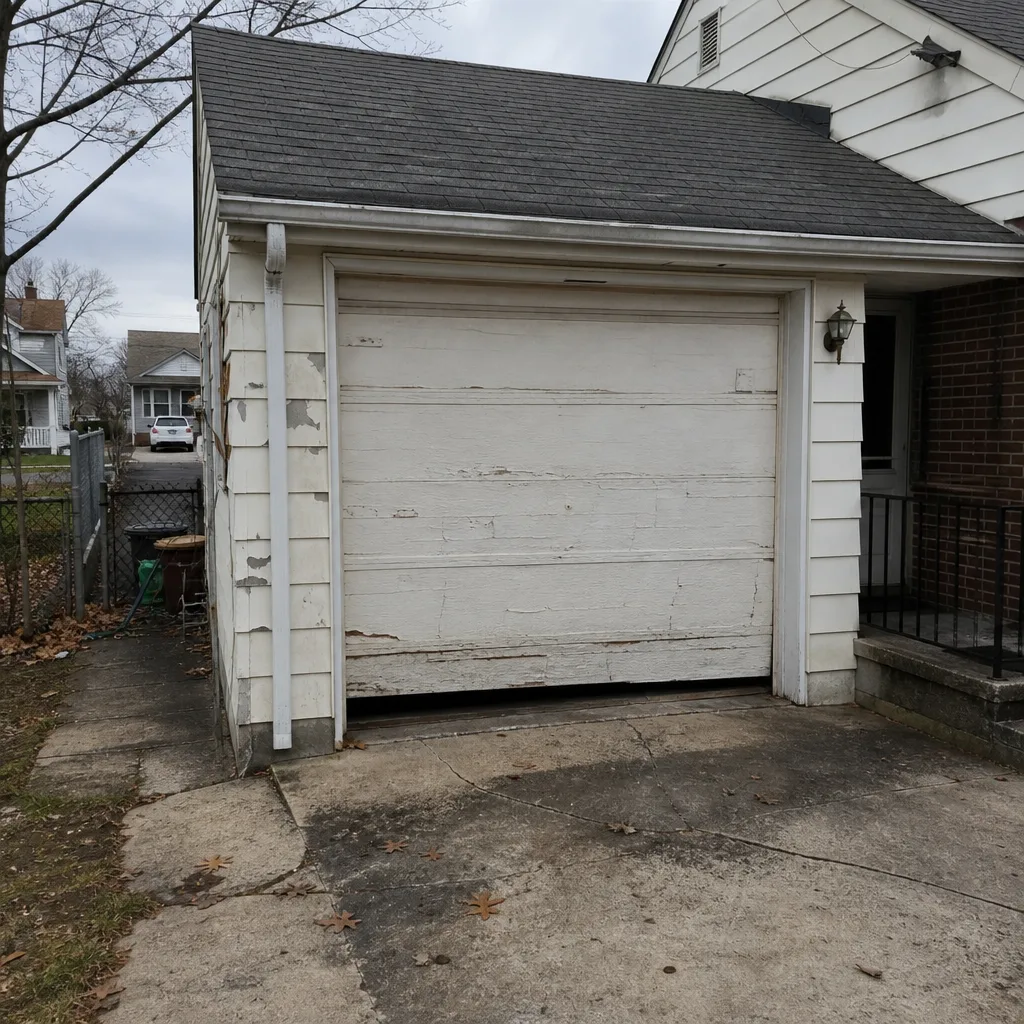 Before
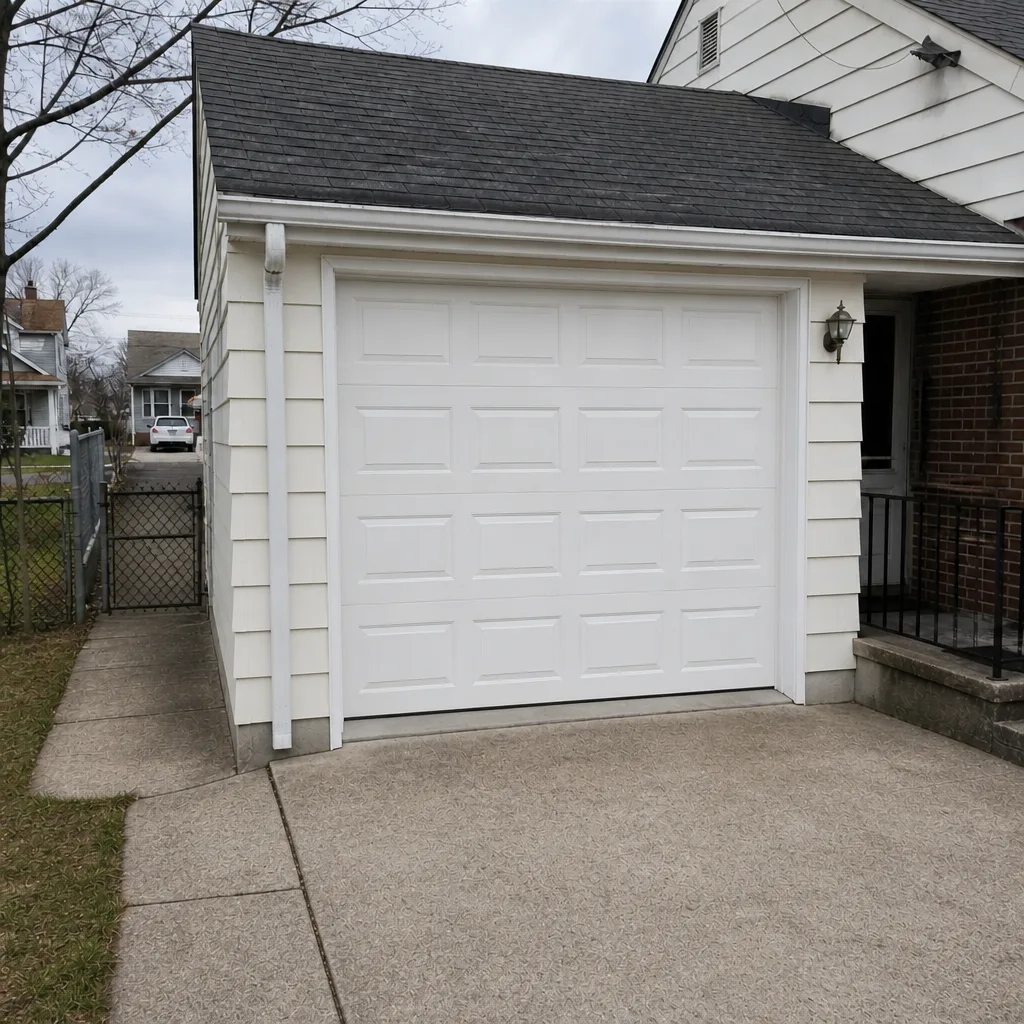 After
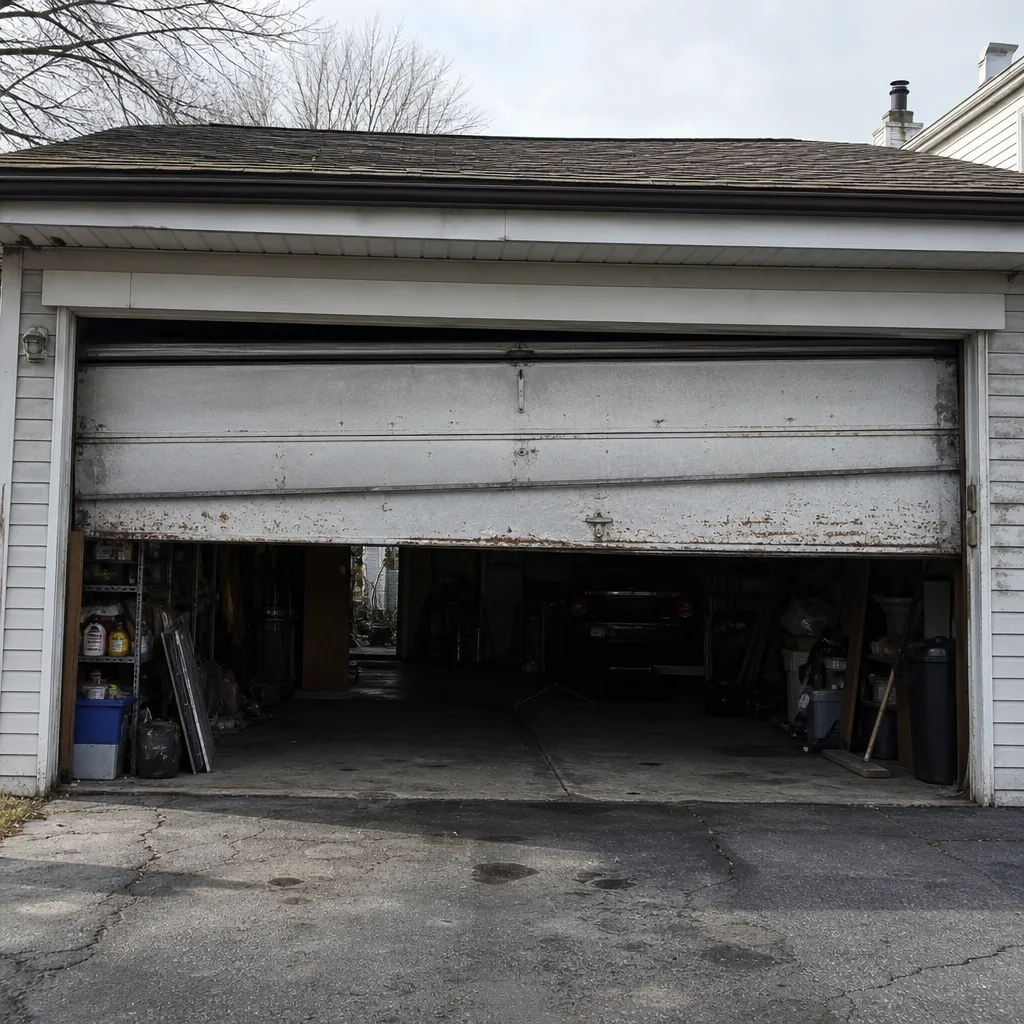 Before
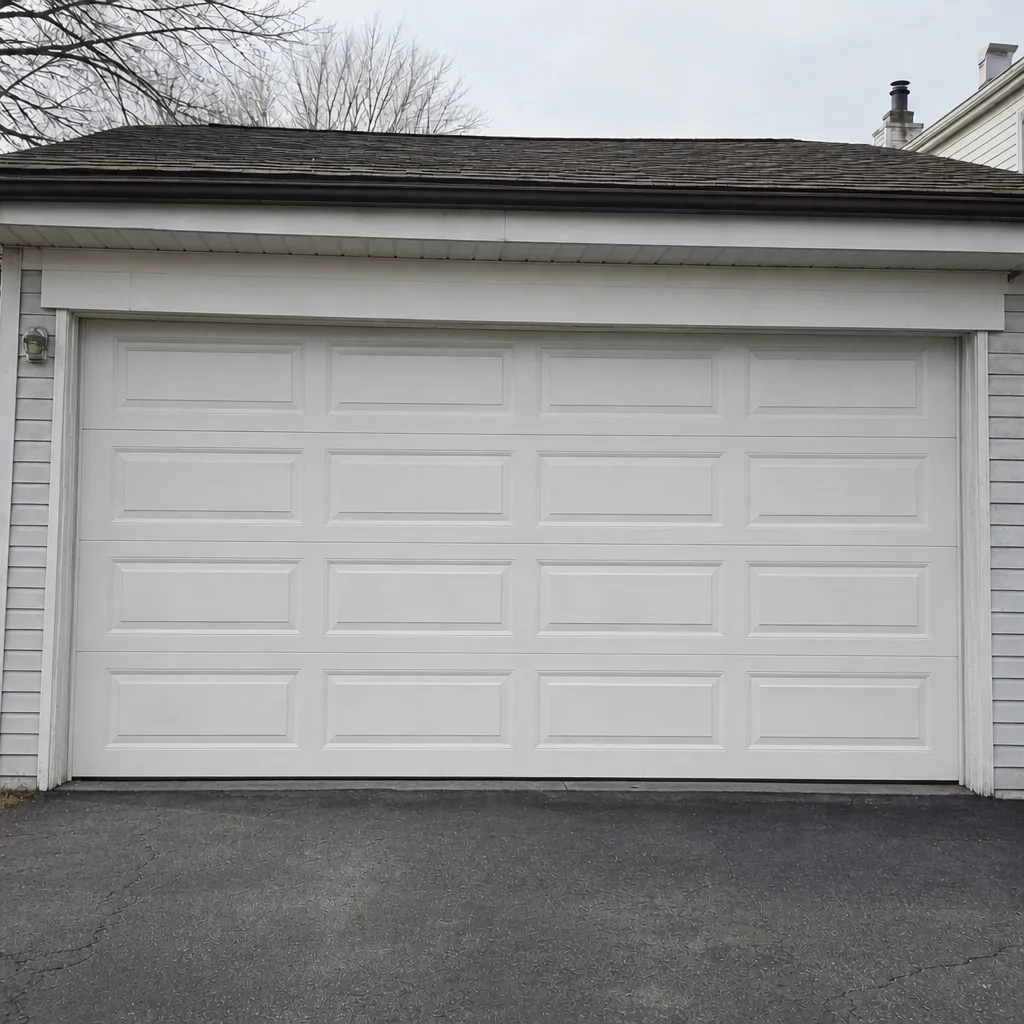 After
When to Call a Professional
Some garage door problems are obvious, and some aren’t. Call a professional if a spring has broken, if a door won’t open or close at all, if the door moves crookedly or binds, if a cable looks loose or frayed, if the opener runs but the door doesn’t move, or if you hear a loud bang from the garage and the door won’t lift. Springs and cables are under high tension and can cause serious injury, so leave those to a trained technician. Plainfield Garage Door Repair Pros offers free estimates in Plainfield, and we’re happy to tell you whether you need a repair or a replacement. Call (877) 492-3251. We answer 24/7. Fast dispatch from 7am to 7pm, Sunday through Friday.
Frequently Asked Questions
Most garage door repairs in Plainfield run in a wide range depending on the part and the door, from a simple opener fix to spring or cable work, so the only number that means anything is the one written on your estimate. We quote the price and agree on it before any work starts, and estimates are free. Call (877) 492-3251 for an exact quote – estimates are free.
Yes, same-day service is often possible. We answer 24/7. Fast dispatch from 7am to 7pm, Sunday through Friday. Call early in the day if you can, and we’ll give you a clear arrival window.
We’re closed Saturday and open Sunday through Friday, 7am to 7pm. If a door fails on a Saturday, call and we’ll book you into the next opening. Call (877) 492-3251 to schedule.
No. The written estimate sets the price, and we quote and agree on it before any work starts. If we find something unexpected once we’re on site, we’ll stop and explain it and get your approval before anything changes. Call (877) 492-3251 for a free estimate.
Yes. The local pro who comes to your home is licensed and insured as their state requires. That’s basic protection for you and your home. Call (877) 492-3251 with any questions before booking.
Yes. We service the major residential brands, including LiftMaster, Chamberlain, Genie, and Clopay, along with others, so we work on the brand already in your garage. If your door or opener is from one of these makers, we’ll know the parts and the quirks. Call (877) 492-3251 and tell us the brand and model if you have it.
The Bottom Line
A garage door in Plainfield needs to handle real seasons, a real opening, and real wear. The mistakes that cost homeowners the most come down to three: choosing a door that doesn’t fit the climate, underestimating the sizing and framing on an older Union County home, and handing a safe-specialist job to a generalist. Get the material right for freeze-thaw and humidity, measure the actual opening, match the track and springs to the door, and ask about insulation if the garage is attached. Then choose a company that does garage doors and nothing else, quotes the price in writing, and agrees on it before any work starts. That’s the whole guide in a paragraph, and it’s the difference between a door that lasts and one that keeps calling you back.
Written by the team at Plainfield Garage Door Repair Pros.