
Top Signs You Need Garage Door Service – Don’t Ignore These
The signs that matter most usually aren’t the dramatic ones. They’re the small things homeowners explain away for weeks – a door that creeps up slower than it used to, a thump that wasn’t there last month, a panel that sits a finger’s width off level when it’s halfway open. We’ve seen it again and again in Plainfield: the slow symptoms get ignored, and then a spring lets go on a frigid morning when the car’s already running late. Here’s what to watch for, and what each sign actually means.
If you’d rather not climb a ladder and guess, call (877) 492-3251. We answer 24/7, with fast dispatch from 7am to 7pm, and estimates are free.
Why Your Door Opens Slower in Cold Weather (And When It’s Actually a Problem)
A garage door that opens slower in January than it did in October isn’t just reacting to the cold. It’s often telling you the spring tension is off, and a small correction now is far cheaper than an emergency replacement later.
Cold does genuinely affect a door. Steel contracts slightly, lubricant thickens, and torsion springs stiffen, so a little extra effort is normal on the first cycle of a cold morning. What isn’t normal is a door that stays sluggish after two or three cycles, or one that gets slower week over week as the weather holds steady.
That pattern points to one of three things:
- Spring wear. Torsion springs lose tension gradually. A door that used to lift with a light touch and now needs a firm one is telling you the spring is near the end of its working life.
- Track friction. Rollers that have dried out or flat-spotted drag against the track and make the opener work harder than it should.
- Motor strain. On an older Genie or LiftMaster unit, a tired motor can struggle even when the door itself is fine. This is where brand familiarity matters. We work on the brand already in your garage, so we know the tolerances and the usual failure points rather than guessing.
In our experience, on doors over seven years old, sluggish operation traces back to spring wear far more often than anything else. If you want a professional read on which one it is, garage door spring repair starts with a proper assessment rather than a parts swap.
Uneven Movement: The Sign Homeowners Most Often Wait Out
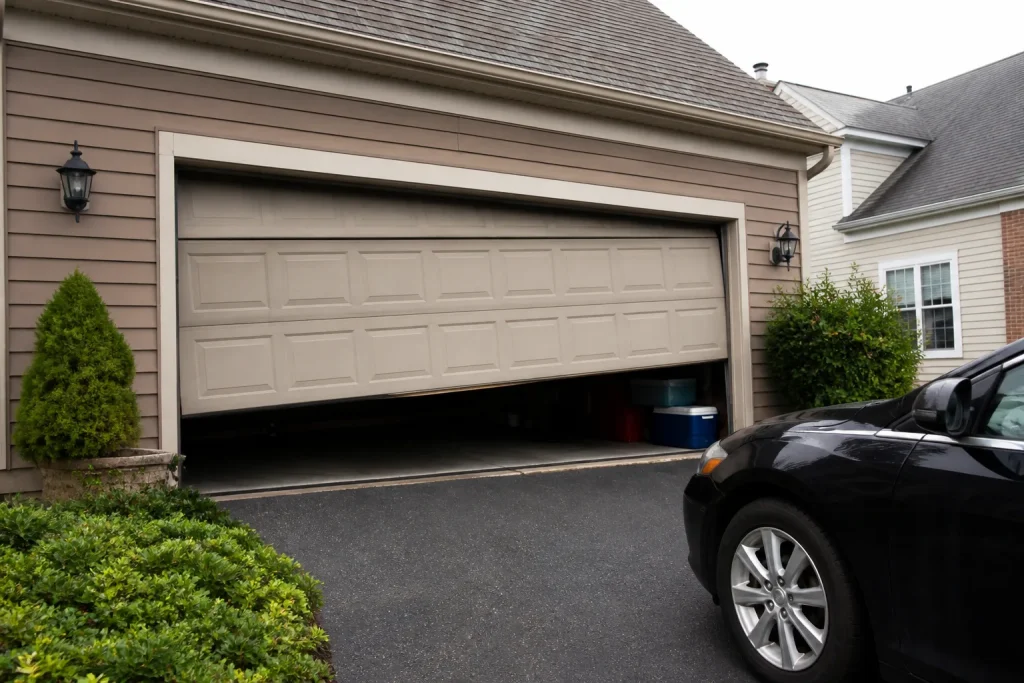
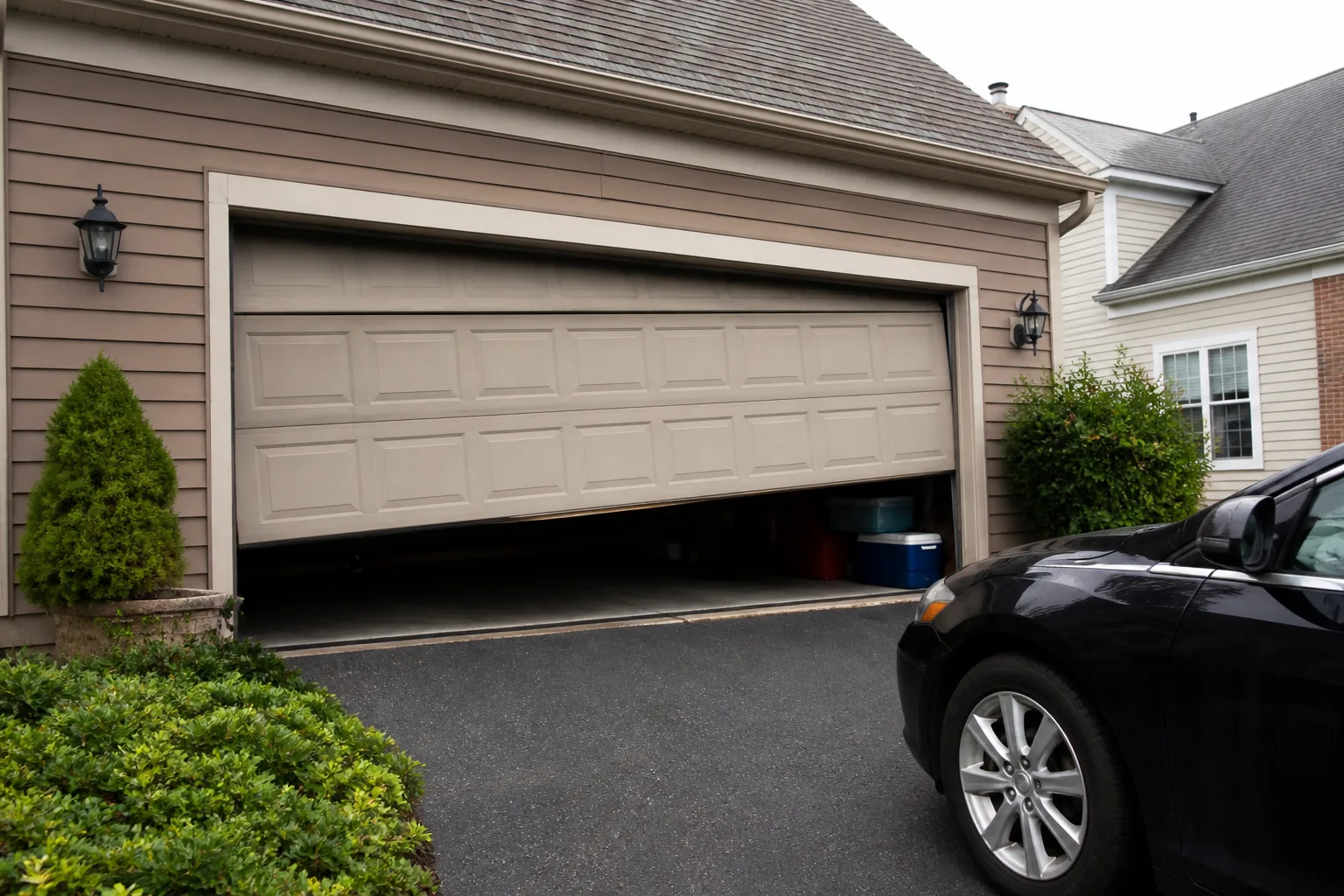
If one side of your door sits lower than the other as it travels, that’s not an alignment quirk to monitor. That’s cable or drum wear – and it’s one of the few signs that genuinely shouldn’t wait.
Cables wind onto drums at each end of the door, and when a cable stretches, frays, or slips off its drum, one side of the door rises while the other lags. Watch your door at the halfway point. A door that’s level when closed but cockeyed when open is showing you a problem that will not fix itself.
Why we push people not to wait on this one:
- A worn cable can snap, and a door hanging on one cable is a serious hazard to anyone standing under it.
- The extra strain transfers to the springs, so a cable issue that starts small can take a spring down with it.
- Continued use can bend panels at the corners, turning a cable job into a panel replacement.
This is where trained eyes beat a YouTube tutorial. Cable and spring work carries real injury risk, so we don’t walk homeowners through tightening or re-seating cables themselves. The safe check you can do is visual and from the floor: look at both cables before each cycle, note any fraying or slack, and stop using the door if either cable looks compromised. Then call a professional. This is exactly the job that garage door repair covers, and it’s work worth doing right the first time. If you’re anywhere in Plainfield and your door is traveling crooked, don’t wait for it to fail completely.
The Sound Profile: Spring Under Stress vs. Roller Wearing Out
Most homeowners describe both problems as “a noise.” The two sound different, and confusing them sends people toward the wrong fix, often paying for parts that weren’t the problem.
Here’s how to tell them apart:
A spring under stress makes a sharp, metallic twang or a rhythmic clicking that rises and falls with the door’s travel. It’s a tighter, higher sound, and it often shows up at the same point in every cycle – usually when tension shifts hardest on the spring. A torsion spring that’s starting to fail may also produce a dull thud at the start of travel as the coil releases unevenly.
A worn roller makes a lower, rougher rumble or a squeal that’s tied to speed rather than position. If the noise gets louder as the door picks up pace and fades as it slows, suspect rollers or a dry track. A rattling door that sounds loose is usually rollers or hinges with slack in them.
One more clue: sound that only appears in the cold points harder toward spring and lubricant issues, while sound that changes pitch on one particular side of the door points toward rollers or a track issue on that side.
We’ve seen plenty of doors in Plainfield where someone oiled and replaced every roller in the door, and the noise never went away – because the spring was the culprit. Our technicians have up to 15 years of experience, and identifying the real source in under a minute is one of the most useful things that experience buys you. For opener-related sounds, see garage door opener repair.
Self-Reversing Doors: The Force Limiter Is Telling You Something
A door that reverses once in a while without hitting anything isn’t a sensor glitch. It’s the opener’s force limiter doing its job. The unit is detecting resistance the door shouldn’t be creating, and it backs off to protect itself and anyone underneath.
People assume it’s a sensor alignment issue and leave it, since the door usually works on the next press. But intermittent reversal is an early warning, and it’s the kind of thing that gets worse until the door stops responding altogether.
The resistance it’s sensing usually comes from one of these:
- A spring losing tension, so the opener has to lift more weight than it was set up for.
- Track friction from dry rollers or a track that’s been knocked slightly out of line.
- Door bind from a bent hinge or a panel that’s warped.
Some newer openers log this on the wall control, so a quick look for a diagnostic code is worth doing. But the real question is what’s creating the resistance, and that requires eyes on the door and the opener together. Our technicians work with Genie, Clopay, and Wayne Dalton systems regularly and understand how each brand sets its force limits. Our advice is simple: don’t reset the force adjustment to make the symptom go away. That defeats the safety feature. If you want help from a team focused only on garage doors, see Plainfield Garage Door Repair Pros.
The 60-Second Visual Check That Predicts Spring Failure
Two visual checks, done from the floor in about a minute, can forecast a spring failure two to four weeks ahead. You don’t need tools and you don’t need to climb a ladder for either one.
- Look for rust on the spring. A dusting of rust along a torsion spring means moisture has broken through the finish. That’s the surface starting to pit, and pitting is where failures begin. Fresh rust on a spring that was clean last season deserves attention now rather than in the spring.
- Check for stress fractures. Look along the length of the coil for a hairline crack or a section where the coil looks thinner. Springs usually fail at the point where a crack has been growing, and a fine line is often visible before it breaks. Use a flashlight and stand directly below the spring looking up, rather than reaching up to touch it.
What you absolutely don’t do is adjust, spray, or otherwise handle the spring yourself. Torsion springs sit under serious tension, and a spring that’s already cracked can release that tension without warning while you’re close to it – one of the most common serious injuries in this trade. This is a trained professional’s job, and it’s the reason we treat spring failure as a core service rather than a side task. If you see rust or a crack, stop using the door until someone qualified takes a look. The fix is typically straightforward when caught early.
When to call a pro
Any of these warrants a call rather than a wait: a door that’s traveling crooked, a spring showing rust or a visible crack, a self-reversing door, or a noise that changed and hasn’t gone back to normal in a week. As a general guide, spring replacement runs $180 to $340 for a single spring, and a matched pair is usually replaced together at about twice that – a written estimate sets the final price before any work starts. If you notice any of the signs above, call Plainfield Garage Door Repair Pros and we’ll take a look. Garage doors are all we do, and the right fix the first time costs less than chasing the wrong one twice.
The Bottom Line
The five most expensive garage door failures usually announce themselves weeks ahead – in a door that hesitates in the cold, travels unevenly, makes a new sound, or reverses on its own. Catch them early and most of them cost less than the dramatic emergency version. If you’re in Plainfield and want a straight answer about what’s going on with your door, we offer free estimates. Call (877) 492-3251 for a free estimate. We answer 24/7. Fast dispatch from 7am to 7pm, Sunday through Friday.
Frequently Asked Questions
Once a year is a sensible rhythm for a residential door, especially before the coldest stretch sets in. Annual service catches worn rollers, dry tracks, loose hardware, and early spring wear before they turn into failures. Our technicians have up to 15 years of experience and can tell you what your particular door needs. Call (877) 492-3251 for a free estimate.
No. Torsion springs operate under heavy tension, and a spring that’s already cracked can release suddenly. This is one of the more dangerous jobs in the trade, and it deserves a trained professional who has the right tools and knows the tension involved. If a spring shows rust or a visible crack, stop using the door and call us at (877) 492-3251. Estimates are free.
It’s worth a look, but it isn’t usually an emergency. Intermittent reversal means the opener’s force limiter is detecting resistance the door shouldn’t be creating. That could be spring wear, track friction, or door bind, and it tends to get worse over time. Don’t reset the force adjustment to hide it. Call (877) 492-3251 and we’ll help you sort out what’s actually causing it.
A spring replacement typically runs $180 to $340 for a single spring, with a matched pair about twice that. Opener repair and roller or cable work vary with what’s actually wrong, and the written estimate sets the final price before any work begins. Call (877) 492-3251 for a free estimate.
Written by the team at Plainfield Garage Door Repair Pros.
Need Garage Door Help?
Call Plainfield Garage Door Repair Pros - the local pro we connect you with is licensed and insured, here with fast help in Plainfield.
(877) 492-3251